



J&K&L High Court Dismisses BSF Personnel's Plea Against Recovery Of ₹6 Lakh Ex-Gratia Relief, Doubts Claims Of Family Members Being Killed
LIVELAW NEWS NETWORK
6 Oct 2026 5:10 PM IST
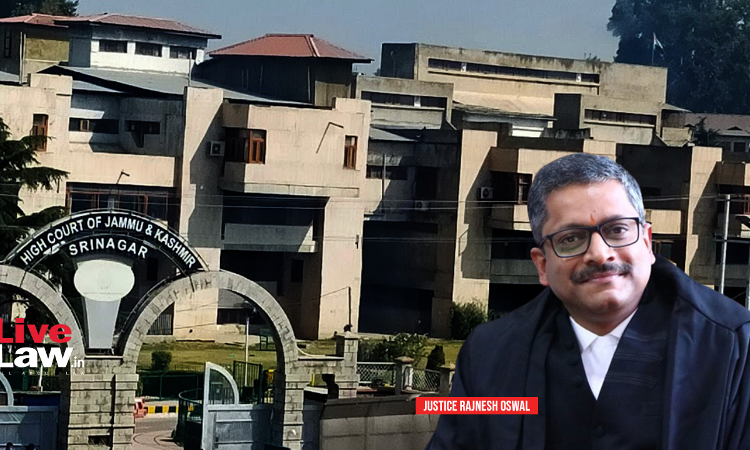
The Jammu & Kashmir and Ladakh High Court has dismissed a BSF personnel's challenge to the recovery of ₹6 lakh in ex-gratia relief sanctioned in 1997 for the alleged deaths of six members of his family, holding that he had failed to establish that the deaths had occurred as claimed.
The Court found significant inconsistencies in his account, including the four-year delay in reporting the alleged incident and the absence of any bodies being handed over to him.
Justice Rajnesh Oswal observed that the circumstances surrounding the original sanction raised serious doubts about the claim and indicated that the relief had been procured in connivance with the authorities concerned.
The Court held that allowing the petitioner to retain the amount would perpetuate unjust enrichment where the very basis of the grant had been found to be false.
“The principle of 'finality of litigation' cannot be pressed to the extent of such an absurdity that it becomes an engine of fraud in the hands of dishonest litigants,” the Court observed, relying on the Supreme Court's ruling in Vishnu Vardhan v. State of U.P.


The Court was hearing a writ petition filed by Nazir Ahmad Mir challenging the communications directing recovery of the amount from his salary and seeking a refund of any amount already recovered.
The petitioner claimed that in 1993, during militant violence in village Shalla Bathu, his father, mother, two brothers and two sisters were killed. He was serving in the Border Security Force and was posted outside the area when the alleged incident occurred.
Following an investigation and the issuance of death certificates, ex-gratia relief of ₹1 lakh each for six persons was sanctioned in his favour in 1997. The authorities subsequently received information that the families concerned had migrated across the Line of Control to Pakistan-occupied Kashmir rather than having died as reported.
A verification exercise followed, and a report submitted by the Divisional Commissioner, Kashmir, in November 2006 stated that the relief had been fraudulently drawn. The authorities initiated steps to recover the amount, and the BSF ultimately ordered recovery of ₹6 lakh from the petitioner in 30 installments, beginning in August 2023.
The petitioner argued that the relief had been sanctioned after official investigation and that he could not be blamed for the authorities' decision to grant it. He also questioned the recovery after more than 25 years and contended that he had not been afforded an opportunity of hearing.
The respondents maintained that an inquiry had been conducted and that the petitioner had been called before the Additional Deputy Commissioner, Kupwara, in February 2001. They asserted that the inquiry had established that the family members had migrated to PoK and that the relief had been obtained on a false basis.
Court's Observations:
The High Court examined the documentary record and found material inconsistencies concerning the alleged deaths and the circumstances in which the ex-gratia relief was sanctioned.
The Court noted that although the alleged incident was said to have occurred in May 1993, the relevant Daily Diary Report was entered at Police Station Kupwara only on March 8, 1997. The death certificates were also issued in September 1997, several years after the alleged incident.
The Court further noted that, when specifically asked whether the bodies of the deceased family members had been handed over to the petitioner, his counsel candidly stated that they had never been delivered. This circumstance, read with the delay in reporting the incident, weighed against the petitioner's claim.
“It strains credulity that the petitioner's family members allegedly passed away in 1993, yet the petitioner remained silent for four long years without making any effort to ascertain their whereabouts,” the Court observed.
The Court also highlighted contradictions in the petitioner's own pleadings. While one representation referred to the killing of six family members in a firing incident in 1990, the writ petition stated that they had gone missing during militant violence in 1993.
Further, it noted that although the petitioner claimed that FIR No. 15/1993 had been registered on his application, the record relied upon for sanctioning the relief showed that only a Daily Diary entry had been made on March 8, 1997.
Another discrepancy concerned the report forming the basis of the relief. It stated that all family members except one sister had been killed, yet the record did not explain why the compensation was paid exclusively to the petitioner, to the exclusion of the surviving sister.
Taking these circumstances together, the Court held that the petitioner had failed to prove that the six family members had died in 1993 as claimed. It observed that the record indicated that the relief had been procured in connivance with the authorities concerned.
The Court also rejected the petitioner's contention that the recovery proceedings violated the principles of natural justice. The respondents had stated that a notice was issued requiring him to appear before the Additional Deputy Commissioner, Kupwara, and that his statement and those of other witnesses were recorded during the inquiry.
The Court noted that the petitioner had not filed a rejoinder or affidavit disputing the respondents' specific assertion that he had been given an opportunity of hearing. In these circumstances, it held that the recovery proceedings could not be characterised as having been initiated in violation of natural justice.
On the question of retaining the relief after the basis for its sanction had been discredited, the Court relied on the Supreme Court's decision in Vishnu Vardhan v. State of U.P., 2025 SCC OnLine SC 1501, which reiterates that fraud cannot be protected merely by invoking the finality of proceedings.
The Court emphasised that the principle of finality cannot be stretched to enable a person to retain benefits obtained through fraud. It further observed that permitting the petitioner to retain the amount would result in unjust enrichment, since the basis on which the relief had been granted was found to be false.
Finding the writ petition devoid of merit, the High Court dismissed it and left undisturbed the recovery of ₹6 lakh from the petitioner.
Case Title: Nazir Ahmad Mir v. Union of India & Others
Citation: 2026 LiveLaw (JKL) 326
Appearances:
Petitioner: Dar Khurshid, Advocate.
Respondents 1, 5 and 6: Faizan Ganai, Central Government Counsel, vice T. M. Shamsi, DSGI.
Respondents 2 to 4: Ilyas Laway, Government Advocate.


