



- Home
- /
- High Courts
- /
- High Court of J & K and Ladakh
- /
- J&K&L High Court Modifies Interim...
J&K&L High Court Modifies Interim Stay, Allows Jammu University To Proceed With Construction On Disputed Land Pending Ownership Plea
LIVELAW NEWS NETWORK
30 Sept 2026 11:30 AM IST
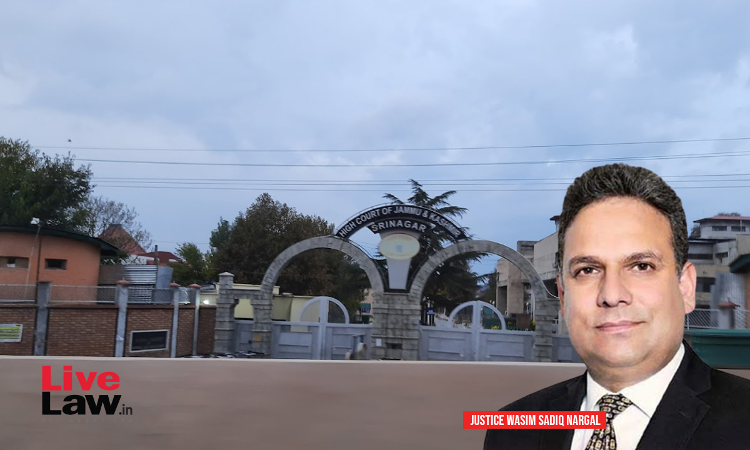
The Jammu & Kashmir and Ladakh High Court has modified an earlier interim order concerning 50 kanals of land at Sharief-Abad, Budgam, permitting the University of Jammu to proceed with development and construction activities over the land, subject to law and requisite statutory permissions.Justice Wasim Sadiq Nargal held that, while exercising discretionary jurisdiction under Article 226...
This is a premium content
Available exclusively to
Our subscribers
Subscribe Premium 
INR 1099+GST
Your support helps us to bring you more content at
an affordable subscription scheme !!!
All payment options available
The Jammu & Kashmir and Ladakh High Court has modified an earlier interim order concerning 50 kanals of land at Sharief-Abad, Budgam, permitting the University of Jammu to proceed with development and construction activities over the land, subject to law and requisite statutory permissions.
Justice Wasim Sadiq Nargal held that, while exercising discretionary jurisdiction under Article 226 of the Constitution at the interlocutory stage, the Court is required to balance the private interest of the claimant against the larger public interest involved in implementation of a lawful public project. The Court clarified that its order would not determine the parties' ultimate rights, title or interest in the disputed land.
The Court was hearing an application filed by the University of Jammu seeking vacation/modification of the interim order dated 13.02.2026, which had restrained interference with the disputed 50-kanal parcel except in accordance with law. The petitioners' main writ petition seeks declaration of ownership rights over a larger parcel of land, including the land in question, under the Government Orders relied upon by them.
Justice Nargal, while modifying the interim protection, observed,
“The exercise of discretionary jurisdiction under Article 226 of the Constitution at the interlocutory stage necessarily requires the Court to balance the private interest of the claimant against the larger public interest involved in the implementation of a lawful public project.”
Background:
The application was filed by the University of Jammu seeking modification of the interim order. The University stated that the land measuring 50 kanals, at Sharief-Abad, Budgam, was recorded as State land in the revenue records, with the ownership column of the Jamabandi showing “Sarkar” and the possession column recording “Makboza Sarkar”.
According to the University, after verification, demarcation and scrutiny by the competent Revenue Authorities, the land was identified for establishment of a Jammu University Research Centre/Campus. The proposal was forwarded to the University, which found the land feasible and suitable for the proposed project.
The University further submitted that the Divisional Commissioner, Kashmir, had accorded sanction for transfer of the State land for the public purpose and that possession had thereafter been formally handed over to the University by the competent Revenue Authorities.
The University contended that the petitioners had not established any prima facie right, title or legally enforceable interest over the land and that mere planting of trees over State land could not confer ownership rights.
It was also submitted that continuation of the interim order was delaying developmental activities and adversely affecting public funds, administrative resources and institutional planning for the proposed campus.
The University further argued that the interim order was being understood by the police authorities as preventing its officials from carrying out development activities over the land allotted to and held by it. It submitted that the resulting hindrance was prejudicial to the development of the University and public interest.
The Government, appearing for respondents also submitted that the land was State land and remained in Government possession. It relied upon the revenue records, according to which Survey No. 217 comprised 192 kanals and 09 marlas and the Jamabandi for 2020-21 recorded “Sarkar” in the ownership column and “Makboza Sarkar” in the possession column.
The petitioners, on the other hand, had instituted the main writ petition seeking declaration of ownership rights under Raj Tilak Boon or, alternatively, directions for conferral of ownership rights.
The earlier interim order dated 13.02.2026 had directed that the respondents should not interfere with the subject matter of the dispute, comprising 50 kanals of land, except strictly in accordance with the procedure established by law. The Court subsequently noted that the University had repeatedly submitted that the interim direction was being interpreted or exploited in a manner that obstructed its development activities.
Court Observations:
The Court first noted that the petitioners had not, as on the date of consideration of the application, been declared owners of the land. Since the main writ petition itself sought a declaration of ownership, the Court held that the ownership claim remained to be adjudicated.
The Court accordingly observed that, without expressing any opinion on the merits of the rival claims, the petitioners had not established any declared ownership right which, by itself, would warrant restraining the University from carrying out activities for which the land had been transferred to it by the competent authority. At the same time, the Court preserved the parties' respective rights and claims for adjudication in the main petition.
In considering whether the interim protection should continue in its existing form, the Court relied upon the Supreme Court's decision in Ramniklal N. Bhutta & Another v. State of Maharashtra & Others (1997) 1 SCC 134. The Supreme Court had emphasised that while considering stay or injunction in matters involving land acquisition and public purposes, courts exercising discretionary jurisdiction must consider the larger public interest.
The Supreme Court's observation, reproduced by the High Court, stated,
“the courts should keep the larger public interest in mind while exercising their power of granting stay/injunction.” It further recognised that the power under Article 226 is discretionary and is to be exercised in furtherance of the interests of justice.
The High Court thereafter held that the legal position required it, while exercising discretionary jurisdiction under Article 226, to strike a judicious balance between the private interest asserted by the petitioners and the larger public interest sought to be served by the developmental project. The Court observed,
“The power of judicial review, though wide, is discretionary and is to be exercised in furtherance of the interests of justice, keeping in view the nature and purpose of the developmental project and the consequences that may ensue from the grant of an interim order.”
The Court further reiterated that at the interlocutory stage, the competing interests of the parties had to be weighed against the wider public interest involved in implementation of a lawful public project. It specifically held that public interest had to be kept in view while considering the grant of stay or injunction in such matters.
Applying that approach to the facts before it, the Court noted that continuation of the interim direction, insofar as it was being understood as restraining the University from undertaking development and construction activities, was causing delay in commencement of the proposed developmental activities.
The Court accordingly found it appropriate, “in the peculiar facts and circumstances of the case”, to modify and clarify the interim order dated 13.02.2026, while expressly stating that it was not expressing any opinion on the merits of the main writ petition.
The Court simultaneously restrained the petitioners, temporarily, from interfering with the development and construction activities once the land had been duly transferred in favour of the University by the competent authority.
The Court, however, made clear that the permission to proceed with construction would not determine the ultimate rights of either side. It directed that all development and construction undertaken by the University would remain subject to the final outcome of the main writ petition and any further order passed by the Court.
The Court accordingly disposed of the application. The main writ petition was directed to be listed for consideration on 23 October 2026.
Case Title: Syed Abbas Rizvi And Others v. Union Territory of J&K And Others
Appearances
Petitioners: Mujeeb Andrabi, Advocate
Respondent No. 7, University of Jammu: Senior Advocate Rajnish Raina with Advocate Abid Khan
Respondents 1 to 5: Ilyas Nazir Laway, Government Advocate


