



- Home
- /
- High Courts
- /
- High Court of J & K and Ladakh
- /
- No Parallel Proceedings; Revenue...
No Parallel Proceedings; Revenue Authorities Should Step Aside Once Civil Court Takes Up Dispute: J&K&L High Court
LIVELAW NEWS NETWORK
11 Dec 2025 5:50 PM IST
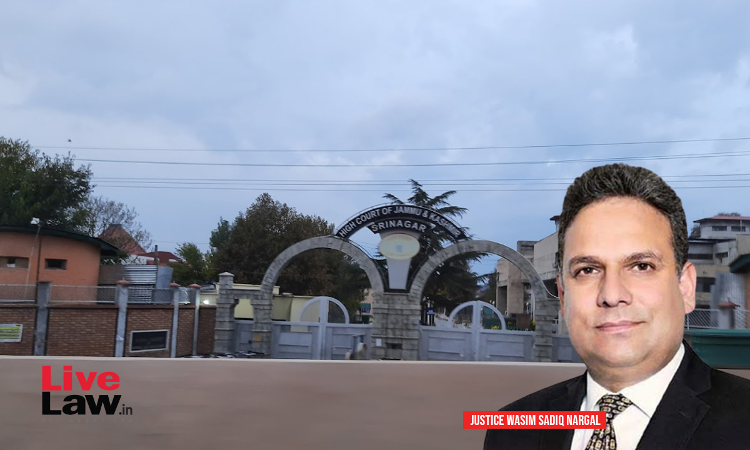
The High Court of Jammu & Kashmir and Ladakh has held that revenue authorities cannot run concurrent proceedings once a civil court has already seized a dispute. Court noted that this principle was violated in a Kupwara land-pathway dispute where both sides simultaneously sought remedies before different forums.Justice Wasim Sadiq Nargal, while dismissing a writ petition filed by one...
This is a premium content
Available exclusively to
Our subscribers
Subscribe Premium 
INR 1099+GST
Your support helps us to bring you more content at
an affordable subscription scheme !!!
All payment options available
The High Court of Jammu & Kashmir and Ladakh has held that revenue authorities cannot run concurrent proceedings once a civil court has already seized a dispute. Court noted that this principle was violated in a Kupwara land-pathway dispute where both sides simultaneously sought remedies before different forums.
Justice Wasim Sadiq Nargal, while dismissing a writ petition filed by one Farooq Ahmad Shiekh and others, underscored that the case represented a textbook example of how “parallel adjudicatory tracks” can create conflicting outcomes and undermine the primacy of the civil court.
The bench turned the spotlight away from routine issues of land demarcation and onto the structural principle that revenue authorities must defer to civil courts when civil rights over immovable property are already under scrutiny.
“… the jurisdiction of Civil Court is superior and revenue authorities cannot adjudicate upon such issues when the same are already before a Civil Court. The principle against parallel proceedings is settled and revenue authorities are expected to lay their hands off when the same controversy is pending before the Civil Court”, Justice Nargal recorded.
Background:
The litigation originated from a complaint filed by private respondents alleging that the petitioners had obstructed a public link road constructed by the Rural Development Department. Acting on the complaint, the Deputy Commissioner directed removal of the alleged obstruction, an order upheld successively by the Additional Commissioner and the Financial Commissioner.
But what fundamentally altered the complexion of the case was that a civil suit on the very same issue was already pending before the Court of Munsiff Sogam. On 12 July 2024, that Court had passed a restraint order prohibiting the petitioners from interfering with or encroaching on the pathway.
Court's Observations:
Justice Nargal noted that the revenue authorities not only continued proceedings despite the pending civil suit, but also failed to defer action even after a clear judicial injunction had been issued by the competent civil court.
Calling the civil court's jurisdiction “superior” in matters involving title, possession and civil rights over property, the Court held that the revenue chain of orders could not survive when the dispute was already sub judice before a civil forum.
Justice Nargal quoted a recent decision in Abdul Rashid Khan v. UT of J&K and reiterated that once a civil suit is pending on the same subject-matter, the revenue authorities are expected to defer their proceedings so as not to prejudice or conflict with the adjudication before the civil court.
The Court remarked that simultaneous adjudication before civil and revenue forums creates real and immediate danger of “conflicting, inconsistent, or contradictory decisions”, which the law consciously seeks to avoid.
A significant portion of the judgment addresses the fact that the petitioners were fully aware of the civil court's order restraining interference with the pathway, yet chose not to pursue remedies in the civil court and instead challenged only the orders of the revenue authorities before the High Court.
The Court examined the record to highlight that even the appellate and revisional revenue authorities had referred to the Munsiff Court's order but the petitioners did not bring it before the High Court at all.
Justice Nargal observed,
“The fact that the Civil Court's order was already in existence and known to the parties, and had also been referred to in the orders of both the appellate and revisional forums, shows the concealment was deliberate and wilful.”
Denouncing the practice he added,
“.. with a view to deprecate such practice of suppression of material facts, this Court imposes a cost of Rs.50,000/- on the petitioners, to be paid jointly by them”.
While the decision does address suppression of facts, the deeper focus of the court was on the structural necessity of maintaining judicial discipline between forums, and the impropriety of revenue authorities continuing to act when a civil court has already assumed jurisdiction.
“The law does not permit parties taking conflicting routes to achieve the same objective, particularly in cases, where the matter is directly and substantially in issue before a competent civil court,” the court recorded.
In view of these findings the Court directed that all grievances be pursued before the Civil Court, which was already seized of the matter, and clarified that the civil court shall proceed independently, uninfluenced by any observations in the writ judgment.
Case Title: Farooq Ahmed Sheikh Vs Financial Commissioner Revenue
Citation: 2025 LiveLaw (JKL) 312


