



Long Possession, Electricity Bills Cannot Protect Illegal Construction From Demolition: J&K&L High Court
LIVELAW NEWS NETWORK
23 Nov 2026 2:50 PM IST
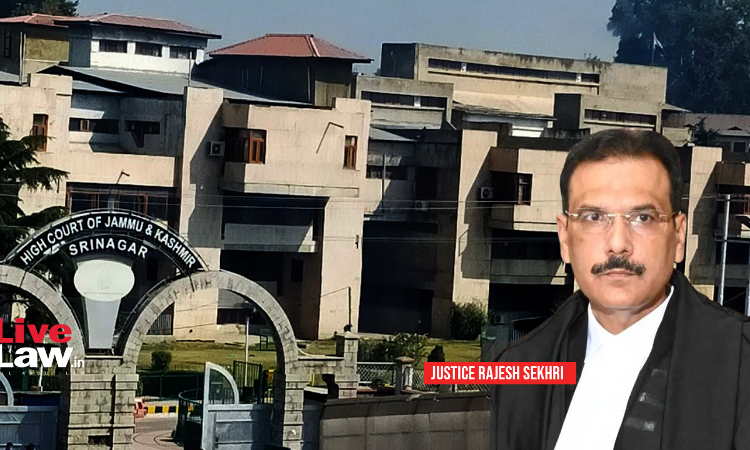
The Jammu & Kashmir and Ladakh High Court has held that long possession of a property, payment of electricity and water bills, or substantial investment in a building cannot confer ownership rights or protect an unauthorised construction from demolition if it has been raised without valid permission from the competent authority.
Dismissing a writ petition challenging a demolition notice issued under the J&K Control of Building Operations Act, 1988, Justice Rajesh Sekhri observed that the passage of time, administrative inaction or alleged lapses on the part of enforcement agencies cannot be used as a shield to perpetuate an illegality.
The Court made the observations while rejecting a challenge by Zaffer Ul Khan, who claimed that the residential building in question had been constructed by his father in 1975, before the area came under the jurisdiction of the Municipal Corporation and when no building permission was allegedly required.
The Court observed,
“.....Long possession for decades over a disputed structure, payment of electricity or water bills and even shop establishment certificates would neither confer ownership status nor prevent demolition, if the structure is found to have been raised without an approved building plan.”


Background
The petitioner approached the High Court under Article 226 of the Constitution, challenging an order passed by the J&K Special Tribunal, Jammu, dismissing his appeal under Section 13 of the J&K Control of Building Operations Act, 1988.
The proceedings originated from a notice dated March 9, 2024, issued under Section 7(1) of the Act, calling upon the petitioner to show cause within 48 hours as to why the alleged building violations should not be sealed or demolished. This was followed by a final notice dated September 17, 2024, under Section 7(3), directing him to remove the violations within five days of service.
The petitioner claimed that the land, measuring 10 marlas had come into his father's possession in 1975. According to him, the residential house had been raised at that time and had remained in the family's possession for decades.
He contended that the colony in which the house was situated was awaiting regularisation by the Government. To substantiate his claim of long-standing occupation, he relied upon electricity and water bills, certain official communications, a marriage card and documents relating to his appointment in Government service.
The petitioner also alleged that the demolition proceedings had been initiated at the instance of a local resident, Sudesh Kumar, against whom he had earlier lodged a complaint for allegedly raising construction on Forest land without an approved building plan.
Before the Special Tribunal, the petitioner had challenged the demolition notice on the ground that the land was not within the jurisdiction of Jammu Municipality when the house was constructed in 1975 and, therefore, no building permission was required.
The respondents opposed the plea, contending that the petitioner was not the owner of the land and had raised a four-storeyed residential structure over State land without obtaining permission from the competent authority. They further argued that the construction was in violation of the applicable building bye-laws and the J&K Municipal Corporation Act, 2000, and involved major violations affecting planned urban development, which were not compoundable.
The Special Tribunal dismissed the appeal primarily on the ground that the petitioner had failed to produce evidence establishing ownership of the land.
Court's Observation
Justice Sekhri first noted that the petitioner had admittedly failed to produce any documentary evidence establishing ownership of the land. Although he disputed the allegation of encroachment over State land and claimed that the property was Wakaf land, he had not placed on record any allotment document issued by the Government, Wakaf authorities or any other competent authority.
The Court observed that, irrespective of the dispute regarding the nature of the land, the petitioner had raised construction without any valid permission from the competent authority.
The principal defence of the petitioner was that the building had been constructed by his father in 1975, when the area was allegedly outside the jurisdiction of the Municipal Corporation. He argued that the authorities had failed to determine the age of the structure through scientific methods, including expert examination, carbon dating or architectural analysis.
The Court, however, found that the electricity and water bills relied upon by the petitioner were of 1991 and subsequent years, by which time the area had admittedly come within the jurisdiction of the Municipal Corporation.
It further held that the writ jurisdiction was not the appropriate forum to determine disputed questions of fact concerning the actual age of the building or whether the structure had earlier been permitted by the authorities. Such disputes, the Court observed, could be resolved only in appropriate civil proceedings.
The Court clarified that even the existence of such disputed questions would not automatically entitle an alleged encroacher to continue construction without valid permission.
“The long possession, payment of taxes, electricity bills, water bills or even payment of user charges would neither create any title nor equity in favour of a person who is alleged to have encroached upon a land,” the Court observed.
It further explained that a challenge to demolition proceedings could carry weight where the alleged violator produces evidence of ownership, official land-allotment documents, a valid lease deed or material showing that the land or structure had been wrongly surveyed by the authorities.
The Court then referred to the settled position laid down by the Supreme Court that unauthorised constructions cannot be permitted to continue merely because they have existed for a long period or because enforcement authorities failed to act in time.
Relying on M.I. Builders (P) Ltd. v. Radhey Shyam Sahu, (1999) 6 SCC 464, the Court noted the Supreme Court's holding that there is no alternative to dismantling a construction which is unauthorised and illegal.
It also referred to Esha Ekta Apartments Coop. Housing Society Limited v. Municipal Corporation of Mumbai, (2013) 3 SCC (Civil) 89, wherein the Supreme Court held that courts should refrain from exercising equitable jurisdiction to regularise illegal and unauthorised constructions, as doing so would encourage violations of planning laws.
Applying these principles, the Court held that the petitioner's assertion that the building had existed for more than 50 years did not clothe him with any legal right.
“There cannot be any estoppel against law. Delay on the part of the enforcement agencies, heavy investment by a violator or administrative lapses of the authorities cannot be shields against demolition of an illegally raised structure,” the Court observed.
Rejecting the petitioner's plea of arbitrariness and violation of natural justice, the Court described the contention as “nothing but a fig leaf of defence, which can hardly have any basis in law.”
Finding no ground for interference with the Special Tribunal's order, the High Court dismissed the writ petition in limine.


