



- Home
- /
- High Courts
- /
- High Court of J & K and Ladakh
- /
- J&K&L High Court Refuses To Quash...
J&K&L High Court Refuses To Quash ₹65 Lakh Cheque Bounce Case, Says Lost Cheque Defence Must Be Tested At Trial
LIVELAW NEWS NETWORK
5 Aug 2026 6:55 PM IST
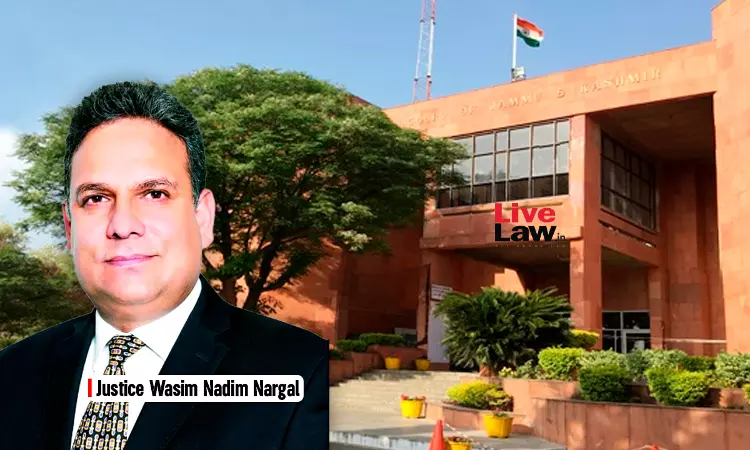
The Jammu & Kashmir and Ladakh High Court, while refusing to quash proceedings in a cheque dishonour complaint involving ₹65.68 lakh, has held that pleas of a cheque being misplaced, prior stop-payment instructions, alleged misuse of cheque and absence of a legally enforceable debt are matters of defence which cannot be conclusively decided in proceedings under Section 528 BNSS.The...
This is a premium content
Available exclusively to
Our subscribers
Subscribe Premium 
INR 1099+GST
Your support helps us to bring you more content at
an affordable subscription scheme !!!
All payment options available
The Jammu & Kashmir and Ladakh High Court, while refusing to quash proceedings in a cheque dishonour complaint involving ₹65.68 lakh, has held that pleas of a cheque being misplaced, prior stop-payment instructions, alleged misuse of cheque and absence of a legally enforceable debt are matters of defence which cannot be conclusively decided in proceedings under Section 528 BNSS.
The Court was hearing a petition under Section 528 of the Bharatiya Nagarik Suraksha Sanhita, 2023, seeking quashing of the process issued by the Sub Judge, Special Mobile Magistrate, Rajouri, in a complaint under Sections 138 and 142 of the Negotiable Instruments Act, 1881.
A Bench of Justice Wasim Sadiq Nargal observed: “The pleas projected by the petitioner, that the cheque had been misplaced, that stop-payment instructions had already been issued to the bank, that the cheque has been misused by the respondent and that no legally enforceable debt or liability existed, constitute his defence to the complaint.”
The Court further observed: “Whether the cheque had in fact been lost, whether it was voluntarily issued by the petitioner, whether it was issued in discharge of a legally enforceable debt or liability, and whether the statutory presumptions available under the Negotiable Instruments Act stand rebutted, are all disputed questions of fact which cannot be conclusively determined in proceedings under Section 528 of the BNSS. These issues necessarily require evidence to be led by the parties before the learned trial Court.”
The matter arose after the petitioner claimed that he was the successful bidder for a liquor vend at Ramnagar and that his cheque book was misplaced in 2022. According to him, he had approached his bank in December 2022 and requested the stoppage of payment for the entire cheque book, which the bank acted upon.
The respondent, however, filed a complaint alleging that he had extended financial assistance to the petitioner for running the liquor business and that the petitioner issued a cheque for ₹65,68,785 in discharge of that liability. The cheque was dishonoured with the endorsement “Payment Stopped by Drawer”, after which statutory notice was issued and the complaint under the NI Act was filed.
The petitioner sought quashing of the complaint, contending that no financial arrangement or liability existed, that the cheque formed part of the misplaced cheque book, and that it had been misused. The respondent opposed the plea, submitting that the cheque was voluntarily issued, the amount had been transferred through banking channels, the petitioner had not denied his signature on the cheque, and the defence of lost cheque or stop-payment could be tested only at trial.
The High Court, at the outset, held that at the stage of cognizance and issuance of process, the Magistrate is only required to see whether the complaint and accompanying material disclose a prima facie offence.
The Court observed: “It is well settled that at the stage of taking cognizance and issuance of process, the learned Magistrate is only required to examine whether the complaint and the material accompanying it disclose the commission of a prima facie offence. At that stage, the Court is not expected to meticulously evaluate the probable defence of the accused or adjudicate upon disputed questions of fact, which necessarily require appreciation of evidence during trial.”
The Court referred to Section 139 of the NI Act and held that once foundational facts constituting an offence under Section 138 are pleaded and prima facie established, the presumption operates in favour of the holder.
The Court stated: “A plain reading of the aforesaid provision makes it evident that once the foundational facts constituting an offence under Section 138 are pleaded and prima facie established, the statutory presumption operates in favour of the holder of the cheque that it was received in discharge, in whole or in part, of a legally enforceable debt or other liability.”
It added that although the presumption is rebuttable, the burden lies on the accused to rebut it before the trial court. The Court rejected the petitioner's attempt to have the complaint quashed based on his defence.
The Court found it significant that the petitioner had not disputed his signature on the cheque. It held that once execution was not denied, the statutory presumption under Section 139 came into operation.
The Court observed: “Significantly, the petitioner does not dispute his signatures on the cheque in question. Once the execution of the cheque is not denied, the statutory presumption under Section 139 of the Negotiable Instruments Act comes into operation in favour of the holder of the cheque.”
It added: “The said presumption is rebuttable, however, the burden to rebut the same lies upon the petitioner by leading appropriate evidence before the learned trial Court.”
The Court held that inherent jurisdiction under Section 528 BNSS cannot be invoked to appreciate disputed facts or evaluate the accused's defence before trial.
The Bench stated: “The inherent jurisdiction preserved under Section 528 of the BNSS is intended to prevent abuse of the process of any Court or otherwise to secure the ends of justice. However, such jurisdiction cannot be invoked to undertake an appreciation of disputed facts or to evaluate the defence sought to be projected by an accused at a stage when the trial has not yet commenced.”
The Court added: “Acceptance of the petitioner's contentions at this stage would virtually amount to conducting a mini trial, which is beyond the permissible scope of interference while exercising inherent jurisdiction.”
The Court relied on Indian Bank Association v. Union of India (2014), where the Supreme Court held that once the statutory requirements under Section 138 are shown to have been complied with, commission of the offence stands technically completed and the accused must raise specific defences.
Applying the principle, the High Court held that the complaint disclosed statutory compliance and the Magistrate had rightly recorded prima facie satisfaction for the issuance of process.
The High Court dismissed the petition and vacated interim directions, if any. It upheld the order issuing process in the cheque dishonour complaint and directed the trial court to proceed expeditiously in accordance with the law. The Court clarified that all pleas raised by the petitioner would remain available before the trial court, which must decide them based on evidence without being influenced by observations made in the quashing proceedings.
Case Title: Sanjay Gupta v. Vipan Kumar Mehta
Citation: 2026 LiveLaw (JKL) 339


