



J&K&L High Court Denies Bail To Two Accused In Alleged JKLF-Y Revival Case
LIVELAW NEWS NETWORK
15 Nov 2026 1:13 PM IST
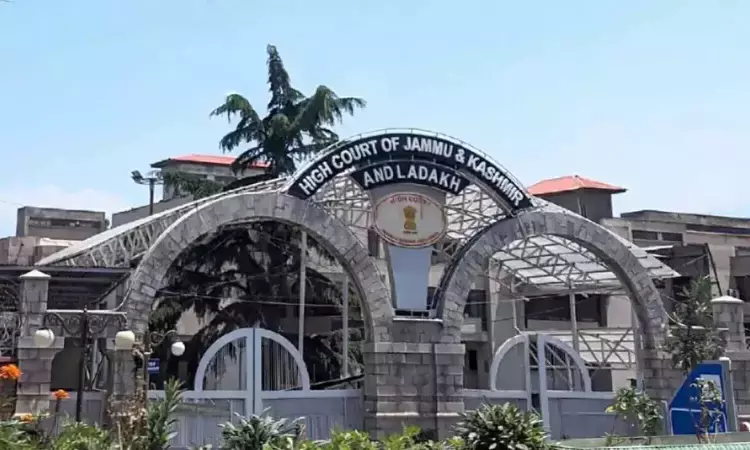
The High Court of Jammu & Kashmir and Ladakh at Srinagar has dismissed two appeals seeking bail in a case under the Unlawful Activities (Prevention) Act, 1967, holding that the material witnesses whose testimony bears directly upon the disclosure statements allegedly made by the appellants and the recoveries effected pursuant thereto are yet to be examined by the prosecution.
The Court held that their examination would be material for a proper consideration of the role attributed to the appellants and the evidentiary circumstances relied upon by the prosecution, and that it would not examine the merits of the evidence led by the prosecution till date lest it prejudice the parties during trial. The Court, however, granted liberty to the appellants to file fresh bail applications after the examination of the material witnesses.
The Court was hearing two appeals filed by accused persons challenging the orders passed by the learned Special Judge designated under the NIA Act, Srinagar, whereby their bail applications were dismissed.
The appeals were heard by a Bench of Justice Rajnesh Oswal and Justice Sanjay Parihar, who observed,
“The contention raised by the appellants that there is no evidence against the appellants cannot be appreciated at this stage, particularly when the material witnesses with regard to the seizure of the incriminating material are yet to be examined.”


Background
According to the prosecution, on 09.07.2023, Police Station Kothibagh received reliable information that some persons along with the appellants had organised a meeting at a restaurant.
While ostensibly organised as an "Eid Milan party", the gathering allegedly served as a front for ex-members of the banned organisation JKLF-Y and other separatist activists to coordinate unlawful activities, with the primary objective of reviving the prohibited JKLF-Y cadre to wage war against the Government of India, thereby compromising the sovereignty and security of the nation.
A raid was conducted at the venue, and 43 suspects were apprehended. The investigation allegedly established the direct involvement of ten accused and both appellants, who were formally arrested following the recovery of mobile phones and other incriminating digital evidence. The investigation utilised forensic analysis of seized digital devices and site inspections.
The key findings allegedly included a resolution letter recovered from the residence of one of the accused, confirming the appointment of appellant Mohammad Rafiq Phaloo as in-charge of Jammu and Kashmir.
During the search of the house of appellant Mohammad Yaseen Bhat, two Samsung phones, one Nokia phone, one laptop, an I-card, press notes of JKLF meetings, posters of Maqbool Bhat, Amanullah Khan and Yasin Malik, photographs of the appellants with the said persons, besides bank passbooks were allegedly recovered.
Forensic examination of the phones allegedly revealed incriminating videos, voice notes, photographs, press releases of Kashmir Global Council and letter pads of the said organisation, besides an alleged conversation with a POK-based terrorist of JKLF.
The appellants contended that the protected witnesses whose statements had been recorded did not support the prosecution case vis-a-vis the appellants and had not spoken about the alleged conspiracy. It was contended that the trial court rejected the bail applications by pressing into service Section 43-D of the UAPA despite the fact that no prima facie case existed against the appellants.
It was further contended that the evidence collected comprised the alleged recovery of mobile phones, forensic analysis, seizure of resolution and recovery of alleged anti-India propagandistic material, but there was no evidence to show that the phone allegedly recovered from the possession of the appellant contained any material to establish the alleged conspiracy. The appellant Mohammad Yaseen Bhat also cited his health condition for release on bail.
The respondent contended that appellant Mohammad Yaseen Bhat had acquired arms training and exfiltrated to POK a number of times to return in 1992 along with Yasin Malik, whereas appellant Mohammad Rafiq Phaloo was involved in prior FIRs regarding kidnapping and killing of Air Force officials.
It was submitted that the appellants were involved in the commission of serious offences carrying punishment up to imprisonment for life, and that there were reasonable grounds for believing that they would jump the concession of bail if granted.
Court's Observation
The Court observed that the appellants had admittedly been charged, besides others, for the commission of an offence under Section 18 of the UAPA, and the rigours of Section 43-D were applicable.
The Court noted that when the appeals were filed, only four witnesses were examined, but the record of the Trial Court revealed that eight more witnesses had been examined, and a total of twelve witnesses had been examined till date. However, the Court noted that there were still material witnesses with regard to the disclosure memo and seizure memos who had not been examined till date.
The Court held,
“This Court is conscious of the fact that in the last more than two and half years, the prosecution has examined only 12 witnesses out of 68 witnesses, but the fact remains that the material witnesses are yet to be recorded.”
The Court further observed that the perusal of the statements of the protected witnesses revealed that one witness had turned hostile, whereas another had not. The Court held,
“This court would not like to examine the merits of the evidence led by the prosecution till date lest it shall prejudice the parties during trial. As already observed above, the material witnesses are yet to be examined.”
The Court examined the impugned orders and found that the Trial Court had rejected the bail applications on various grounds, including the antecedents of the appellants and the recovery of secessionist documents, voice notes, etc. The Court held that the criminal antecedents of the appellants could not be ignored at that stage, and that the judgment of the Hon'ble Supreme Court relied upon by the appellants was not applicable to the facts and circumstances of the case.
Regarding the medical condition of appellant Mohammad Yaseen Bhat, the Court noted that the Trial Court had considered the ground and observed that the recent coronary angiography report revealed non-obstructive coronary artery disease, which could be managed with medication, and that the gallbladder surgery was non-urgent elective surgery which could be scheduled while the appellant remained in custody.
The Court held that the appellant was being provided proper medical facilities, and it was not his case that he was suffering from a disease which could not be managed while in custody.
The Court further held,
“In view of the foregoing discussion, and having regard to the nature and gravity of the offences alleged against the appellants, the material presently available on record, as well as the stage at which the trial is presently proceeding, we do not find any ground warranting interference in favour of the appellants at this stage.”
The Court, without expressing any opinion on the merits of the case, dismissed the appeals. However, the Court granted liberty to the appellants to approach the Trial Court by filing fresh applications for bail after the material witnesses pertaining to their disclosure statements and the recoveries were examined, which were to be considered in accordance with law and on their own merits, without being influenced by any observation made in the order.


