



- Home
- /
- High Courts
- /
- High Court of J & K and Ladakh
- /
- Law Provides Mechanism, Yet Minor...
Law Provides Mechanism, Yet Minor Rape Survivor's Mother Was Forced To Approach Court: J&K&L High Court Directs Termination Of Pregnancy
LIVELAW NEWS NETWORK
30 Sept 2026 1:40 PM IST
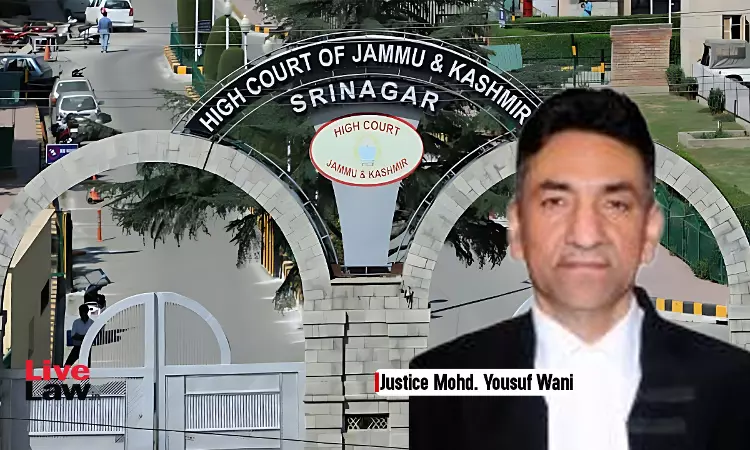
The Jammu & Kashmir and Ladakh High Court has permitted termination of the pregnancy of a 17-year-old minor rape survivor, observing that the Medical Termination of Pregnancy Act, 1971 and the Rules framed thereunder already provide a complete mechanism for dealing with such cases, yet the minor's mother was constrained to approach the High Court for appropriate directions.The Court...
This is a premium content
Available exclusively to
Our subscribers
Subscribe Premium 
INR 1099+GST
Your support helps us to bring you more content at
an affordable subscription scheme !!!
All payment options available
The Jammu & Kashmir and Ladakh High Court has permitted termination of the pregnancy of a 17-year-old minor rape survivor, observing that the Medical Termination of Pregnancy Act, 1971 and the Rules framed thereunder already provide a complete mechanism for dealing with such cases, yet the minor's mother was constrained to approach the High Court for appropriate directions.
The Court was hearing a petition filed by the minor victim through her mother as next friend under Article 226 of the Constitution read with Section 3 of the Medical Termination of Pregnancy Act, 1971. The pregnancy, reported to be more than four months, was stated to be a direct consequence of sexual assault, in respect of which FIR that had been registered under the POCSO Act.
Justice Mohd Yousuf Wani observed,
“It is astonishing that when the Medical Termination of Pregnancy Act, 1971, and the rules framed thereunder provide for a complete mechanism and the manner under which the medical termination of pregnancy is permitted and to be undertaken, how the mother of the minor victim has been constrained to approach this Court to seek the appropriate directions.”
Background:
The minor victim, aged about 17 years, was reported to be carrying a pregnancy of more than four months, which was stated to be causing her serious mental trauma. FIR had been registered under Sections 3/4 and 5/6 of the POCSO Act, and the accused had been taken into custody.
The Child Welfare Committee, after interacting with the victim and her family, considered that immediate legal, medical and psychological protection and support were required. The victim was medically examined and her pregnancy was initially found to be approximately four months old. Her parents/guardians expressed their unequivocal consent for termination, considering it to be in her best interests.
The mother consequently approached the High Court seeking permission for immediate medical termination, constitution/arrangement of an appropriate Medical Board, urgent medical opinion regarding safe termination, confidential treatment with medical and psychological care, protection of the victim's identity and privacy, and State-funded medical and post-operative expenses.
Counsel for the petitioner submitted that the case involved the minor's dignity, bodily integrity, decisional autonomy, privacy, mental well-being and welfare. It was also argued that pregnancy resulting from sexual assault could not be viewed as an ordinary medical circumstance and that continuation of the pregnancy could prolong the physical and psychological consequences of the alleged offence.
The respondents did not oppose appropriate orders being passed strictly in accordance with law.
Court's Observation:
Adjudicating the matter Justice Wani noted that the MTP Act permits termination in specified circumstances and that Section 3, read with the applicable Rules, contains provisions concerning termination up to 24 weeks for prescribed categories including survivors of sexual assault or rape and minors.
The Court specifically took note of Explanation 2 to Section 3(2), under which, where pregnancy is alleged by the pregnant woman to have been caused by rape, the anguish caused by the pregnancy is presumed to constitute grave injury to her mental health.
It further noted that the Medical Board mechanism under the statutory framework was already available. The Court reproduced Rule 3A of the 2003 Rules, which sets out the powers and functions of the Medical Board, including examination of the woman, obtaining additional investigations where necessary, furnishing its opinion and ensuring that the procedure, when advised, is carried out with safety precautions and appropriate counselling.
Against this statutory framework, the Court expressed concern over the fact that the minor's mother had nevertheless been required to approach the Court. The Court observed,
“The Chief Medical Officer, Kargil/Medical Superintendent, Government District Hospital, Kargil, one among whom is supposed to be the Chairperson of the District Level Board constituted under the Act, should have earlier addressed the problem strictly in accordance with the Medical Termination of Pregnancy Act, 1971, and the rules framed thereunder.”
The Court further noted that the case was not one in which the District Level Board, having regard to the gestational age, could simply have expressed its inability to act.
The Court found that continuation of the pregnancy was likely to cause grave injury to the minor's physical and mental health. It specifically applied the statutory presumption contained in Explanation 2 to Section 3(2), observing that the pregnancy in the present case was alleged to have resulted from rape.
The Court also took note of the material showing that the fetus had not exceeded 24 weeks, while observing that the minor had reportedly undergone two failed attempts at termination. The Medical Superintendent had indicated that surgical intervention might be required and that arrangements for fresh blood donors might be necessary.
In view of the sensitivity and urgency of the matter, the Court held that the case could be disposed of at that stage by issuing directions in accordance with the governing law.
In view of these findings the Court consequently invoked its extraordinary jurisdiction under Article 226 and permitted termination of the minor's pregnancy through a recognised and approved medical procedure.
Accordingly, the Court permitted the minor victim to undergo medical termination of pregnancy. The petition was accordingly allowed and disposed of.
Case Title: Minor Victim (X) Through Her Natural Guardian/Mother v. Union Territory of Ladakh
Citation: 2026 LiveLaw (JKL) 427
Appearances
Petitioner: Aasifa Rashid, Advocate
Respondents: Shagufta Maqbool, Advocate vice T.M. Shamsi, DSGI


