



- Home
- /
- High Courts
- /
- High Court of J & K and Ladakh
- /
- 'Perfect Compensation Is Hardly...
'Perfect Compensation Is Hardly Possible': J&K&L High Court Says MACT Must Restore Accident Victim To Pre-Accident Position In Fair Manner
LIVELAW NEWS NETWORK
25 Sept 2026 10:00 AM IST
The Jammu & Kashmir and Ladakh High Court has observed that while “perfect compensation is hardly possible”, Motor Accident Claims Tribunals must bear in mind that an accident victim has committed no wrong and should, as far as money can reasonably achieve it, be restored to the position he occupied before the accident.“Therefore, though perfect compensation is hardly possible but...
This is a premium content
Available exclusively to
Our subscribers
Subscribe Premium 
INR 1099+GST
Your support helps us to bring you more content at
an affordable subscription scheme !!!
All payment options available
The Jammu & Kashmir and Ladakh High Court has observed that while “perfect compensation is hardly possible”, Motor Accident Claims Tribunals must bear in mind that an accident victim has committed no wrong and should, as far as money can reasonably achieve it, be restored to the position he occupied before the accident.
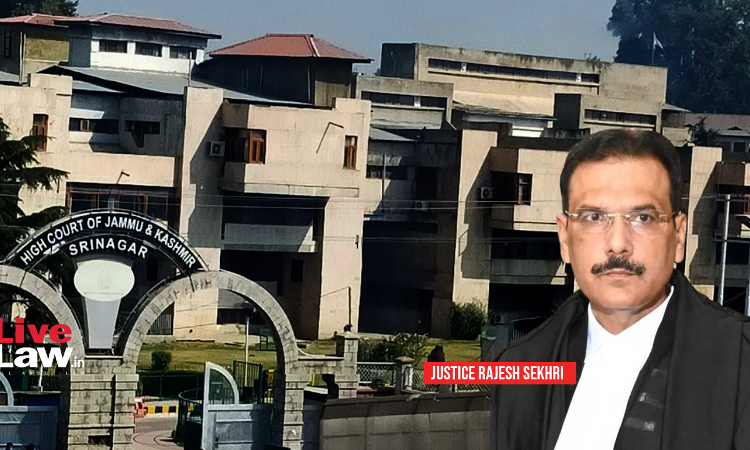
“Therefore, though perfect compensation is hardly possible but one has to keep in mind that victim has done no wrong and since he has suffered at the hands of the wrongdoer, tribunals must take care to put him in the same position as he was in prior to the accident and make the loss good, as far as money can do, but in a fair and reasonable manner,” Justice Rajesh Sekhri observed.
The Court made the observations while partly allowing an appeal filed by Bajaj Allianz General Insurance Company against an award of the Motor Accident Claims Tribunal, Srinagar. It reduced the compensation awarded to the claimant towards pain, suffering and loss of amenities from ₹5 lakh to ₹50,000, and reduced the rate of interest from 9.5% to 6% per annum.
The case arose from an accident when a motorcycle carrying two persons was hit by a Tavera. Both occupants of the motorcycle sustained injuries. The cousin of respondent No.1, who was driving the motorcycle, suffered 50% permanent disability, while Aijaz Ahmad Najar, who was riding pillion, was assessed to have suffered 5% disability.
The Tribunal awarded compensation to both claimants, including ₹5 lakh each as non-pecuniary damages for pain and suffering and trauma, with interest at 9.5% per annum. The insurance company challenged the award only insofar as it related to the ₹5 lakh non-pecuniary compensation granted to Najar and the rate of interest.
The insurer argued that Section 168 of the Motor Vehicles Act requires the Tribunal to determine compensation that is “just and reasonable” and that compensation cannot become a windfall or bonanza for the victim.
The High Court agreed that assessment of compensation involves a degree of guesswork and hypothetical consideration, coupled with an element of sympathy depending upon the nature of disability. However, it stressed that these considerations must be applied objectively.
Justice Sekhri observed that while assessing compensation for pain, suffering and loss of amenities, Tribunals must consider factors including the victim's age, percentage of disability, actual medical expenses, loss of earnings during treatment and loss of future earnings arising from permanent disability.
The Court said Tribunals must strike a balance between inflated claims by victims and unreasonable claims by insurance companies that nothing is payable. “In other words,” the Court held, compensation “should neither be a pittance or a windfall or a bonanza for the victim.”
The bench relied upon the Supreme Court's judgment in Raj Kumar v. Ajay Kumar, (2011) 1 SCC 343, which explained that an award of compensation should, to the extent possible, adequately restore the claimant to the position prior to the accident.
The Supreme Court had held that damages should make good the loss suffered as a result of the wrong “as far as money can do so, in a fair, reasonable and equitable manner”, while requiring Courts and Tribunals to assess damages objectively and avoid speculation or fanciful calculations.
The judgment further distinguishes between pecuniary damages.including treatment expenses, loss of earnings and future medical expenses and non-pecuniary damages such as pain and suffering, loss of amenities and loss of expectation of life.
Applying these principles to the case, the Court found that the ₹5 lakh award towards non-pecuniary damages was excessive.
The claimant had examined the Doctor who had examined him along with the orthopaedician and Chief Medical Officer of the Medical Board. Although the doctor initially referred to 5% permanent disability, he clarified during cross-examination that the disability was curable, was not permanent and did not affect the claimant's livelihood.
The claimant had also stated that he had been taken to Baramulla Hospital after the accident and that he was able to walk.
The Court accordingly held that the evidence established that the 5% disability was neither permanent nor adversely affecting the claimant's livelihood, and these circumstances ought to have guided the Tribunal while determining compensation for pain, suffering and loss of amenities.
The Court also took note of the fact that the Tribunal had adopted the same yardstick of ₹5 lakh towards pain and suffering for both claimants, despite their disabilities being markedly different—50% in the case of the motorcycle driver and 5% in the case of the pillion rider.
Against this backdrop, the High Court concluded that the compensation and interest awarded to Najar were “not only unfair and unreasonable but illegal” and required interference.
Allowing the appeal, the Court modified the Tribunal's award and held that respondent No.1 would be entitled to ₹50,000 as non-pecuniary damages for pain and suffering and loss of amenities.
The Court further directed that the entire compensation amount be paid by the insurance company with interest at 6% per annum from the date of filing of the claim petition until realization.
Case Title: Bajaj Allianz General Insurance Company v. Aijaz Ahmad Najar & Ors.
Citation: 2026 LiveLaw (JKL) 419


