



Postal Receipt Alone Cannot Establish Service Of Court Summons: J&K&L High Court
LIVELAW NEWS NETWORK
24 Oct 2026 1:50 PM IST
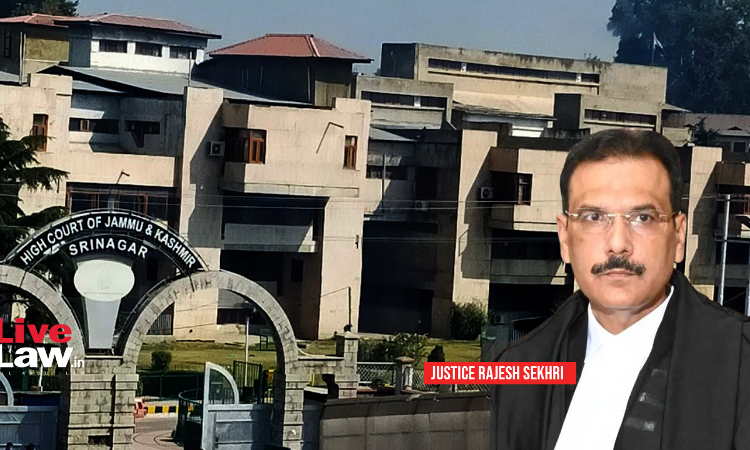
The Jammu & Kashmir and Ladakh High Court has held that a postal receipt by itself does not establish due service of a court summons, setting aside an order rejecting the government's plea to condone a 110-day delay in seeking to set aside an ex-parte decree.
Justice Rajesh Sekhri observed that before raising a presumption of service under Section 27 of the General Clauses Act, 1897, and Section 114 of the Indian Evidence Act, 1872, a court must satisfy itself that the summons was properly addressed and sent to the correct address. A postal receipt, the Court said, only establishes that the article was handed over to the post office and does not, by itself, verify that it reached its destination.
The Court also held that where the dispute concerns alleged encroachment on State land, the public interest involved warranted condonation of the delay so that the parties could contest the matter on merits.
The Court was hearing an appeal filed by the Union Territory of Jammu and Kashmir and its officials against an order of the Additional District Judge, Srinagar, dismissing their application for condonation of delay in filing an application to set aside an ex-parte judgment and decree directing payment of ₹20 lakh in damages.


The dispute arose from a suit filed by Mehmooda Shaheen Medical Trust Hospital, through its chairman, seeking damages from government authorities following the demolition of a structure at Tulsi Bagh, Srinagar.
The respondent had earlier instituted a suit seeking a permanent injunction to restrain the authorities from demolishing the structure. Subsequently, after the High Court permitted the authorities to take steps for removal of an alleged unauthorised occupation or obstruction on a public road, a demolition order was issued under Section 7 of the Jammu and Kashmir Public Premises (Eviction of Unauthorized Occupants) Act, 1959.
After the challenge to the demolition order was dismissed, the structure was demolished with police assistance.
The respondent thereafter filed a suit seeking ₹80 lakh in damages. On December 18, 2012, the Additional District Judge, Srinagar, passed an ex-parte decree directing the authorities to pay ₹20 lakh, along with simple interest at 6% per annum.
The government authorities subsequently sought to set aside the ex-parte decree, along with an application seeking condonation of a 110-day delay. They maintained that they had not received summons in the original proceedings and learnt about the suit only on April 25, 2013, when they received a summons in the execution proceedings.
They further stated that they contacted their standing counsel, obtained certified copies on May 7, 2013, and filed the application to set aside the decree on May 9, 2013.
The trial court rejected the application for condonation of delay, relying on postal receipts showing that summons had been sent to the authorities. Aggrieved, the government approached the High Court.
Court's Observations
Justice Sekhri noted that the trial court had rejected the application primarily because postal receipts were available on record, without recording the requisite satisfaction regarding the proper addressing and dispatch of the summons before proceeding ex parte.
The Court observed,
“A postal receipt proves only dispatch or posting, not actual or due delivery of the item, though it triggers a rebuttable presumption of service under law.”
Explaining the legal position, the Court noted that Section 27 of the General Clauses Act and Section 114 of the Indian Evidence Act permit a presumption of delivery where a document is properly addressed, prepaid and sent by registered or speed post. However, before invoking that presumption, the court must record a finding that the summons was properly addressed and sent to the correct address of the addressee.
The Court observed that a postal receipt, in the absence of such satisfaction, would only confirm that the article was handed over to the post office with the correct address and prepaid charges. It would not establish that the envelope actually reached its destination.
The Court further noted that where service is disputed, evidence such as an India Post tracking report showing delivery, a signed acknowledgement card or official postal remarks on a returned cover may help establish whether the summons was duly served.
In the present case, the government authorities had produced three witnesses who stated that they had not received any notice or summons and that the department learnt about the proceedings only upon receiving notice in the execution petition.
The Court found that the trial court had rejected the application solely on the basis of postal receipts. It also noted that the trial court had neither recorded the required satisfaction regarding proper addressing and dispatch of the summons before proceeding ex parte nor dealt with this aspect while deciding the application for condonation of delay.
The Court also took note of the government's contention that the respondent had encroached upon State land. It observed that, having regard to the public interest involved, the trial court ought to have condoned the delay and allowed the parties to contest the matter.
Allowing the appeal, the High Court set aside the order and condoned the 110-day delay in filing the application to set aside the ex-parte proceedings. The trial court was directed to consider the application seeking to set aside the ex-parte judgment and decree after affording both sides a reasonable opportunity of being heard. The High Court did not itself set aside the decree or decide the underlying damages dispute.


