



- Home
- /
- High Courts
- /
- High Court of J & K and Ladakh
- /
- Admission Of Issuing Cheque Alone...
Admission Of Issuing Cheque Alone Can't Be Treated As Plea Of Guilt In S.138 NI Act Case: J&K&L High Court
LIVELAW NEWS NETWORK
22 July 2026 11:40 AM IST
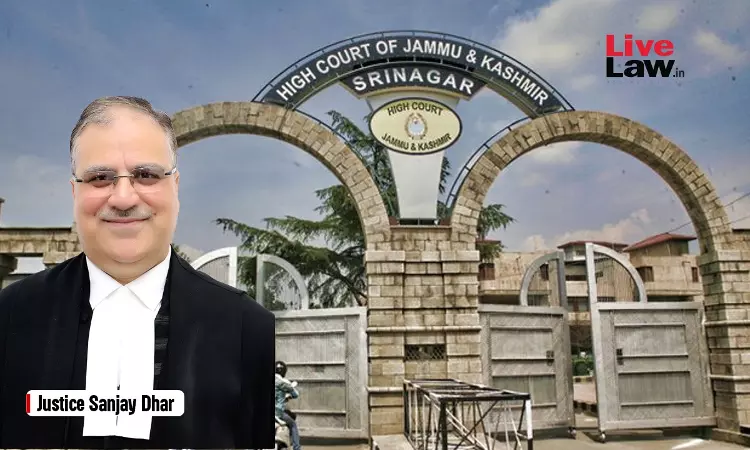
Delineating the limits of summary criminal procedure, the High Court of Jammu & Kashmir and Ladakh has held that a defence disclosed by an accused while recording his plea under Section 251 of the Code of Criminal Procedure cannot be converted into a plea of guilt merely because the accused admits issuing the cheque or expresses willingness to settle accounts.The Court ruled that unless...
This is a premium content
Available exclusively to
Our subscribers
Subscribe Premium 
INR 1099+GST
Your support helps us to bring you more content at
an affordable subscription scheme !!!
All payment options available
Delineating the limits of summary criminal procedure, the High Court of Jammu & Kashmir and Ladakh has held that a defence disclosed by an accused while recording his plea under Section 251 of the Code of Criminal Procedure cannot be converted into a plea of guilt merely because the accused admits issuing the cheque or expresses willingness to settle accounts.
The Court ruled that unless the admission is voluntary, unqualified, unequivocal and covers every constituent ingredient of the offence, the Magistrate is duty-bound to proceed with the trial instead of recording a conviction on the assumption that the accused has confessed.
Justice Sanjay Dhar made these observations while allowing a criminal revision petition filed by one Adil Ahmad Sofi, setting aside the judgments of the Judicial Magistrate 1st Class, Chadoora, and the Principal Sessions Judge, Budgam, which had convicted him under Section 138 of the Negotiable Instruments Act without recording evidence, solely on the basis of his statement under Section 251 CrPC.
As a preclude to the proceedings before the High court the respondent had instituted a complaint under Section 138 of the Negotiable Instruments Act alleging dishonour of a cheque for ₹9.60 lakh, claiming the amount represented dues arising out of business transactions between the parties.
When the petitioner appeared before the Trial Magistrate, he admitted having issued the cheque but asserted that it had been handed over merely as a security cheque during business dealings. He further maintained that the parties had unsettled accounts, claiming that while the respondent had invested ₹9.60 lakh, he himself had invested ₹30.40 lakh, and stated that he would pay any outstanding amount only after receiving his own share from the respondent.
Treating this statement as an admission of guilt, the Trial Magistrate convicted the petitioner under Section 138 of the Negotiable Instruments Act and sentenced him to one year's simple imprisonment besides imposing a fine of ₹19.20 lakh payable as compensation. The conviction was affirmed in appeal by the Principal Sessions Judge, Budgam.
Allowing the revision petition, the High Court undertook an extensive examination of the scheme of Sections 251 and 252 CrPC, observing that although a summons case does not require framing of a formal charge, the statutory safeguards surrounding a plea of guilt are mandatory because a conviction based on such plea substantially curtails the accused's appellate remedies. Justice Dhar observed,
"Unless an accused makes an unqualified, unambiguous, clear and voluntary admission of accusations levelled against him, he cannot be convicted of the offences alleged."
The Court further emphasised that the statutory procedure is not an empty formality but an indispensable safeguard against erroneous convictions.
Referring to Mahant Kaushalya Das v. State of Madras, the Court underscored that strict compliance with Section 252 CrPC is mandatory because a conviction on a plea of guilt deprives the accused of the valuable statutory right of appeal under Section 375 CrPC. The Court also relied upon New Raginaya Goods Mart v. State, Waheed Hussain v. Mohammad Farooq Rangrez, all of which emphasised that only an unequivocal admission of every ingredient of the offence can justify conviction without trial.
Applying these principles, Justice Dhar found that the petitioner's statement fell far short of a confession. The Court observed,
"The only admission which he has made is with regard to issuance of cheque and the signatures appearing on the said cheque. Beyond this, he has not admitted anything. The petitioner has not admitted that there is a legally enforceable debt due to the respondent from him, nor has he admitted that he is going to pay the cheque amount to the respondent unconditionally."
The Court further held that the Trial Magistrate had failed to even put all the essential ingredients of the offence to the accused while recording his plea under Section 251 CrPC. In particular, the allegation relating to service of the statutory demand notice, an indispensable ingredient of an offence under Section 138 of the Negotiable Instruments Act, was never put to the petitioner.
"The alleged admission made by the petitioner in his statement under Section 251 of the Cr. P. C is not unqualified, unambiguous and unconditional. On the basis of such a statement, it was not open to the learned Trial Magistrate to record conviction of the petitioner”, Justice Dhar remarked.
Rejecting the respondent's contention that payment of ₹50,000 during pendency of the complaint amounted to an admission of liability, the Court held that a part payment or an attempt to amicably settle accounts cannot substitute the statutory requirement of an unequivocal plea of guilt, particularly where the accused consistently disputes the existence of a legally enforceable debt.
The Court also held that the Appellate Court had acted without jurisdiction, observing that since Section 375 CrPC bars an appeal against a conviction founded upon a plea of guilt, the Sessions Court could not have entertained the appeal after treating the conviction as one based on such plea.
Holding that both the Trial Magistrate and the Appellate Court had committed manifest legal error, the High Court allowed the revision petition, set aside the impugned judgments and remanded the complaint to the Trial Magistrate for proceeding with the case afresh in accordance with law.
Case Title: Adil Ahmad Sofi v. Javid Ahmad Sofi
Citation: 2026 LiveLaw (JKL) 313


