



Section 151 CPC Can Permit Additional Evidence After Closure Of Trial If Necessary In Interests Of Justice: J&K&L High Court
LIVELAW NEWS NETWORK
7 Oct 2026 10:20 AM IST
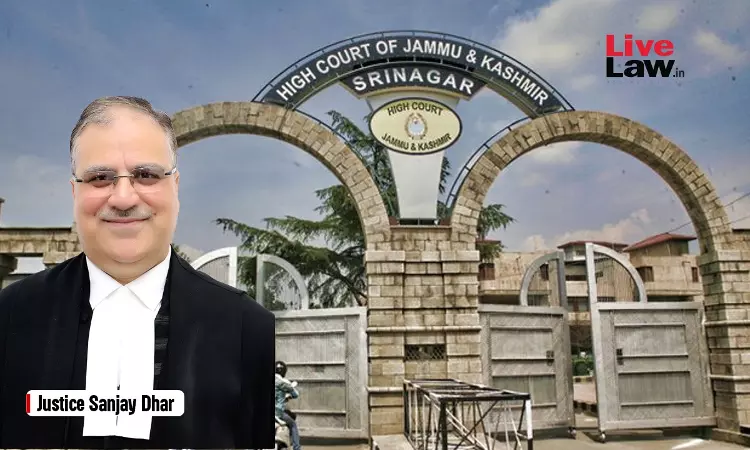
The Jammu & Kashmir and Ladakh High Court has held that while Order XVIII Rule 17 CPC can be invoked to recall a witness for clarifying doubts arising from the evidence already led, Section 151 CPC can be exercised in an appropriate case to permit additional evidence even after closure of evidence, where such evidence is relevant and necessary in the interests of justice.
The Court, however, clarified that the inherent power under Section 151 CPC cannot be invoked routinely, and that the power under Order XVIII Rule 17 CPC cannot be used to fill lacunae in evidence or to reopen a party's case for further examination and cross-examination.
The Court was hearing a petition filed by one Mangat Ram challenging an order of the Family Court, Jammu, which had permitted his wife to recall him for examination and produce two additional witnesses after the parties had concluded their evidence and the matter had been listed for final arguments.
Justice Sanjay Dhar observed, “It is also clear that, for the purposes of producing any additional evidence which a party comes across after the evidence was closed, the Court has the power under Section 151 CPC to permit such party to lead additional evidence in an appropriate case, if it is necessary in the interests of justice.”


The petitioner had instituted proceedings under Section 13 of the Hindu Marriage Act seeking dissolution of marriage on the grounds of desertion and non-compliance with a decree under Section 9 of the Act. He had also alleged cruelty on the part of the respondent.
The respondent, after conclusion of evidence and when the matter had been fixed for final arguments, sought recall of the petitioner and some of his witnesses and permission to examine Raman Kumar and Priya Rani as additional witnesses.
According to the respondent, she had recently learnt that the petitioner had entered into a second marriage with Laxmi Devi during the subsistence of their marriage and that Priya Rani was born from that relationship.
The petitioner opposed the application, contending that there was no justification for reopening the evidence and that the Family Court had also imposed costs of ₹10,000 upon him without first determining whether he had in fact contracted the alleged second marriage.
Court's Observations:
The Court examined the scope of Order XVIII Rule 17 CPC, which empowers a Court to recall a witness already examined and put such questions to the witness as it considers appropriate.
Relying upon Vadiraj Naggappa Vernekar v. Sharadchandra Prabhakar Gogate (2009), the Court observed that the power under Order XVIII Rule 17 CPC is to be exercised sparingly and in appropriate cases. It is intended to enable the Court to clarify doubts arising from the evidence and not to allow a party to fill lacunae in the evidence already recorded, the bench underscored.
The Court noted that the Supreme Court in K.K. Velusamy v. N. Palanisamy (2011) had also clarified that Order XVIII Rule 17 CPC is not intended to enable parties to recall witnesses for further examination-in-chief or cross-examination or to introduce additional material which could not be produced when evidence was being recorded.
The High Court observed, “The provision cannot be used to fill up the lacunae or omissions in the testimony of a witness who has already been examined.”
The Court thereafter considered the scope of Section 151 CPC, which preserves the inherent powers of the Court to make orders necessary for the ends of justice or to prevent abuse of the process of the Court.
It noted that while Order XVIII Rule 17 CPC specifically deals with recall of a witness for clarification, the Code does not contain a specific provision dealing with reopening of evidence for the purpose of permitting additional evidence in every situation.
Relying again on K.K. Velusamy (2011), the Court held that Section 151 CPC can be invoked in appropriate cases for reopening evidence or recalling witnesses, but the power cannot be exercised routinely.
The Court further referred to the Supreme Court's principles governing Section 151 CPC, including that the provision does not create or confer jurisdiction but recognises the inherent power of a Court to do what is necessary to secure the ends of justice and prevent abuse of process.
It also noted that where the Code contains an express or implied provision dealing with a particular matter, the inherent power cannot be exercised in a manner inconsistent with that provision.
The Court emphasised that the exercise of inherent power requires caution and that the absence of an express provision in the Code cannot be treated as a carte blanche for granting relief.
The Court observed, “The power under section 151 will have to be used with circumspection and care, only where it is absolutely necessary, when there is no provision in the Code governing the matter, when the bona fides of the applicant cannot be doubted, when such exercise is to meet the ends of justice and to prevent abuse of process of court.”
Applying these principles to the case, the Court examined the respondent's claim that she had recently learnt about the petitioner's alleged second marriage with Laxmi Devi.
The petitioner contended that the respondent already knew about his alleged second marriage because she had earlier filed a complaint under Section 494 RPC against him in 1997. The Court noted, however, that the earlier complaint concerned an allegation that the petitioner had married Bholi Devi, whereas the present allegation concerned Laxmi Devi.
The respondent had produced several documents along with her application, including the Aadhaar Card of Priya Rani showing the petitioner as her father, a petition under Section 12 of the Hindu Marriage Act filed by Priya Rani against Raman Kumar, and a marriage agreement between Raman Kumar and Priya Rani, all of which prima facie showed Priya Rani to be the petitioner's daughter.
The Court held that if it was ultimately established after trial that the petitioner had entered into the alleged second marriage during the subsistence of his marriage with the respondent, the fact could have a bearing on whether the respondent was justified in not joining the petitioner's company. It could also constitute a defence to the allegations of cruelty made against her.
The Court observed that the evidence sought to be produced concerned the conduct of the petitioner and was relevant to the issues involved in the matrimonial proceedings. It therefore held that the Family Court was justified in permitting the respondent to produce the additional evidence under Section 151 CPC.
The High Court also found it necessary to recall the petitioner under Order XVIII Rule 17 CPC so that the Court could elicit the requisite information and clarify the doubts arising from the evidence concerning the alleged second marriage.
The High Court consequently held that recalling those witnesses would serve no purpose and that the Family Court's order was not sustainable to that extent.
The Court also examined the direction imposing ₹10,000 costs upon the petitioner for allegedly concealing information regarding his second marriage. It held that such a finding could not be recorded at that stage because the alleged second marriage itself had yet to be established through evidence.
The Court observed that only after the respondent produced Raman Kumar and Priya Rani as witnesses and the petitioner was recalled for examination could the trial court record a finding regarding the alleged second marriage. Until then, it could not be stated that the petitioner had concealed the fact of such marriage.
Accordingly, the High Court partly allowed the petition. It set aside the Family Court's order insofar as it imposed costs of ₹10,000 upon the petitioner and insofar as it directed recall of PWs Sansar Chand and Prem Nath.
Case Title: Mangat Ram v. Shano Devi
Citation: 2026 LiveLaw (JKL)
Appearances
Petitioner: Abhishek Wazir, Advocate, with Rajat Sudan, Advocate.
Respondent: Subodh S. Jamwal, Advocate.


