



- Home
- /
- High Courts
- /
- High Court of J & K and Ladakh
- /
- Status Quo Violation Must Be Dealt...
Status Quo Violation Must Be Dealt Under Order 39 Rule 2(A) CPC, Not Section 164 BNSS: J&K High Court
LIVELAW NEWS NETWORK
18 Sept 2026 5:30 PM IST
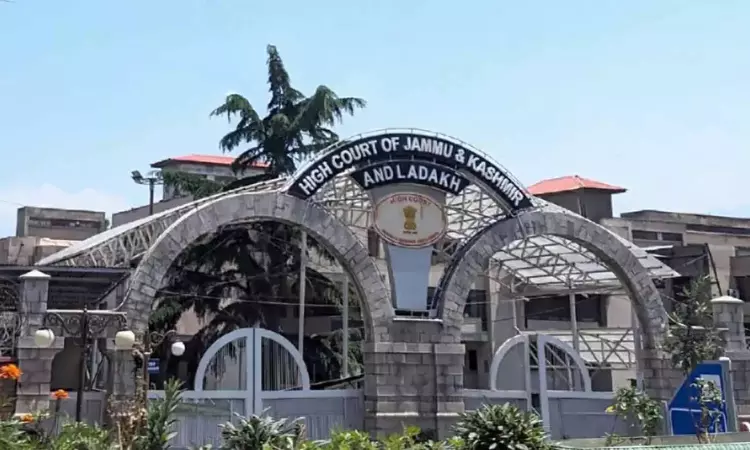
The High Court of Jammu & Kashmir and Ladakh has held that a violation of a Civil Court's status quo order must be dealt with under Order 39 Rule 2(A) of the Code of Civil Procedure, 1908, and not by resorting to proceedings under Section 164 of the Bharatiya Nagarik Suraksha Sanhita, 2023.The Court observed that when possession of a party was protected by an interim order of the Civil...
This is a premium content
Available exclusively to
Our subscribers
Subscribe Premium 
INR 1099+GST
Your support helps us to bring you more content at
an affordable subscription scheme !!!
All payment options available
The High Court of Jammu & Kashmir and Ladakh has held that a violation of a Civil Court's status quo order must be dealt with under Order 39 Rule 2(A) of the Code of Civil Procedure, 1908, and not by resorting to proceedings under Section 164 of the Bharatiya Nagarik Suraksha Sanhita, 2023.
The Court observed that when possession of a party was protected by an interim order of the Civil Court, there was no occasion for the Executive Magistrate to initiate proceedings under Section 164 BNSS.
The Court was hearing a Letters Patent Appeal filed by Mumtaz Mehraj and another challenging the order and judgment passed by the Single Judge in a writ petition whereby the it had allowed the writ petition of respondent, declared the entire proceedings initiated by the Executive Magistrate 1st Class, Harwan at the instance of SHO Police Station Harwan as illegal, and set aside certain orders.
A Division Bench of Acting Chief Justice Sanjeev Kumar and Justice Mohd Yousuf Wani, while allowing the appeal, observed,
"In these circumstances when there was no dispute with regard to the possession of the suit property and the Court had protected such possession by issuing order of status quo, there was no reason or occasion for invocation of Section 164 BNSS. The attempt by one of the parties to violate the order of status quo which is clear and unequivocal and has been passed after prima facie finding a particular party in possession, is nothing but disobedience and violation of the interim order, is to be dealt with under Order 39 Rule 2(A) CPC and not by having resort to provisions of Section 164 BNSS as has happened in the instant case."
The Court further observed,
"The subsequent attempt, if any, made by the respondent Nos. 6 & 7 herein or the police, to violate that order of status quo was nothing short of disobedience of order passed by the Civil Court to be dealt with under Order 39 Rule 2(A) CPC and was not a case for initiating proceedings under Section 164 BNSS."
Background
Respondent Nos. 6 and 7 filed a civil suit for possession and injunction against the appellants and official respondents before the Civil Court. The Civil Court directed appellant No. 1 to maintain status quo qua the suit property situated at Harwan, Srinagar.
The appellants filed an application under Order 39 Rule 2(A) CPC alleging that respondent No. 7 had violated the interim order. It was alleged that on the intervening night of 7th and 8th January 2026, respondent Nos. 6 and 7, with the help of their henchmen and using illegal force, entered the suit property to take over possession forcibly from appellant No. 1. Subsequently FIR under Sections 331(4), 305 and 324(4) BNS was registered at Police Station Harwan against respondent Nos. 6 and 7.
The SHO Police Station Harwan took over possession of the suit property and kept it under his lock and key, requesting the Executive Magistrate 1st Class, Harwan to initiate proceedings under Section 164 BNSS. The Executive Magistrate ordered temporary attachment and sealing of the suit property. The proceedings culminated into an order directing restoration of possession in favour of appellant No. 1, after returning a finding that appellant No. 1 had remained in actual, peaceful, settled and continuous possession of the subject land since 2007.
This order was challenged by respondent Nos. 6 and 7 in a writ petition. The Writ Court concluded that the proceedings initiated by the Executive Magistrate at the instance of SHO were not in consonance with Section 164 BNSS and set them aside. The Writ Court, however, directed the Civil Court to place the subject land in attachment with the Nazir of the Court of Principal District Judge, Srinagar. Aggrieved, the appellants filed the present appeal.
Court's Observation
The Division Bench examined the pleadings and found that when the suit was filed by respondent Nos. 6 and 7 before the Civil Court, they were out of possession of the suit land. The Court observed,
"Admittedly, when the suit was filed by the respondents 6 & 7 before the Civil Court, they were out of possession of the suit land. This is so evident from the pleadings in the plaint and the prayer made therein."
The Court noted that the prayer clause of the suit sought a decree of possession and mandatory injunction against the official defendants seeking recovery of state land from defendant No. 4 and restoration of possession with the plaintiffs. The Court observed,
"From the perusal of the prayer clause, it is beyond any shadow of doubt that the respondent Nos. 6 & 7 admitted the appellant No. 1 to be in possession of the suit property. It is because of this reason the suit was essentially for recovery of possession from the defendant No. 4/appellant No. 1 herein."
The Court further observed that the Civil Court's interim order did not provide for directing both parties to maintain status quo, but unequivocally directed appellant No. 1 to maintain status quo in respect of the suit property. The Court observed: "The order of status quo dated 29.10.2025, thus protected the suit property."
The Court held that in these circumstances, there was no reason or occasion for invocation of Section 164 BNSS. The Court observed,
"The attempt by one of the parties to violate the order of status quo which is clear and unequivocal and has been passed after prima facie finding a particular party in possession, is nothing but disobedience and violation of the interim order, is to be dealt with under Order 39 Rule 2(A) CPC and not by having resort to provisions of Section 164 BNSS."
The Court further observed,
"We reiterate that the possession of the defendant No. 4/appellant No. 1 herein over the suit property is not in dispute as it is the categoric and emphatic case of the respondent No. 6 & 7 {the plaintiffs} that they are out of possession of the suit property, and, therefore, pray for a decree of possession."
The Court held that the Writ Court was correct in concluding that the entire proceedings initiated by the Executive Magistrate were illegal and uncalled for. However, the Court found that the direction to place the suit property under attachment of the Nazir was flawed.
The High Court thus allowed the appeal and quashed and set aside the order of the Writ Court insofar as it directed the suit property to be placed under attachment with the Nazir of the Court of Principal District Judge, Srinagar.
The Court further directed the Trial Court to expedite the consideration of the main suit as well as the application for interim relief, clarifying that nothing said in the order shall prejudice either of the parties before the Trial Court.
Case Title: Mumtaz Mehraj and Another v. UT of J&K and Others
Citation: 2026 LiveLaw (JKL) 404
Appearances
Appellants: Mr. Shuja Ul Haq, Advocate
Respondents: Mr. Jehangir Iqbal Ganai, Sr. Advocate; Mr. Mushtaq Ahmad Dar, Advocate; Mr. Vakis Malik, Advocate
Click here to read/download Order


