



'Single Knife Blow During Sudden Argument Over Drinking Is Not Premeditated Murder': Jharkhand High Court
LIVELAW NEWS NETWORK
27 Oct 2026 7:45 PM IST
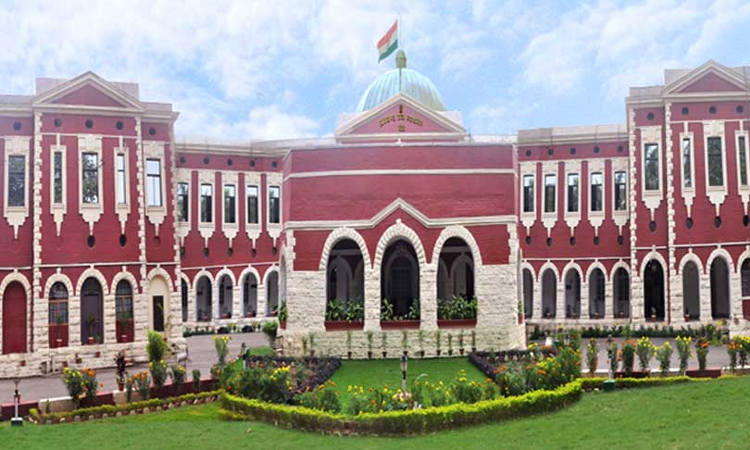
The Jharkhand HC has held that a single knife blow inflicted during a sudden argument, in the heat of passion and without premeditation, can fall within Exception 4 to Section 300 IPC, making the offence culpable homicide not amounting to murder. The Court converted the murder conviction of an 88-year-old father who fatally stabbed his son following an argument over his consumption of alcohol to an offence under Section 304 Part II IPC.
A Division Bench of Justice Ananda Sen and Justice Pradeep Kumar Srivastava observed that the assault occurred on the spur of the moment when the deceased questioned his father for consuming hariya, a locally brewed alcoholic drink. Considering the circumstances and the appellant's advanced age, the Court reduced his sentence to the period already undergone.
The Court was hearing an appeal challenging the judgment dated August 24, 2018, passed by the Additional Sessions Judge-III, West Singhbhum at Chaibasa, convicting Goma Gope under Section 302 IPC and sentencing him to life imprisonment with a fine of Rs.5,000.


According to the prosecution, on November 21, 2013, the appellant was at home consuming hariya when his 20-year-old son, Pratap Gope, returned and questioned him about his excessive drinking. An argument ensued between the two, during which the appellant allegedly picked up a vegetable-cutting knife and stabbed his son in the stomach. The injury caused the deceased's intestines to spill out, resulting in profuse bleeding and his death at the spot.
The incident was reported by the appellant's wife, Jema Gope, who was present in the house at the time. An FIR was subsequently registered under Section 302 IPC. Before the High Court, the appellant argued that he had been falsely implicated and that his conviction was based on conjectures and surmises. He also pointed to his prolonged incarceration.
The State opposed the appeal, submitting that the appellant had murdered his son with a knife and that blood-stained soil and the weapon had been recovered from the place of occurrence.
Examining the prosecution evidence, the High Court noted that none of the prosecution witnesses, apart from the informant-wife, had witnessed the incident.
The Bench considered whether the circumstances established murder under Section 302 IPC or whether the act fell within Exception 4 to Section 300 IPC, which concerns culpable homicide committed without premeditation in a sudden fight, in the heat of passion, subject to the conditions of that exception. The Court noted that the medical evidence established that only a single knife blow had been inflicted upon the deceased. It observed:
“From perusal of the medical evidence of the Doctor P.W.-4) and other evidences, it is evident that there was only one blow of knife, given to the deceased. The assault is not premeditated and it happened on the spur of the moment.”
The Bench further considered that the appellant was under the influence of hariya when his son suddenly returned home and questioned him about his drinking. It found that the altercation occurred spontaneously and that the appellant, in the heat of passion, inflicted the fatal injury without any premeditated intention to kill his son.
The Court observed that the prosecution had failed to establish any premeditation on the appellant's part. It noted that the quarrel arose suddenly when the deceased questioned his father's drinking and that the appellant reacted in the heat of the moment, without appreciating how dangerous the knife blow could be.
Considering the medical evidence, the nature of the assault and the circumstances in which the incident occurred, the Court concluded that although the act amounted to culpable homicide, it did not constitute murder. The Bench held:
“Considering the aforesaid facts and circumstances of the case, so also the medical report and the proximity of the death with the assault, we are of the opinion that though the case is of culpable homicide, but the same cannot be said to be a murder, thus the case of the appellant falls under Exception-4 of Section 300 IPC. Thus, we hereby convert the conviction from Section 302 IPC to Section 304 Part-II IPC.”
The High Court accordingly converted the conviction from murder under Section 302 IPC to culpable homicide not amounting to murder under Section 304 Part II IPC.
On the question of sentence, the Court noted that the appellant was approximately 80 years old when his statement under Section 313 CrPC was recorded and was now around 88 years old.
It also considered that he had remained in custody during the trial and was still incarcerated, having faced criminal proceedings spanning approximately 13 years. Taking into account his advanced age and the period already spent in custody, the High Court reduced the sentence to the period already undergone.
Appearance:
For the Appellant: Mrs. Alpana Verma, Advocate (Amicus Curiae)
For the State: Mr. Tarun Kumar, A.P.P.


