



- Home
- /
- High Courts
- /
- Jharkhand High Court
- /
- 'Dignified Renunciation Of Office...
'Dignified Renunciation Of Office Expected, Not Chase For Lost Briefs': Jharkhand High Court Dismisses Govt Pleader's Plea Against Termination
LIVELAW NEWS NETWORK
4 Sept 2026 2:55 PM IST
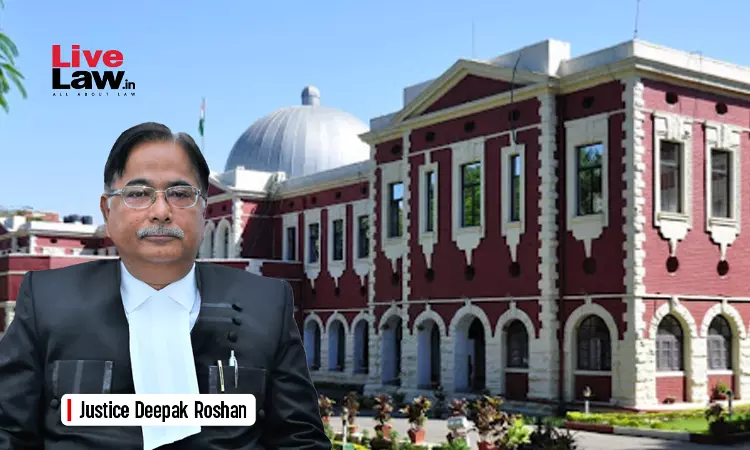
The Jharkhand High Court has observed that when the government ends the engagement of a government pleader, the appropriate response is a “dignified renunciation of office” rather than pursuing “lost briefs” through writ proceedings.A Single Judge Bench of Justice Deepak Roshan made the observation while dismissing a petition filed by a public prosecutor challenging the termination of...
This is a premium content
Available exclusively to
Our subscribers
Subscribe Premium 
INR 1099+GST
Your support helps us to bring you more content at
an affordable subscription scheme !!!
All payment options available
The Jharkhand High Court has observed that when the government ends the engagement of a government pleader, the appropriate response is a “dignified renunciation of office” rather than pursuing “lost briefs” through writ proceedings.
A Single Judge Bench of Justice Deepak Roshan made the observation while dismissing a petition filed by a public prosecutor challenging the termination of his engagement by the authorities.
The Court was dealing with a petition seeking quashing of the order dated July 8, 2026, whereby the petitioner's engagement as a public prosecutor was terminated. He had also sought a direction restraining the respondents from disturbing his engagement or giving effect to the termination order.
The petitioner submitted that he had been working as a counsel in the Additional Panel of Advocates for Animal Husbandry cases since his engagement by the respondents in 2003. He contended that he was handling several cases relating to the animal husbandry scam. His counsel also relied upon a September 18, 2013 communication issued by the Directorate of Prosecution, claiming that a change of counsel or transfer of officers could only be made with the permission of the High Court.
The petitioner further argued that he had not been given an opportunity of hearing before his engagement was terminated. He alleged that the action was discriminatory since other counsels engaged along with him continued to represent the respondents. It was also alleged that the action was mala fide as the petitioner, while acting as public prosecutor, had been calling upon the respondent to appear before the Court to give evidence. Relying on the Supreme Court's judgment in Kumari Shrilekha Vidyarthi v. State of U.P., the petitioner contended that public prosecutors could not be removed in violation of Article 14 of the Constitution.
Opposing the petition, the respondents submitted that the engagement was governed by a notification dated January 30, 1997 issued by the Ministry of Personnel, Public Grievances and Pensions. It was argued that Clause IV of the notification expressly provided that the appointment of counsel could be terminated by either side by giving one month's notice in writing. The respondents therefore contended that they could not be compelled to continue the services of a particular advocate and that the scope of interference under Article 226 was limited.
The High Court noted that the termination letter dated July 8, 2026 itself provided one month's notice and that the disengagement was to take effect from August 9, 2026. In these circumstances, the Court held that the notification dated January 30, 1997 clearly permitted termination of a counsel's services upon one month's written notice. Therefore, the petitioner's contention that the respondents lacked authority to terminate his appointment was without force.
The Court also rejected the reliance placed on the 2013 communication concerning animal husbandry cases, noting that the trials pertaining to those cases had already concluded. The Bench further distinguished Kumari Shrilekha Vidyarthi, observing that the Supreme Court case concerned the en bloc termination of government advocates and pleaders in the State of Uttar Pradesh.
The Court held that although the State remains bound by Article 14 even in contractual matters, the facts of the present case were different as the respondents had acted in accordance with the notification governing the petitioner's engagement. The Court also rejected the allegation of mala fide, observing that there was no document or proof on record to support the allegation. The Bench stated that “mere pleading without proof cannot be treated as evidence” and was insufficient to establish mala fides.
Before parting with the matter, the Court referred to the Supreme Court's judgment in Mundrika Prasad Singh v. State of Bihar and observed:
Before parting, this Court finds it necessary to refer to the judgement of Mundrika Prasad Singh Vs. State of Bihar (1979 INSC 192), where the Hon'ble Supreme Court has enunciated that if the government does an act of ending the public office filled by a government pleader, what becomes the incumbent in the land of Gandhi is a dignified renunciation of office, not a chase for lost briefs through the 'writ route'. Advocacy is a noble profession which requires the advocates, who are foremost officers of the Court, to conduct themselves in a dignified manner.”
Case Title: Shiva Kant Srivastava @ S.K. Srivastava v. Union of India and Ors.
Case Number: W.P.(S) No. 5780 of 2026
Appearance:
For the Petitioner(s): Mr. Rajeeva Sharma, Sr. Adv.; Mr. Devesh Krishna, Adv.; Mr. Gopal K. Sinha, Adv.
For the Respondent(s): Mr. Prashant Pallav, ASGI; Ms. Shivani Jaluka, A.C. to ASGI
Tags


