



Husband Insisting Wife Accept His Affair, Live With Other Woman As 'Younger Sister' Is Cruelty Of Gravest Kind: Jharkhand High Court
LIVELAW NEWS NETWORK
26 Oct 2026 12:18 PM IST
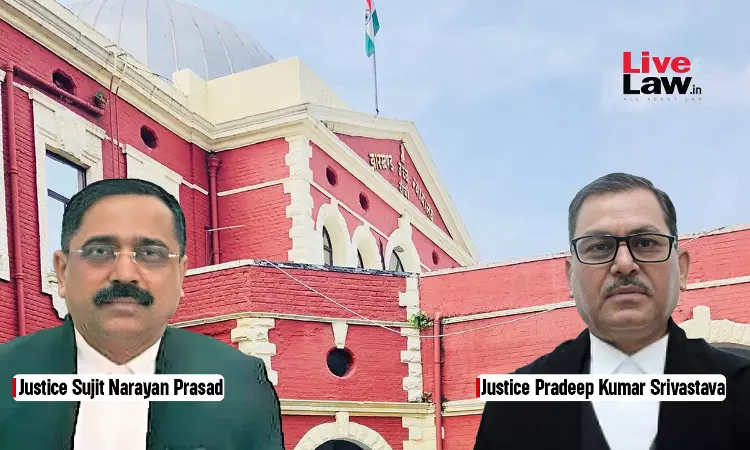
The Jharkhand HC has held that a husband insisting that his wife accept his extramarital relationship and live with the woman with whom he was having an affair as a “younger sister” amounts to mental cruelty of the gravest kind. The Court allowed the wife's appeal against the dismissal of her divorce petition and dissolved the marriage on the ground of cruelty.
A Division Bench of Justice Sujit Narayan Prasad and Justice Pradeep Kumar Srivastava observed that marriage is founded on mutual trust and respect, and that an extramarital relationship which destroys this trust can make it impossible for the spouses to continue living together.
The Court was hearing an appeal filed by a wife against the judgment dated November 17, 2023, passed by the Principal Judge, Family Court, Hazaribagh, dismissing her petition for divorce on the ground of cruelty under Section 13(1)(i-a) of the Hindu Marriage Act, 1955. The parties, both medical practitioners, were married on February 24, 2018, and subsequently lived together in Dhanbad. The husband was employed at the Primary Health Centre, Tundi, while the wife worked with Bharat Coking Coal Limited (BCCL). They had been living separately since September 5, 2019.


The wife alleged that her husband had developed an illicit relationship with a widow named Mousami Ghosh alias Julie. Following objections from the wife and intervention by family members, the husband allegedly executed a bond undertaking not to repeat such conduct. However, according to the wife, the relationship continued despite the assurance. She further alleged that her husband subjected her to repeated physical assaults with household implements, resulting in medical conditions including slip-disc and traumatic osteoarthritis.
The husband had instituted proceedings for restitution of conjugal rights in January 2022, which were decreed ex parte in January 2023. Meanwhile, the wife filed a divorce petition in April 2022, which the Family Court subsequently dismissed.
Examining the wife's testimony, the High Court found that the marital relationship had been marked by persistent cruelty. It noted that the husband had subjected her to physical assaults and continued his extramarital relationship despite family intervention and an assurance to discontinue it. Significantly, the Court considered the husband's insistence that his wife accept his relationship with Mousami Ghosh and live with her as a “younger sister”. The Court observed:
“The petitioner's testimony establishes that soon after the gauna ritual, the respondent began to ill-treat her, denied her cohabitation at Dhanbad, and subsequently subjected her to repeated physical assaults with household implements, resulting in serious medical conditions such as slip-disc and traumatic osteoarthritis. Her evidence further discloses the respondent's illicit relationship with one widow, Mousami Ghosh @ Julie, which, despite family intervention and execution of a bond of assurance, continued unabated. The respondent's insistence that the petitioner should accept such relationship and live with Mousami Ghosh as a 'younger sister' amount to mental cruelty of the gravest kind.”
The Bench found that the Family Court had failed to appreciate the evidence in its entirety and had instead examined it in a piecemeal manner. It held that the Family Court had overlooked the principle of preponderance of probabilities applicable to matrimonial proceedings, even though the pleadings and evidence disclosed cruelty.
The High Court further noted that the parties had admittedly been living separately since 2019. Referring to the Supreme Court's decision in Samar Ghosh v. Jaya Ghosh, it observed that prolonged separation could itself constitute mental cruelty.
The Bench emphasised that the husband's conduct in maintaining an illicit relationship had caused mental cruelty and compelled the wife to leave her matrimonial home, since the foundation of trust in the marriage had already been destroyed. The Court observed:
“Relationship of wife and husband is based on the trust and respect to have upon each other and if it is broken it is non-repairable as the trust is the foundation of marriage. Marriage is a relationship built on mutual trust, companionship and shared experience.”
The High Court accordingly found the Family Court's assessment of cruelty to be perverse, holding that it had failed to consider the cumulative effect of the husband's conduct and the evidence placed before it.
Allowing the wife's appeal, the High Court dissolved the marriage solemnised between the parties on February 24, 2018, by granting a decree of divorce under the Hindu Marriage Act, 1955.
Case Number:
Appearance:
For the Appellant: Mr. Abhishek Thakur, Advocate; Mr. Pratyush Navneet, Advocate
For the Respondent: Mr. Soumitra Baroi, Advocate


