



- Home
- /
- High Courts
- /
- Jharkhand High Court
- /
- Mistake Of Law By Quasi-Judicial...
Mistake Of Law By Quasi-Judicial Authority Cannot Be Basis For Disciplinary Proceedings Without Improper Motives: Jharkhand High Court
LIVELAW NEWS NETWORK
18 Sept 2026 4:00 PM IST
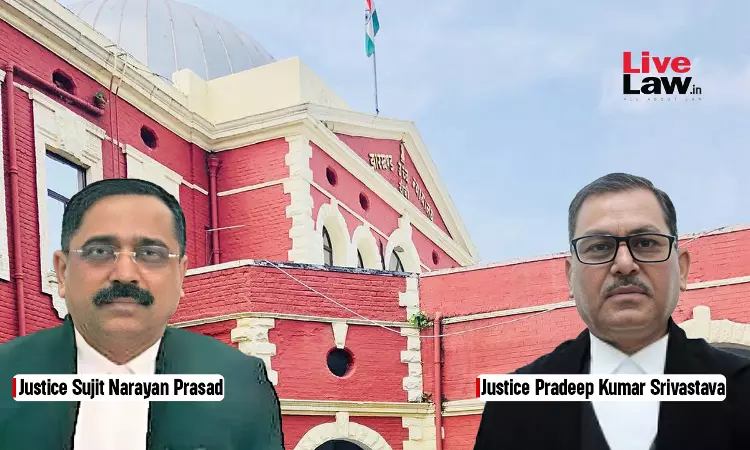
The Jharkhand High Court has held that a mistake of law or wrong interpretation of law by a quasi-judicial authority, while exercising lawful jurisdiction, cannot by itself form the basis for disciplinary proceedings. The Court said that such allegations must disclose extraneous considerations or improper motives.A Division Bench of Justice Sujit Narayan Prasad and Justice Pradeep...
This is a premium content
Available exclusively to
Our subscribers
Subscribe Premium 
INR 1099+GST
Your support helps us to bring you more content at
an affordable subscription scheme !!!
All payment options available
The Jharkhand High Court has held that a mistake of law or wrong interpretation of law by a quasi-judicial authority, while exercising lawful jurisdiction, cannot by itself form the basis for disciplinary proceedings. The Court said that such allegations must disclose extraneous considerations or improper motives.
A Division Bench of Justice Sujit Narayan Prasad and Justice Pradeep Kumar Srivastava was hearing a petition filed by the Employees' Provident Fund Organisation (EPFO) challenging the Central Administrative Tribunal's decision quashing disciplinary proceedings against an Assistant Provident Fund Commissioner.
The officer had exercised powers under Section 7C of the Employees' Provident Funds and Miscellaneous Provisions Act, 1952 in proceedings concerning Katihar Medical College. After the matter was remanded by the EPF Appellate Tribunal, the officer passed an order dated 04.11.2010 closing the proceedings. Disciplinary proceedings were subsequently initiated against him alleging negligence and recklessness in conducting the inquiry. A penalty of 30% cut in pension for five years was ultimately imposed.
The Tribunal quashed the disciplinary action, holding that disciplinary proceedings could not be initiated merely on account of the officer's exercise of quasi-judicial powers. The High Court agreed with the Tribunal and emphasised the distinction between a legal error and misconduct.
The Court observed:
“It is settled position of law that mistake of law or wrong interpretation of law done by a quasi-judicial officer while exercising lawful jurisdiction, cannot be made basis for initiating disciplinary proceedings and further the Charge Memorandum should have clearly revealed as to how the order passed by the petitioner could be treated as misconduct.”
The Bench further held that an error committed while exercising quasi-judicial jurisdiction cannot automatically be treated as misconduct. For disciplinary action to be sustained, the allegations must go beyond the mere correctness of the order and disclose circumstances indicating misconduct. The Court observed:
“Thus, from the aforesaid deduction it is apparent that every error does not amount to misconduct. Treating a mere legal mistake as misconduct would undermine the independence of quasi-judicial officers. To sustain a charge-sheet against such an authority, allegations must go beyond error of law and disclose extraneous considerations or improper motives.”
The Court also noted that the charge memorandum did not contain allegations concerning integrity, moral turpitude, extraneous influence or improper motive. Finding no error in the Tribunal's decision, the High Court dismissed the EPFO's petition.
Case: Chairman, Central Board of Trustees, Employees Provident Fund Organization and Ors. v. Deepak Tigga and Anr.
Case No.: W.P.(S) No. 4759 of 2025
Appearance:
For the Petitioners: Mr. Rupesh Singh, Advocate.
For Respondent No.1: Mr. J.J. Sanga, Advocate, Mr. Randhir Kumar Sharma, Advocate and Ms. Angel Khalkho, Advocate.
For the Union of India: Mr. Romit Kumar, AC to Mr. Prashant Vidyarthi, Advocate.
Click Here To Read/Download Order
Tags


