



- Home
- /
- High Courts
- /
- Jharkhand High Court
- /
- Ex-Servicemen In Special Auxiliary...
Ex-Servicemen In Special Auxiliary Police Force Cannot Claim Superannuation As Regular Govt Servant: Jharkhand High Court
Rushil Batra
22 Dec 2025 2:10 PM IST
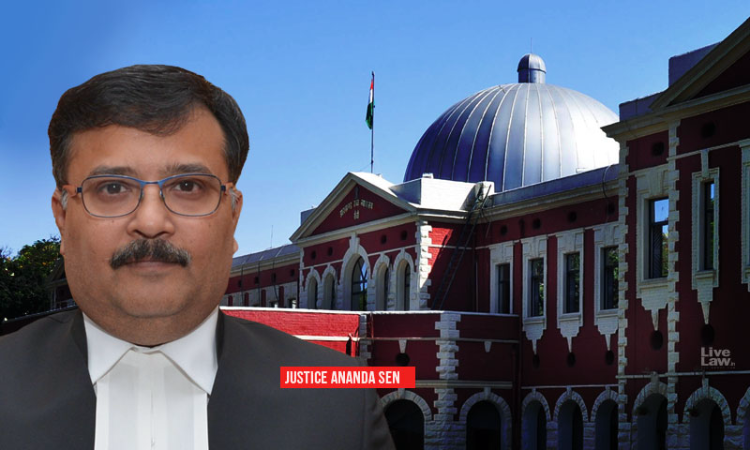
The Jharkhand High Court recently held that ex-servicemen engaged on a contractual basis under the State's Special Auxiliary Police Force (SAP) battalions cannot claim continuation of service beyond the tenure prescribed under the governing scheme.A Single Judge Bench of Justice Ananda Sen was hearing a case wherein the petitioners were ex-servicemen appointed in terms of a scheme. The scheme...
This is a premium content
Available exclusively to
Our subscribers
Subscribe Premium 
INR 1099+GST
Your support helps us to bring you more content at
an affordable subscription scheme !!!
All payment options available
The Jharkhand High Court recently held that ex-servicemen engaged on a contractual basis under the State's Special Auxiliary Police Force (SAP) battalions cannot claim continuation of service beyond the tenure prescribed under the governing scheme.
A Single Judge Bench of Justice Ananda Sen was hearing a case wherein the petitioners were ex-servicemen appointed in terms of a scheme. The scheme did not provide for any age of superannuation. The Court clarified that in the absence of any provision regarding age of superannuation, contractual appointees cannot seek parity with regular government servants. It further held that intra-departmental correspondence or past illegal extensions granted to some personnel cannot override or amend the express terms of the scheme.
Background:
All the petitioners were ex-servicemen/ex-army personnel. To maintain law and order, provide adequate force at police stations, eliminate anti-social elements, and handle security-related responsibilities in industrial establishments, the Government of Jharkhand formed two battalions on 7 June 2008 for multi-purpose work. These battalions were called the “Special Auxiliary Police Force” (SAP). The engagement was contractual in nature, and the force was constituted out of retired ex-army personnel engaged on a contractual basis.
The petitioners claimed that it should be presumed that their age of superannuation would be the same as that of a government servant. They argued that their appointment should be co-terminous with the scheme and/or that their actual age of superannuation should be as per the policy of the Government. Additionally, they contended that the State was guilty of discrimination, as some ex-servicemen had been allowed to continue for 15 years, whereas others had been removed upon completion of 7 years of engagement.
The State, on the other hand, submitted that as per the scheme, a period of 7 (seven) years was the maximum tenure for which the petitioners could work. Any recommendation or suggestion could not override the scheme.
Clause 3 of the scheme provided that the personnel would be engaged on a contractual basis for a period of 2 (two) years, and the tenure of the contract, considering the need, could be extended up to 5 (five) years. The Court noted that, from the aforesaid scheme, it was clear that the initial period of contract would be 2 (two) years, extendable for a further period of 5 (five) years, making the total tenure 7 (seven) years. The salary and all other benefits payable also formed part of the scheme. The Court noted:
“8. Be it noted that the formation of Special Auxillary Police Force was by virtue of a scheme framed by the Government, which is dated 7th June, 2008…The scheme does not provide for any age of superannuation. The tenure has only been fixed… If any age of superannuation was to be included or to be read into the scheme, the same can only be done by a proper amendment and not by any recommendatory letter. This scheme is nothing but a rule governing the Special Auxillary Police Force. Any rule governing the issue of appointment or service condition has to be strictly followed. Any deviation can only be made by a proper amendment only.”
Rejecting the argument that intra-departmental correspondence entitled the petitioners to any benefit beyond the scheme, the Court noted that no intra-departmental correspondence or opinion can override or supersede the clauses of the scheme. The scheme is required to be strictly followed, and where there is no ambiguity, its clauses must be adhered to and interpreted as they are drafted.
In the present case, the Court observed that there was no ambiguity in the scheme insofar as the tenure of service of contractual ex-servicemen was concerned. The Court further held that when the scheme does not specifically provide for an age of superannuation, any intra-departmental letter cannot amend or supersede its provisions. The Court held:
“13. So far as letters of recommendations are concerned, same have got no value in the eyes of law. Same are recommendatory in nature. The scheme has not yet been amended… These letters are nothing but an opinion of the individuals and I hold that they exceeded their jurisdiction in doing so. In my opinion, the same does not have any force of law and cannot be treated to be a mandate as they are not the authorities to mandate and fix the age of superannuation. These letters cannot also override the clauses of the scheme.”
The Court observed that the respondents could not have allowed anyone to continue beyond the tenure prescribed under the scheme, and by doing so, the respondents had committed an illegality. The petitioners could not derive any benefit from such illegalities, as there can be no equality in illegality.
The Court further held that there was a clear rationale behind fixing the maximum tenure at 7 (seven) years instead of prescribing an age of superannuation. The State was required to rotate the workforce for the purpose for which the scheme had been formulated. Accordingly, the High Court dismissed the writ petitions.
Case Title: Francis Kujur v. State of Jharkhand
LL Citation: 2025 LiveLaw (Jha) 96
Case Number: W.P. (S) No. 3008 of 2025
Appearance: Ms. Aparajita Bhardwaj, Ms. Tanya Singh, Mr. Rahul Kumar, and Ms. Richa Lal appeared for the Petitioners. Advocate General Mr. Rajiv Ranjan, Ms. Pinky Tiwary, and Ms. Komal Tiwary appeared for the Respondents.


