- Home
- /
- High Courts
- /
- Jharkhand High Court
- /
- Second Wife Can't Claim...
Second Wife Can't Claim Compassionate Appointment Without Permission For Second Marriage Under Conduct Rules: Jharkhand HC
Namdev Singh
8 Sept 2026 9:58 AM IST
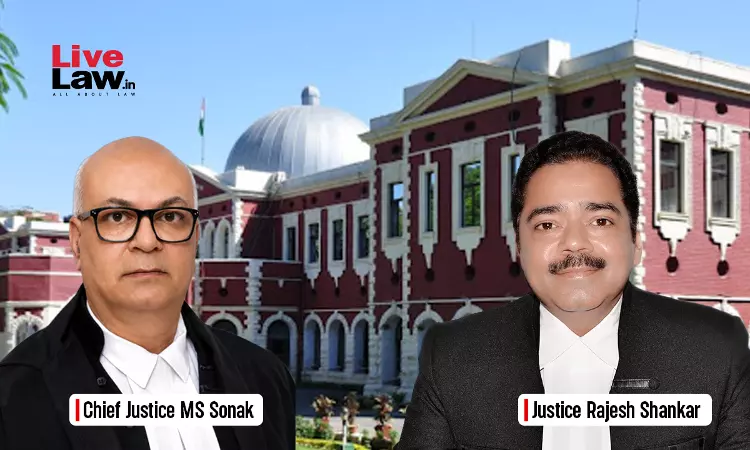
A Division Bench of the Jharkhand High Court comprising Chief Justice M.S. Sonak and Justice Rajesh Shankar held that second wife cannot claim compassionate appointment when the deceased government employee contracted the second marriage without permission under Rule 23 of the Bihar Government Servants' Conduct Rules, 1976, even if the marriage is permissible...
This is a premium content
Available exclusively to
Our subscribers
Subscribe Premium 
INR 1099+GST
Your support helps us to bring you more content at
an affordable subscription scheme !!!
All payment options available
A Division Bench of the Jharkhand High Court comprising Chief Justice M.S. Sonak and Justice Rajesh Shankar held that second wife cannot claim compassionate appointment when the deceased government employee contracted the second marriage without permission under Rule 23 of the Bihar Government Servants' Conduct Rules, 1976, even if the marriage is permissible under customary law.
Background Facts
The deceased employee was working as Panchayat Sewak and died in harness on 11.07.2011. The appellant claimed to be the second wife of the employee. The respondents rejected her application for compassionate appointment and retiral benefits for herself and her son. Consequently, she filed a writ petition.
The first wife also instituted a petition claiming similar benefits. Both these petitions were disposed of by order dated 13.09.2017. Thereafter, the first wife filed an appeal. The appellate Court modified the order of the Single Judge and held that the first wife and the minor son of the second wife were entitled to the distribution of the gratuity amongst themselves.
However, no such relief was granted to the appellant, but directions were issued to reconsider the case of both wives for compassionate appointment. The appellant's case for compassionate appointment was denied.
Aggrieved, the appellant filed a writ petition to challenge the decision by which she was denied compassionate appointment. The Single Judge dismissed the petition. Hence, an appeal was filed against the Single Judge order.
It was argued by the appellant that the Single Judge has ignored the Rule 23(1) of the Bihar Government Servant's Conduct Rules, 1976 as applicable in the State of Jharkhand. It was submitted that the Single Judge also ignored the fact that the appellant and her late husband were members of the Santhali Tribe and, according to the customary law applicable to them, a second marriage was permissible.
It was further submitted that earlier the Court had ordered division of certain pensionary and gratuity benefits between the first wife and the appellant's minor son. Therefore, it was evident that the legality of the marriage was not questioned.
On the other hand, it was argued by the respondents that Rule 23(1) of the 1976 Rules requires specific permission before any second marriage is contracted and no such permission was granted. He relied on the decision of Ghulam Nabi Shergujri Vs. The United of India & Anr to argue that such a permission was mandatory.
Findings and Observations of the Court
It was observed by the Division Bench that Rule 23 of the Bihar Government Servant's Conduct Rules, 1976 provides that no Government servant shall enter into or contract a marriage with a person having a spouse living, and no Government servant having a spouse living shall enter into or contract a marriage with any person. It was further provided that Government may permit such marriage if it is satisfied that such marriage is permissible under the personal law applicable and there are other grounds for so doing.
It was observed by the Court that no permission was taken by the deceased employee while in service, to enter into the contract of second marriage with the appellant. The Single Judge has correctly held that in the absence of any such permission, the appellant cannot insist upon compassionate appointment based upon her second marriage while the marriage between the deceased employee and his first wife was subsisting.
It was further observed that the argument about the customs of the Santhali Tribe was also not directly relevant because there was nothing on record to show that the marriage with the appellant was contracted after obtaining permission under the Rule 23(2) of the Conduct Rules.
The decision in Rameshwari Devi Vs. State of Bihar and others was distinguished from the appellant's case. It was observed that the issue in Rameshwari Devi case was whether the children of the second marriage contracted by the deceased employee during the subsistence of the first wife would be entitled to family pension and other retiral benefits. It was held by the Supreme Court that though the marriage itself was void, the children of such a void marriage could never be regarded as illegitimate, but the wife was not entitled to any benefits.
It was observed by the Division Bench that the appellant's minor son had been given certain benefits, and based upon Rameshwari Devi case, no relief can be granted to the appellant herein.
With the aforesaid observations, the order of the Single Judge was upheld by the Division Bench. Consequently, the appeal filed by the second wife was dismissed by the Division Bench.
Case Name: Martha Murmu v. State of Jharkhand & Ors.
Case No. : L.P.A. No. 414 of 2026
Counsel for the Appellant : Kanchan Lata, Advocate
Counsel for the Respondents : Md Zaid Imam, AC to SC-VII