



- Home
- /
- High Courts
- /
- Karnataka High Court
- /
- Drunk Riding Poses Risk To Public,...
Drunk Riding Poses Risk To Public, Can't Adopt Liberal Approach In Compensation Claims: Karnataka High Court
Sebin James
7 Sept 2026 8:00 PM IST
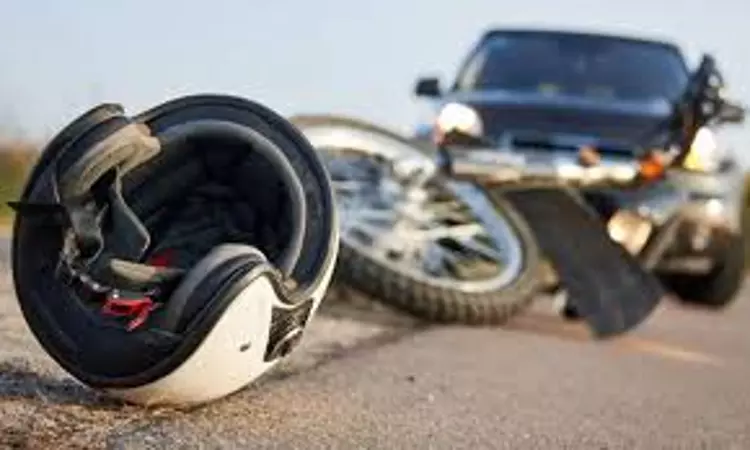
In era of increasing human population and road congestion, vehicle users should exhibit obedience to law and concern for fellow road users, Court said.
The Karnataka High Court has recently held that a claimant who rode a motorcycle under the influence of alcohol couldn't claim full compensation, attributing 30% contributory negligence to the injured rider. [2026 LiveLaw (Kar) 338]The single judge bench of Justice K.V Aravind, sitting at Kalaburagi, held that ignoring the violation of law such as riding a vehicle under the influence of...
This is a premium content
Available exclusively to
Our subscribers
Subscribe Premium 
INR 1099+GST
Your support helps us to bring you more content at
an affordable subscription scheme !!!
All payment options available
The Karnataka High Court has recently held that a claimant who rode a motorcycle under the influence of alcohol couldn't claim full compensation, attributing 30% contributory negligence to the injured rider. [2026 LiveLaw (Kar) 338]
The single judge bench of Justice K.V Aravind, sitting at Kalaburagi, held that ignoring the violation of law such as riding a vehicle under the influence of alcohol would be counter-productive to the safety of citizens on the road. In such cases, the norm of liberally interpreting benevolent laws cannot be extended indefinitely when the claimant himself has violated the law, the court opined.
“…. When a person uses a vehicle under the influence of alcohol, he not only poses himself to risk but also exposes other road users, the public, and society at large to risk... In the era of increasing human population, vehicle population, and road congestion, vehicle users should exhibit obedience to the law and concern for fellow road users. If liberal interpretation is extended to a person who comes before the Tribunal claiming compensation, it would add a premium to the violation and would result in the breakdown of the road discipline, maintenance of law and order…”, the court noted in the order.
The claimant preferred the plea seeking compensation for injuries suffered in an accident that occurred in 2018, involving a motorcycle ridden by him and another car.
Before the High Court, the insurer company claimed that the date of the accident was fabricated and contributory negligence should be attributed to him for riding under the influence of alcohol.
According to the insurer, medical records showed the date of the accident as September 18 whereas the stamp paper for indemnity bond was purchased on October 4 in 2018. This, according to the insurer, suggested a planned implication of the vehicle. Additionally, the clinical noted indicated that the rider was under the influence of alcohol when admitted and denoted the cause as a 'fall from the motorcycle', the company submitted.
To the contrary, the claimant argued that the accident occurred on September 22 and the offending car was not registered at the time of the accident. Moroever, the claimant's blood pressure taken on September 23 was considerably low as normally compared to the high blood pressure of a person under the influence of alcohol, it was submitted.
After hearing both parties, the court noted that documents such as letter of Omerga P.S to Basavakalyan P.S, claimant's statement and FIR proved conclusively that the date of the accident was September 22, 2018.
The Court rejected the insurer's argument based on the purchase of stamp paper on October 4, 2018:
“…The purchase of the stamp paper on 04.10.2018, when the vehicle was seized on 06.10.2018 for execution of the indemnity bond, is of no assistance when the insured vehicle was stated to be involved on 22.09.2018. The possibility of purchase of the stamp paper, perhaps on legal advice, in anticipation of the requirement of surrendering the vehicle for inspection, cannot be brushed aside….”, the court noted further.'
However, the court inferred from the testimony of the treating doctor that the claimant was under the influence of alcohol when brought to the hospital due to 'fall from the motorcycle'.
The Court rejected the claimant's argument regarding blood pressure in the absence of any expert evidence.
“…When such instances [riding under the influence of alcohol] are noticed by the Court, the same is to be viewed and handled strictly”, it was observed further.
About the clinical notes prepared by the doctor about the accident and how the accident had been described as 'fall from the motorcycle' indicating a possible self-accident, the court noted as below:
“…The recording of the history of the accident as a fall from the motorcycle cannot be inferred as a self-fall from the motorcycle when it is the case that the insured car dashed against the claimant. In such circumstances, it would be stated only as a fall from the motorcycle. The doctor, while recording the brief history, may not be required to record the details which would be relevant for a legal dispute. When a patient is taken to the doctor, the concentration would be on the treatment and not on recording the detailed reasoning or history of the accident…”, the court added.
Hence, Court partly allowed the insurer's appeal by attributing 30 percent contributory negligence to the conduct of the claimant. Accordingly, insurer was directed to deposit 70 per cent of the compensation [ awarded by the Tribunal with interest before the passing of 8 weeks.
Case Title: The Divisional Manager, National Insurance Compnay Ltd. V. Vishwanath & Ors.
Case No: MFA No.202713/2023
Citation: 2026 LiveLaw (Kar) 338
Tags
Sebin James
Sebin James is a Correspondent with LiveLaw, covering the Karnataka High Court

