



- Home
- /
- High Courts
- /
- Karnataka High Court
- /
- “Article 21 Rights Flow From...
“Article 21 Rights Flow From Discharge Of Fundamental Duties”: Karnataka High Court Refuses Bail In 2020 Bengaluru Riots Case
Mustafa Plumber
29 Dec 2025 12:47 PM IST
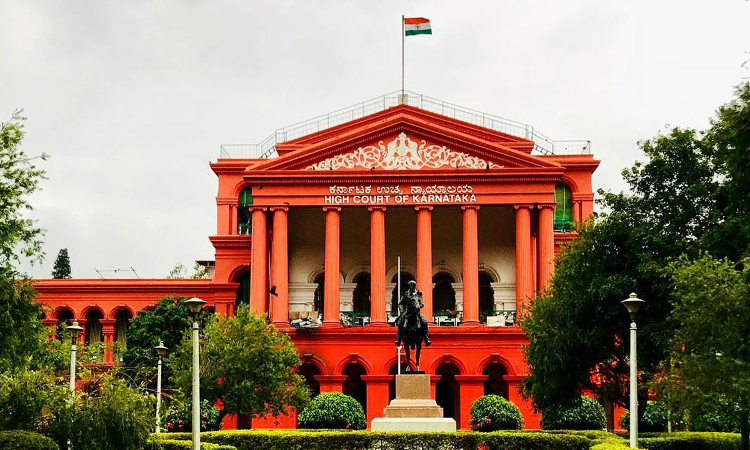
The Karnataka High Court, while refusing bail to an accused in the 2020 Bengaluru Riots case, observed that, “The appellant is seeking bail on the ground that his fundamental right to liberty under Article 21 of the Constitution is violated. He gets that right when he adheres to his fundamental duties encapsulated in Article 51A of the Constitution.”A Division Bench comprising Justice...
This is a premium content
Available exclusively to
Our subscribers
Subscribe Premium 
INR 1099+GST
Your support helps us to bring you more content at
an affordable subscription scheme !!!
All payment options available
The Karnataka High Court, while refusing bail to an accused in the 2020 Bengaluru Riots case, observed that, “The appellant is seeking bail on the ground that his fundamental right to liberty under Article 21 of the Constitution is violated. He gets that right when he adheres to his fundamental duties encapsulated in Article 51A of the Constitution.”
A Division Bench comprising Justice K.S. Mudagal and Justice Venkatesh Naik T stated: “Mahatma Gandhi famously said, 'The true source of rights is duty. If we all discharge our duties, rights will not be far to seek.' Another related quote of his is, 'Right is duty well performed.'”
The accused, Afzal Basha, had approached the High Court challenging an order of the trial court rejecting his bail application. It was contended on his behalf that he had been falsely implicated in the case and that he had remained in judicial custody for nearly five years without the commencement of a trial.
It was further argued that some of the co-accused had been granted bail by the trial court and, therefore, the rejection of the appellant's bail application was erroneous. The appellant also pointed out that his mother was suffering from carcinoma and was solely dependent on him.
Opposing the appeal, the National Investigation Agency submitted that there was prima facie material establishing the involvement of the appellant in the crime. It was argued that the delay in the trial was attributable to the calculated acts of the accused themselves and, therefore, the appellant could not rely on the delay as a ground for bail. It was also submitted that Section 43D(5) of the Unlawful Activities (Prevention) Act bars the grant of bail when a prima facie case is made out against the accused.
After examining the case records, the Bench observed that the Investigating Officer had collected call detail records of the appellant showing that he was in contact with other accused persons during the incident. The tower location of his mobile phone indicated his presence in the D.J. Halli Police Station area at the relevant time. According to the charge sheet, the seized mobile phone of the appellant was sent to the Forensic Science Laboratory for data retrieval, and the FSL report revealed that the appellant had received a voice message from accused No.21 exhorting Muslims to gather at the D.J. Halli Police Station and to be ready to martyr themselves. The call detail records further showed that the appellant had received 14 calls and made 28 outgoing calls during the relevant period. In view of this material, the Court held that the trial court was justified in concluding that a prima facie case existed against the appellant.
Referring to a chart produced by the prosecution detailing the conduct of the accused, the Bench noted that the accused themselves were strategically delaying the proceedings in order to use such delay as a ground for seeking bail. An examination of earlier orders of the trial court, available on the official website, showed that since 2021, although the matter had been repeatedly listed for hearing on framing of charges, the accused had obstructed progress by filing one application or another. The records further revealed that on several occasions, non-bailable warrants and proclamations had to be issued as one or the other accused failed to appear on the scheduled dates.
The Court added that bail or discharge applications were being filed consecutively by individual accused instead of being filed collectively, even though some sets of accused were represented by a common advocate. It also noted that the accused frequently changed advocates, and the newly engaged lawyers sought adjournments. The Bench held that the delay could not be attributed to either the prosecution or the trial court and that the accused, being themselves responsible for the delay, could not be permitted to take advantage of their own conduct by invoking delay as a ground for bail.
Rejecting the appeal, the Court concluded that there was prima facie material to show that the appellant had indulged in vandalising the police station, assaulted police personnel, obstructed them from discharging their duties, caused injuries, attempted to damage public property, indulged in violence, and dented communal harmony on religious lines, in breach of fundamental duties. It held that since the accused themselves had delayed the proceedings, they could not seek the benefit of Article 21 of the Constitution. The Court found no merit in the contention that the impugned order of the trial court was unsustainable.
Appearance: Advocate Akarsh S Kanade for Advocate Divya A V for Appellant.
SPP P Prasanna Kumar for Respondent.
Citation No: 2025 LiveLaw (Kar) 445
Case Title: Afzal Basha AND National Investigation Agency
Tags


