



- Home
- /
- High Courts
- /
- Karnataka High Court
- /
- Karnataka High Court Clarifies Stay...
Karnataka High Court Clarifies Stay On KPSC Resolution Applies Only To Additional Agenda Seeking Ex-Chairman's Resignation
Sebin James
14 July 2026 7:22 PM IST
Court permitted KPSC to place resignation resolution for reconsideration in next meeting but barred giving effect without its approval.
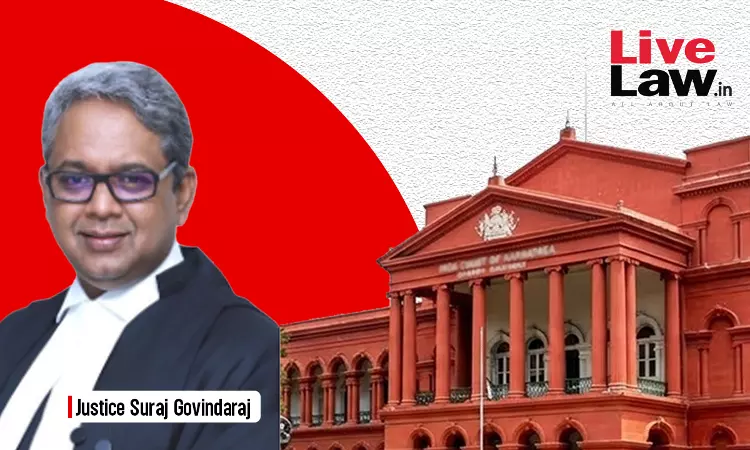
The Karnataka High Court on Monday (July 14) clarified that its interim stay on the Karnataka Public Service Commission's (KPSC) June 19 resolution would operate only in respect of the "Additional Agenda" item calling upon its former Chairman, Shiva Shankarappa S. Sahukar, to resign, and would not extend to the other thirteen agenda items from which he had recused himself.Justice Suraj...
This is a premium content
Available exclusively to
Our subscribers
Subscribe Premium 
INR 1099+GST
Your support helps us to bring you more content at
an affordable subscription scheme !!!
All payment options available
The Karnataka High Court on Monday (July 14) clarified that its interim stay on the Karnataka Public Service Commission's (KPSC) June 19 resolution would operate only in respect of the "Additional Agenda" item calling upon its former Chairman, Shiva Shankarappa S. Sahukar, to resign, and would not extend to the other thirteen agenda items from which he had recused himself.
Justice Suraj Govindaraj was hearing a writ petition filed by Sahukar, who has since been suspended by the Governor, challenging the resolution passed by KPSC members seeking his resignation.Senior Advocate Aruna Shyam appeared for the petitioner and Senior Advocate Reuben Jacob appeared for KPSC [R12].
At the outset, Senior Advocate Aruna Shyam, appearing for the petitioner, submitted that Sahukar had already been suspended by the Governor without a reference from the President under Article 317 of the Constitution, which was under challenge in a separate petition.
It was argued that Article 317 vests the power to suspend or remove the Chairman of a Public Service Commission exclusively in the Governor and that too only after a reference is made by the President to the Supreme Court. In the absence of such a reference, the suspension itself was illegal, the petitioner contended.
Appearing for the KPSC members, Senior Advocate Reuben Jacob submitted that the present writ petition had become infructuous in view of the subsequent developments. Taking the Court through the notice convening the June 19 meeting, the respondents clarified that Agenda Item No. 4 pertained to allegations relating to the petitioner's daughter's appointment, on account of which Sahukar had recused himself from the proceedings.
With regard to the additional agenda item seeking the petitioner's resignation, the respondents submitted that it was merely a request to resign and not an order removing him from office.
"It's a call for resignation. Resignation is a voluntary act. Even this resolution, in the subsequent meeting, it has to be ratified," counsel submitted.
When the Court observed that the resolution effectively sought the petitioner's resignation, the respondents reiterated: "We are requesting him to resign."
After hearing the parties, the Court clarified that its interim order dated July 10, 2026, staying the operation of the June 19 resolution, would apply only to the additional agenda item and not to Agenda Items 1 to 13.
The Court observed:
"By order dated 10.07.2026, this Court stayed the operation of resolution dated 19.06.2026... The resolution in effect contains 13 agenda items and additional agenda item deals with resolution for resignation of Chairman. In so far as item Nos.1 to 13 are concerned, the petitioner, having recused himself from the meeting and having directed that the meeting can go on to consider those items, the stay of the resolution dated 19.06.2026 shall be applicable only to the additional item and not with respect to agenda items 1 to 13."
The Court further permitted the respondents to place the additional agenda item before the next meeting in terms of Section 7 of the Karnataka Public Service Commission (Conduct of Business and Additional Functions) Act, 1959.
When counsel for the petitioner pointed out that reconsideration of the resolution in a future meeting could affect the maintainability of the writ petition, counsel for the KPSC responded that any ratification or modification would not render the proceedings infructuous.
The Court, however, clarified: "The effect of any such resolution will be subject to the orders of the Court."
Accordingly, the bench permitted the KPSC members to place the additional agenda item before the next meeting but made it clear that no effect could be given to any ratification or modification without the leave of the Court.
"In view of the request made by the petitioner himself... the respondents are permitted to place the same in the next meeting in terms of Section 7 of the Karnataka Public Service Commission (Conduct of Business and Additional Functions) Act, 1959. It is, however, made clear that no effect to the resolution can be given without the leave of this Court insofar as any ratification or modification to Additional Agenda Item No.1 is concerned," the Court ordered.
The Court also orally observed that its interim order would not prevent the Commission from conducting meetings or considering other agenda items. "We can't come in the way of you holding any other meeting or agenda."
On instructions, counsel for the KPSC informed the Court that the next meeting of the Commission could be held as early as Tuesday or Wednesday. The matter has now been posted for further hearing on July 23, 2026.
In the connected petition challenging the Governor's decision to suspend Sahukar, the Court declined to grant any interim relief. Recording that the principal issue concerned the Governor's power to suspend the Chairman before a presidential reference under Article 317(2), the Court directed all parties to place relevant precedents on record and posted the matter for further hearing on July 15.
During the hearing, the Court orally observed:
"We can look into the aspect of the power exercised and lack of jurisdiction. We can't decide on the correctness of the decision; that's for the Supreme Court to decide by appointing an enquiry committee."
Background
The controversy stems from a June 19 meeting of the KPSC during which Sahukar had recused himself because one of the agenda items related to allegations concerning the reservation benefits availed by his daughter in her appointment as a Group 'C' Industrial Extension Officer. The meeting was thereafter presided over by the senior-most member.
During the meeting, KPSC members introduced an "Additional Agenda" item alleging that Sahukar's daughter had submitted a false caste and income certificate and calling upon him to resign. A report was subsequently forwarded to the Chief Secretary and the Governor.
Challenging the resolution, Sahukar approached the High Court contending that KPSC members had no authority to seek his resignation, since Article 317 of the Constitution vests the power to remove the Chairman or a member of a Public Service Commission exclusively in the President or the Governor, and only after an inquiry by the Supreme Court.
Case Title: Shiva Shankarappas Sahukar v. Dr B Prabhudev & Ors.
Case No: WP 20949/2026
Tags

Sebin James
Sebin James is a Correspondent with LiveLaw, covering the Karnataka High Court

