



- Home
- /
- High Courts
- /
- Karnataka High Court
- /
- 'How Can ECI's Seal On Postal...
'How Can ECI's Seal On Postal Ballots Be Broken?': Karnataka High Court Questions Tampering Allegation Against BJP's DN Jeevaraja
Sebin James
3 July 2026 7:00 PM IST
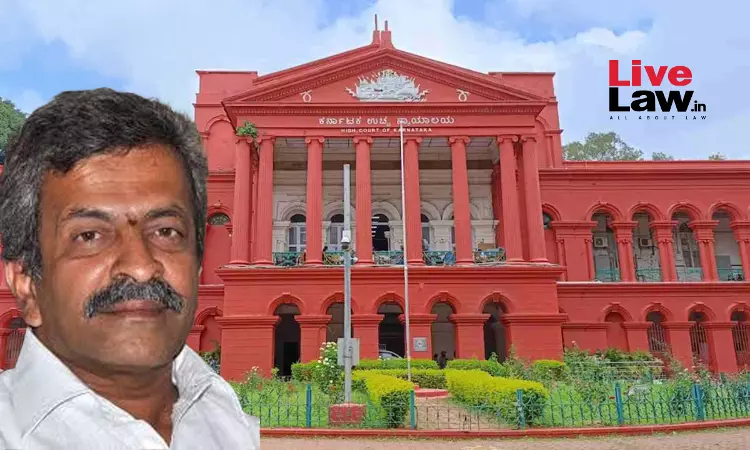
The Karnataka High Court on Friday (July 3) orally questioned how tampering by BJP's D.N. Jeevaraja could be alleged when the election documents and ballots of Sringeri constituency were in the exclusive custody of the Election Commission of India (ECI).The court was hearing the BJP leader's plea seeking quashing of an FIR over alleged ballot tampering during recounting of votes of...
This is a premium content
Available exclusively to
Our subscribers
Subscribe Premium 
INR 1099+GST
Your support helps us to bring you more content at
an affordable subscription scheme !!!
All payment options available
The Karnataka High Court on Friday (July 3) orally questioned how tampering by BJP's D.N. Jeevaraja could be alleged when the election documents and ballots of Sringeri constituency were in the exclusive custody of the Election Commission of India (ECI).
The court was hearing the BJP leader's plea seeking quashing of an FIR over alleged ballot tampering during recounting of votes of Sringeri Assembly constituency.
The single judge bench of Justice M. Nagaprasanna orally remarked: "When it is in the custody of election commission, you cannot allege tampering. How are you alleging tampering by these three petitioners [including Returning Officer, former Deputy Commissioner and BJP candidate]?"
During the hearing, the complainant's [Congress Candidate's Agent] counsel informed the court that an interim order was operating in the matter and sought to file objections. The counsel argued that the mahazar recorded serious irregularities and that the Returning Officer (RO) was responsible for sealing the ballot boxes.
"In mahazar, it is seen that some of the postal ballots, seals were broken, some of the trunks are damaged and the locks were broken…that is why the RO is also made an accused," the counsel submitted.
Justice Nagaprasanna, however orally asked: "How can someone go and break the seal when it is election commission's custody?"
Meanwhile the petitioner's counsel pointed out that the seal on the postal ballot batch was intact: "Other boxes not opened… so far as postal ballot only batch no.20, the seal was there."
The complainant's counsel however responded that the RO and other officials were on deputation and might not have been physically present at all times:
"Every officer will be under delegation by the Election Commission. They are deputed. EC will not be standing there”, the counsel added.
Background
BJP's Jeevaraja had initially challenged the 2023 election results through a three-year-long litigation that culminated in his favour in April 2026, resulting in a vote recount on May 2, 2026.
The High Court had in April 2026 ordered a recount of the postal ballot votes entered in the 2023 Sringeri Assembly Constituency Elections, which had declared Congress candidate T.D. Rajegowda victorious.
During the recount, the returning officer verified the previously rejected 279 postal ballots, which resulted in a favourable outcome for the BJP candidate. 255 postal votes in favour of Congress legislator Rajegowda were also deemed invalid in the recount.
As a result, the BJP candidate Jeevaraj was declared the winner with a lead of 52 votes under Section 66 of the Representation of the People Act, 1951, on May 3, 2026.
However, on 11 May, the Supreme Court had stayed the effect of the recount exercise in the Sringeri Assembly constituency in Karnataka, which resulted in the unseating of BJP's DN Jeevaraja who was earlier sworn in as the MLA from the constituency, by restoring TD Rajegowda from Congress as the MLA.
Hearing the appeal filed by Congress member TD Rajegowda, who got unseated as the MLA after the recount in the constitutency, the Apex Court directed restoration of status quo ante (state of affairs before the recount), observing that the Returning Officer's exercise of reverifying already validated postal ballots was prima facie invalid.
In the appeal before the Supreme Court, Rajegowda argued that, though the High Court had only ordered the re-verification of 279 rejected postal ballots, the Returning Officer also recounted 562 valid postal ballots that were in Rajegowda's favour.
Soon after the postal ballot recount which resulted in Jeevaraja's favour, Congress agent Sudhir Kumar Murolli filed a complaint with the Chikkamanglur Police Station alleging that the BJP candidate has committed offences under Sections 143 (unlawful assembly), 465 (forgery), 468 (forgery for cheating), 471 (using forged document as genuine), 120B (criminal conspiracy), 149 (common object) and Section 136 of the Representation of the People Act, 1951 (election irregularities).
The FIR alleged that the BJP candidate conspired with the returning officer and deputy commissioner to manipulate the recounting process and invalidate the postal votes in favour of the Congress candidate.
Challenging the aforesaid FIR, Jeevaraja approached the High Court, stating that the complaint was politically motivated. The deputy commissioner has also filed a similar plea before the High Court seeking to quash the FIR registered against him.
The court listed the matter on July 17.
Case Title: D.N. Jeevaraja v. State of Karnataka & Anr.
Case No: WP 14698/2026
Tags

Sebin James
Sebin James is a Correspondent with LiveLaw, covering the Karnataka High Court

