



- Home
- /
- High Courts
- /
- Karnataka High Court
- /
- Karnataka High Court Asks State To...
Karnataka High Court Asks State To Consider Desk Job For Police Recruit Who Lost Leg While Awaiting Appointment
LIVELAW NEWS NETWORK
19 Nov 2026 12:39 PM IST
"Law exists to serve justice and not to defeat it; Constitutional compassion is not the antithesis of constitutional discipline."
The Karnataka High Court has directed the State government to meaningfully consider the case of a 28-year-old man for appointment to any job, after the man lost one of his legs in a road accident, while waiting for being appointed to the post of Civil Police constable after following due selection process.A division bench of Justice M Nagaprasanna and Justice Hema Kulkarni sitting at...
This is a premium content
Available exclusively to
Our subscribers
Subscribe Premium 
INR 1099+GST
Your support helps us to bring you more content at
an affordable subscription scheme !!!
All payment options available
The Karnataka High Court has directed the State government to meaningfully consider the case of a 28-year-old man for appointment to any job, after the man lost one of his legs in a road accident, while waiting for being appointed to the post of Civil Police constable after following due selection process.
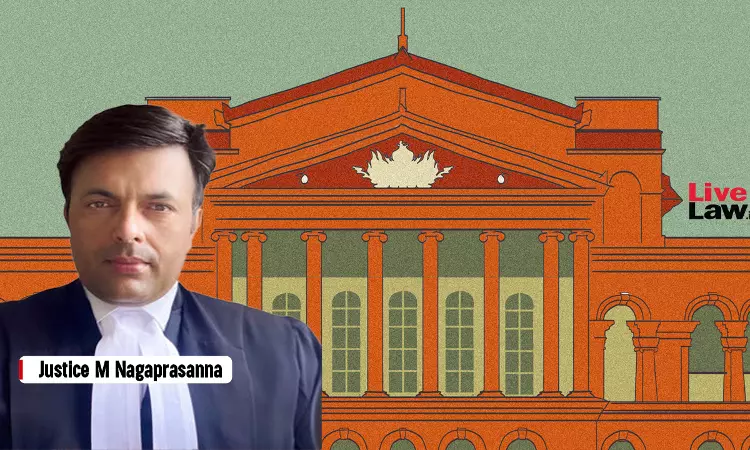
A division bench of Justice M Nagaprasanna and Justice Hema Kulkarni sitting at Dharwad, allowed the petition filed by Shivakumar Hiremath and said, “The predicament in which the petitioner finds himself, is after all, a consequence of administrative apathy and the petitioner ought not to be made to bear the burden of such administrative indifference.”
The court clarified that sympathy by itself cannot confer a right to public employment and compassion cannot supplant the constitutional mandate of equality under Articles 14 and 16 of the Constitution of India.
However, stating that the petitioner stands at the crossroads of two misfortunes: one inflicted by fate and the other occasioned by administrative inaction, the bench observed, “To now tell the petitioner that he cannot be appointed because he no longer satisfies the physical standards, without even examining the possibility of an alternative suitable appointment, would be to permit consequences of administrative delay to fall entirely upon the shoulders of the selectee, who had done no wrong.”
It added “It is in circumstances such as these that the equitable dimension of Article 226 of the Constitution of India assumes significance. The arc of justice must, on occasion, bend towards equity, but never break the boundaries of law.”
Hiremath had in 2019, participated in the selection process for a post advertised calling for appointment as Civil Police Constable (Men and Women). His name was found in the final select list, but no appointment order was issued on the score of obfuscation of an eligibility criteria which recognised the 3-year Diploma course as to be equivalent to Pre-University course or otherwise.
Following which he approached the Administrative tribunal, which in 2022, allowed the applications and directed that the appointment orders be issued to him. However, the government did not abide by the order, forcing Hiremath to approach the High Court by filing contempt proceedings. On issuance of court notice, the government finally offered an appointment on 01.01.2025 of appointing the petitioner to the post of Civil Police Constable.
However, the petitioner met with an accident on 30.11.2024 which resulted in amputation of his leg, thereby he was disabled for appointment to the post of constable. On 05.02.2025, he addressed a communication to the Police Commissioner, intimating that he was due to join duty on 09.01.2025, but due to the accident was unable to report to his duties and sought an alternate post.
Following which an endorsement came to be issued to the petitioner rejecting his request for an alternate post and also denied to issue the appointment letter on the ground of his physical disability to the post of police constable. Challenging the endorsement the petitioner approached the Administrative Tribunal, which rejected his plea on the score that Tribunal cannot pass orders on misplaced sympathy and notification was issued only for recruitment of police constable and no other post can be offered. Following which he approached the High Court.
The counsel for the petitioner argued that if only the State had issued the appointment order as directed by the Tribunal, perhaps the petitioner would not have met with an accident and lost his leg. For the delay by the State in issuing the appointment order, the petitioner today is made to suffer loss of livelihood. A direction was sought for appointment to other suitable and equivalent posts like writer, assistant writer, second division assistant/junior data entry operator.
The state opposed the petition saying no other appointment can be offered on sympathy or compassionate grounds, as it is public employment and there is no warrant of interference with the order of the Tribunal rejecting the application filed by petitioner.
Firstly, the Coirt noted that what the State government ought to have done in obedience to a judicial command (directing appointment of petitioner), was done only when confronted with proceedings for its disobedience (contempt proceedings).
The bench then said “The delay, which may appear to the State as a mere passage of time in the movement of administrative files, has assumed tragic proportions in the life of the petitioner. The very physical fitness that the post demands has, by an unfortunate turn of events, become the impediment to his appointment.”
The court made it clear that it would be legally impermissible to hold that the delay in issuing the appointment order caused the accident or the resultant amputation and it cannot enter the realm of conjecture.
Following which it observed, “The State cannot be held responsible for the accident. But, the State cannot altogether absolve itself of responsibility for the consequences of its own delay in effectuating a judicial order. The accident may be an act of fate; the delay was an act of administration.”
Equity cannot be permitted to create an appointment where the law expressly prohibits one
Stating that courts must distinguish between sympathy that seeks to defeat the law and equity that seeks to prevent the law from being administered without justice, the court said “A constitutional Court must possess the courage to do justice, and the restraint to do so within the bounds of law. For, law must have its head, but never lose its heart.”
The Court observed that “Equity cannot be permitted to create an appointment where the law expressly prohibits one. But, it is equally true that where the law leaves room for a just and reasonable administrative response, constitutional equity cannot be rendered mute merely because the circumstances evoke compassion.”
It took a balanced view and said, “Cases of this nature do not present themselves before Constitutional Courts day-in and day-out. A one-off situation may call for a one-off solution; not as an exception to the rule of law, but as an exercise in ensuring that the rule of law does not lose its human purpose.”
It added “Constitutional compassion is not the antithesis of constitutional discipline. Equity is not an invitation to disregard the law. It is a reminder that the law exists to serve justice and not to defeat it.”
Following which it set aside the tribunal order and directed the state government to consider whether the petitioner can be accommodated in a suitable alternative post, consistent with his qualifications and present physical capacity and the applicable service rules within eight weeks.
Appearance: Advocates ADITHYA R.CHAKRAGIRI AND SURESH S.BHAT, for Petitioner.
HCGP GIRIJA S.HIREMATH for Respondent.
Tags


