



- Home
- /
- High Courts
- /
- Karnataka High Court
- /
- Unauthorised Waste Dumping Poses...
Unauthorised Waste Dumping Poses Threat To Public Health: Karnataka High Court Directs Technology-Driven Waste Management Framework
Mustafa Plumber
11 Nov 2025 12:51 PM IST
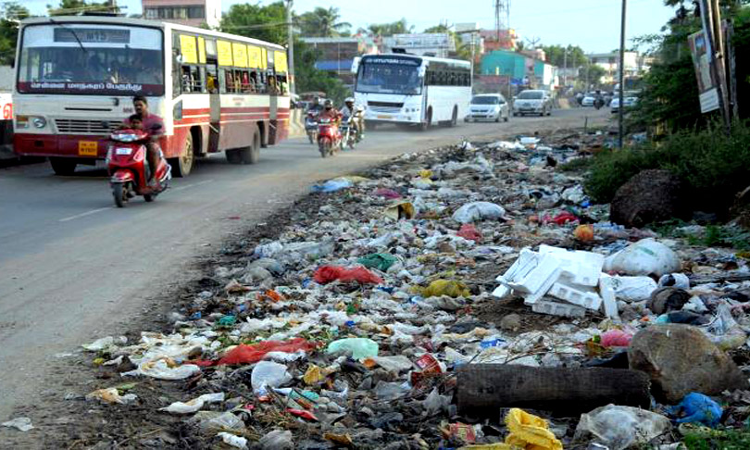
The Karnataka High Court recently observed that “the city of Bengaluru, despite its stature as a global metropolis, is plagued by the chronic issue of “garbage blackspots,” which are areas of recurrent, unauthorised waste dumping that pose a significant and ongoing threat to public health and the urban environment.”Justice Suraj Govindaraj, to tackle this issue, has directed...
This is a premium content
Available exclusively to
Our subscribers
Subscribe Premium 
INR 1099+GST
Your support helps us to bring you more content at
an affordable subscription scheme !!!
All payment options available
The Karnataka High Court recently observed that “the city of Bengaluru, despite its stature as a global metropolis, is plagued by the chronic issue of “garbage blackspots,” which are areas of recurrent, unauthorised waste dumping that pose a significant and ongoing threat to public health and the urban environment.”
Justice Suraj Govindaraj, to tackle this issue, has directed the establishment of an Integrated-Technology-Driven, Solid Waste Management Governance Framework.
He said, “This Court is of the considered opinion that the management of solid waste is not merely a statutory duty of municipal corporations but a profound constitutional obligation, inextricably linked to the fundamental Right to life under Article 21 of the Constitution of India.”
Stating that there is a critical and urgent need for a proactive, systemic, and technologically advanced solution to a problem that has been allowed to fester for far too long. The Right to a clean, hygienic, and dignified environment is not a privilege to be bestowed but a right to be enforced.
The court issued directions with a view to giving full effect to the constitutional mandate of Article 21 and to ensure that the citizens of Bengaluru are provided with an efficient, transparent, and accountable system of solid waste management.
The key directions include.
- The Chief Commissioner of the Greater Bangalore Authority, along with the Zonal Commissioners of each of the Corporations coming under the GBA, with the assistance of the Principal Secretary, e-Governance Department, Government of Karnataka, shall forthwith commence the design, development, and implementation of a single, unified, and integrated digital platform for Solid Waste Management for the city of Bengaluru.
- The CCTV surveillance network shall function as a primary data-gathering and enforcement sensor network, feeding critical, real-time information directly into the analytical and operational modules of the unified digital platform
- Citizen grievances about blackspots lodged via the platform's mobile application will inform the strategic deployment and monitoring focus of the surveillance system. Conversely, evidence of violations captured by the CCTV network will be processed, and penalties will be issued and tracked through the enforcement modules of the same digital platform.
- A “Nodal Oversight and Committee for SWM Surveillance" (hereinafter "the Committee") shall be constituted by the Chief Secretary, Government of Karnataka, within a period of fifteen (15) days from the date of this Order.
- Live Vehicle Tracking: A real-time, map based interface, accessible to all citizens, displaying the current location of waste collection vehicles operating in their respective wards. This feature shall also provide an Estimated Time of Arrival (ETA) for collection at the citizen's locality, thereby fostering predictability and accountability.
- Performance Scorecards: An intuitive, easy-to-understand public dashboard displaying key performance metrics for each ward and for each SWM contract awarded. This shall include, but not be limited to, daily collection status (percentage of households covered), source segregation compliance rates, number of garbage vulnerable points (blackspots) identified and cleared, and average grievance resolution time. This feature makes performance publicly visible, comparable, and holds officials and contractors directly accountable to the citizens they serve.
- Integrated Grievance Redressal System: A single, streamlined module for citizens to report all SWM-related grievances, such as missed collections, overflowing bins, illegal dumping, or non-segregation. Every complaint lodged must be accompanied by a geo-tagged photograph of the issue, which the application shall facilitate. Upon submission, a unique docket number shall be generated and communicated to the complainant via SMS and in-app notification for tracking purposes.
- To prevent the "accountability gap" where grievances are prematurely closed by officials without actual resolution, this system shall incorporate a mandatory closure protocol. A grievance ticket shall only be marked as "Resolved" and officially closed after the original complainant verifies through the application that the issue has been addressed to their satisfaction. Should the complainant dispute the resolution, the ticket shall be automatically reopened and escalated to a higher authority. This is a non-negotiable feature essential for building and maintaining public trust.
- Information Hub: A dedicated section providing clear, multi-lingual, and pictorial information on Bengaluru's specific waste segregation protocols, schedules for different types of waste collection (e.g., sanitary, e-waste), and a map of nearby recycling centers or dry waste collection centers.
- The Committee to in 90 days, frame and notify a comprehensive SOP for the management of the SWM Surveillance System. This SOP shall be a public document accessible to citizens, and must be designed to give full effect to the privacy-protecting principles enunciated in Puttaswamy's case.
- To build legitimacy and ensure long-term public acceptance, the enforcement mechanism under this Order must be transparent, evidence-based, and uniform. By providing offenders with the video evidence against them and establishing a clear, accessible grievance redressal mechanism, the system moves from being perceived as an arbitrary punishment to a transparent regulatory process. This shift is crucial for fostering a culture of voluntary compliance.
- Grievance Redressal Mechanism : A robust and accessible grievance redressal mechanism is fundamental to the fairness of this system. Accordingly, an online portal and a dedicated helpline shall be established within one hundred and twenty (120) days for citizens
These directions were given by the court while dismissing a petition filed by Municipal Solid Waste Management contractors questioning the request for proposals/invitation for tender dated 30.07.2025 in respect of 33 packages issued by the respondents.
Appearance: Senior Advocate Udaya Holla for Advocate Maya Holla for Petitioners.
Advocate General K Shashi Kiran Shetty a/w Advocate Namitha Mahesh, S N Prashanth Chandra for FOR R2 TO R4.
HCGP Anukanksha Kalkeri for R1.
Citation No: 2025 LiveLaw (Kar) 384
Case Title: B S Kiran Kumar & Others AND State of Karnataka & Others
Case No: WRIT PETITION NO. 27474 OF 2025


