



- Home
- /
- High Courts
- /
- Karnataka High Court
- /
- Karnataka High Court Upholds POCSO...
Karnataka High Court Upholds POCSO Acquittal, Says Minor Girl Had 'Enough Worldly Knowledge'
Amruta Gangajaliwale
7 Nov 2026 11:20 AM IST
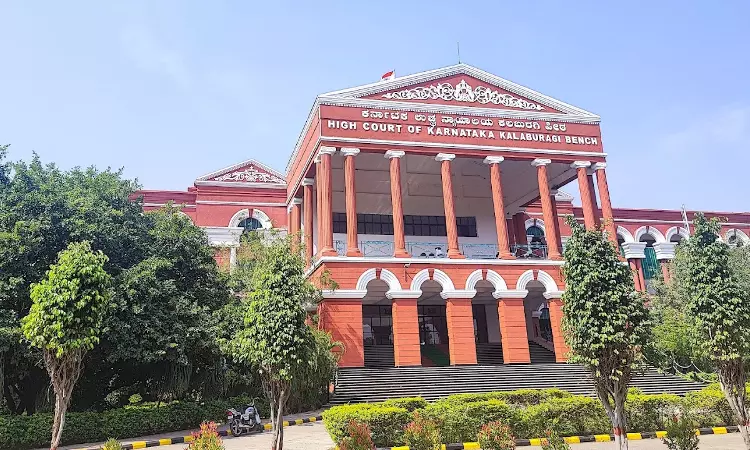
The Karnataka High Court at Kalaburagi upheld the acquittal of a man accused of kidnapping and repeatedly raping a minor girl, noting that the facts showed the girl had enough worldly knowledge and was in the habit of having love affairs and extracting money. The Division Bench of Justice Ashok S. Kinagi and Justice Subramanya reiterated the principle set out by Apex Court that an order...
This is a premium content
Available exclusively to
Our subscribers
Subscribe Premium 
INR 1099+GST
Your support helps us to bring you more content at
an affordable subscription scheme !!!
All payment options available
The Karnataka High Court at Kalaburagi upheld the acquittal of a man accused of kidnapping and repeatedly raping a minor girl, noting that the facts showed the girl had enough worldly knowledge and was in the habit of having love affairs and extracting money.
The Division Bench of Justice Ashok S. Kinagi and Justice Subramanya reiterated the principle set out by Apex Court that an order of acquittal by a trial court adds up to the presumption of innocence in favour of the accused, and that an appellate court should be “relatively slow” in reversing such an order.
The Bench observed that the trial court considered entire evidence on record while concluding that the prosecution failed to establish the accused's guilt beyond reasonable doubt.
The trial court relied on the victim girl's past love affairs— which were followed by monetary settlement— the delay in lodging the complaint and the fact that panch witnesses did not support the prosecution's case to conclude that the prosecution failed to prove guilt beyond reasonable doubt.
The High Court further observed that the girl, despite being a minor, had “worldly knowledge” and knew “what is right and wrong for her”.
“The facts clearly shows that the victim girl has enough worldly knowledge and she is in the habit of having love affairs and extracting money. She extracted money from Tukaram Bakade. The age of the victim as on the date of the alleged offence is 17 years, 03 months and 19 days, and she was in a position to understand what is right and wrong for her,” the Court said.
The case arose from a complaint filed by the victim's father on September 23, 2023. He stated that his daughter went missing on September 20, 2023, after she had stepped out to give meals to her brother on their agricultural land. Police arrested the accused on September 29, 2023.
After investigation, a chargesheet was filed under Sections 363 and 376(2)(n) of the Indian Penal Code (IPC) and Section 6 of the POCSO Act. The Special Court took cognizance on December 2, 2023 and framed charges on December 12, 2023.
The victim, examined as PW.1, deposed that she had been in contact with the accused for two years, that he followed her and professed love with a promise of marriage, and that despite her telling him he was already married, he induced her and committed rape. The Special Court acquitted the accused. Aggrieved by this, the State approached the High Court. The State argued that there is a presumption of guilt under Section 29 of the POCSO Act, which has not been rebutted by the accused.
While examining the State's appeal to set aside the special court's order and convict the accused, the High Court placed reliance on the Supreme Court's ruling in Jafarudheen and others vs. State of Kerala (2022). In that case, it was held, “An order of acquittal adds up to the presumption of innocence in favour of the accused. Thus, the Appellate Court has to be relatively slow in reversing the order of the Trial Court rendering acquittal. Therefore, the presumption in favour of the accused does not get weakened but only strengthened. Such a double presumption that enures in favour of the accused has to be disturbed only by thorough scrutiny on the accepted legal parameters.”
Accordingly, the High Court dismissed the appeal.
Tags


