



- Home
- /
- High Courts
- /
- Karnataka High Court
- /
- 'Child Held Captive To Criminal...
'Child Held Captive To Criminal Justice System': Karnataka High Court Slams 12-Year Delay, 'Adjournment Culture' In POCSO Trial
Sebin James
14 July 2026 12:30 PM IST
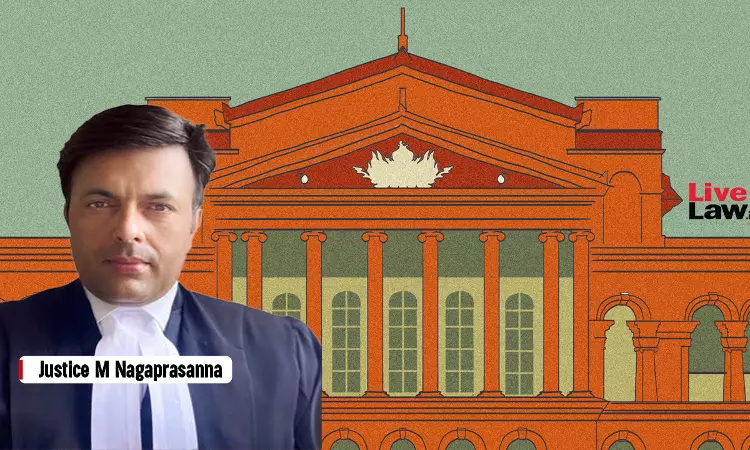
"Nothing can be more appalling than a case concerning rape of a minor child pending for 12 long years," Court observed.
The Karnataka High Court recently lamented that a child victim of sexual assault was 'held captive' by the legal system for over a decade, while the trial court indulged in a 'culture of repeated adjournments'. [2026 LiveLaw (Kar) 245]The single judge bench of Justice M. Nagaprasanna, while disposing of a writ petition in a 2014 POCSO case, directed the Special Court to conclude the...
This is a premium content
Available exclusively to
Our subscribers
Subscribe Premium 
INR 1099+GST
Your support helps us to bring you more content at
an affordable subscription scheme !!!
All payment options available
The Karnataka High Court recently lamented that a child victim of sexual assault was 'held captive' by the legal system for over a decade, while the trial court indulged in a 'culture of repeated adjournments'. [2026 LiveLaw (Kar) 245]
The single judge bench of Justice M. Nagaprasanna, while disposing of a writ petition in a 2014 POCSO case, directed the Special Court to conclude the proceedings within eight weeks, terming the delay 'deeply disquieting' and 'continued injustice'.
“…The case at hand is not one involving an ordinary offence. It concerns the alleged rape of a child, barely 6 years of age. Every adjournment granted without compelling justification has not merely postponed a hearing; it has prolonged the trauma of a child who entered the criminal justice system as a victim and has remained captive to it for over ten years.Justice delayed, in cases of this nature, does not remain a mere procedural lapse - it assumes the character of a continuing injustice”, the Court observed.
The High Court pointed out that Section 35(2) of POCSO Act stipulates the completion from trial within a one-year period from the date of taking cognizance.
“Adjournments should be exception; but unfortunately, has become a rule…. The Apex Court has repeatedly deprecated this unhealthy culture of mechanical adjournments and has warned that such acts of adjournments ultimately become a silent accomplice to miscarriage of justice …. It is not one year, it is not two years, it is 12 long years of pendency. Nothing can be more appalling than case concerning rape of a minor child, pending in the Court for 12 long years…”, the court further said highlighting 309 CrPC which requires trials to proceed from day to day.
On another note, the Court also said that a child victim is not required to sign a statement recorded under Section 164 CrPC.
“…This legislative omission is neither inadvertent nor accidental. It is a conscious recognition of the peculiar vulnerability of child victims…A victim could be a toddler scarcely capable of speech, a child of tender years unable to comprehend the significance of a signature, or an adolescent traumatised by the very incident that necessitates the recording of the statement. To insist upon the signature of every child, irrespective of age, maturity or mental condition, would be to import into the statute a requirement which the legislature, in its wisdom, deliberately refrained from engrafting.”, the Court held further.
The case pertains to the alleged sexual assault of a six-year-old girl at a school in Bengaluru in 2014. A charge sheet was filed under Sections 376 of the IPC and Sections 4, 6, and 21 of the POCSO Act. The trial remained pending for over a decade.
The complainant-petitioner had approached the High Court challenging the trial court's order refusing to summon the Magistrate who recorded the victim's statement under Section 164 CrPC as well as the speedy disposal of trial.
Before the Trial Court and The High Court, the petitioner-father argued that the Magistrate's examination was imperative as the statement lacked the signatures of both the victim and the Magistrate.
“…. To prove a statement recorded under Section 164 of the Code, it must be shown to and marked through its maker, who must then acknowledge having made the statement before the Magistrate and identify the same. Once this is done, the statement stands proved and may be used for the purpose of trial…”, the court added.
On the aspect of summoning the magistrate by the Special Court, the court underscored that it can be done only when the witness completely denies having made such a statement.
“…the Magistrate is not to be summoned merely because a party entertains a speculative apprehension regarding the authenticity of the statement or seeks to cure perceived procedural irregularities. The judicial act of recording a statement under Section 164 of the Code enjoys a presumption of regularity, and the sanctity attached to such proceedings cannot be lightly diluted by routinely compelling judicial officers to enter the witness box…”, the court opined.
The court hence held that the absence of a child victim's signature on a statement recorded under Section 164 CrPC does not vitiate the proceedings, and that Magistrates should not be summoned to prove such statements except in exceptional circumstances.
Accordingly, the special court was directed to conclude the trial within 8 weeks without unwanted adjournments.
“…the parties to the lis shall extend their fullest cooperation to facilitate the expeditious conclusion of the trial. Should either side indulge in dilatory tactics or seek unwarranted adjournments, it shall be open to the learned Special Court to decline such requests and to adopt every measure permissible…”, the court concluded.
Case Title: P v. State of Karnataka & Ors.
Case No.: Writ Petition No. 7053 of 2024
Citation: 2026 LiveLaw (Kar) 245
Appearances: Petitioner- Adv. Spoorthi Cotha, Adv Hari Om Tiwari\
Rashmi Patel, High Court Government Pleader (HCGP) for Respondent No. 1[State]

Sebin James
Sebin James is a Correspondent with LiveLaw, covering the Karnataka High Court

