



- Home
- /
- High Courts
- /
- Karnataka High Court
- /
- Certified Copy Of Decree Sufficient...
Certified Copy Of Decree Sufficient For Sub-Registrar To Record Cancellation Of Registered Documents: Karnataka HC Issues Guidelines
Sebin James
13 April 2026 8:25 PM IST
The Karnataka High Court has recently held that if a party produces a certified copy of the jurisdictional court's decree and judgment before the registering authority, the latter would be duty-bound to act upon it for cancelling registered deeds even without a formal communication of the order [contemplated under Section 31(2) of the Specific Relief Act] from the court.The single-judge bench...
This is a premium content
Available exclusively to
Our subscribers
Subscribe Premium 
INR 1099+GST
Your support helps us to bring you more content at
an affordable subscription scheme !!!
All payment options available
The Karnataka High Court has recently held that if a party produces a certified copy of the jurisdictional court's decree and judgment before the registering authority, the latter would be duty-bound to act upon it for cancelling registered deeds even without a formal communication of the order [contemplated under Section 31(2) of the Specific Relief Act] from the court.
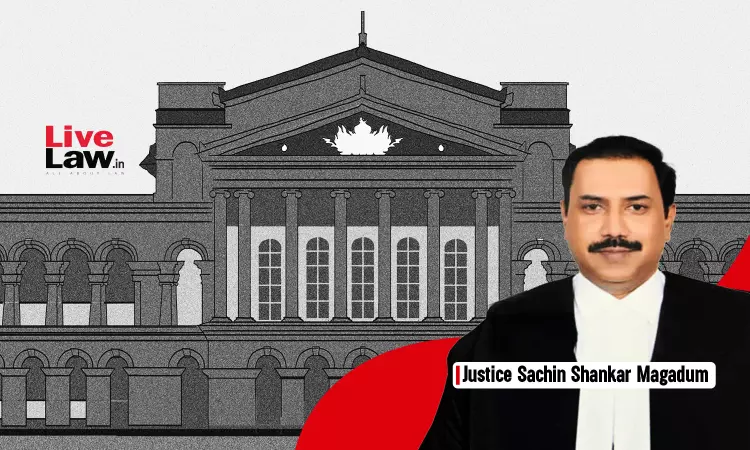
The single-judge bench of Justice Sachin Shankar Magadum issued the following directions to the sub-registrars across the state:
“…Even in cases where no formal communication is received from the Court, if a party produces a certified copy of the judgment and decree declaring the registered instrument as cancelled or void, the Sub-Registrar shall not refuse to act upon the decree….In such cases, the Sub-Registrar shall verify the authenticity of the certified copy and thereafter record the cancellation in the relevant registers and indexes…”
The court added that the role of sub-registrars is 'ministerial in nature'. They shouldn't be making enquiries about the correctness of the decree or demanding separate orders of other authorities like High Court once a competent civil court declared a document to be void, the single judge bench further said.
“…..When a certified copy of a decree cancelling a registered instrument is produced, the registering authority cannot refuse to act upon it merely on the ground that the decree was not separately communicated by the Court. Certified copies issued by courts carry statutory authenticity and must be treated as conclusive proof of the decree”, the court further clarified in clear terms.
In the current case, the court allowed the writ petition filed by an aggrieved decree holder and asked the concerned Sub Registrar(Mahadevapura) to record the cancellation of a Joint Development Agreement (JDA) and Power of Attorney (PoA), which was rendered 'void' by the civil court's order. The JDA was entered by the owner with a developer who failed to commence the work on the project promptly. Then, the original owner approached the Commercial Court seeking cancellation of the JDA and PoA which was allowed.
Previously, the Sub Registrar had also issued an endorsement that declined to note the cancellation of the Joint Development Agreement and GPA. The Registering Authority reasoned that the commercial court had not communicated the decree directly, the certified copy wasn't sufficient, and that directions from the High Court were required.
“The endorsement issued by the Sub-Registrar declining to give effect to the decree therefore reflects arbitrariness and abdication of statutory duty. Public authorities entrusted with statutory functions are expected to act with due diligence and respect for judicial orders”, the court also highlighted the necessity of streamlining the communication between civil courts and registering offices.
Section 31(2) of the Specific Relief Act,1963 talks about courts sending a copy of the decree and judgment to the registering authorities, the court noted. However, it shouldn't lead to unnecessary delays, and avoidable litigation wherein the clients approach the high court to give effect to the decree in their favour by availing Article 226 of the Constitution, it remarked.
Therefore, the court issued the following directions to the civil courts to ensure that cancellation of registered documents is duly communicated to the registering authorities:
“…. the Court shall direct the office to transmit a copy of the decree to the jurisdictional Sub- Registrar in whose office the document was registered…The communication shall ordinarily be sent within four weeks from the date of decree…. The communication shall clearly mention the document number, the date of registration, the book and volume, and the nature of the document cancelled…”.
Further, it has been directed by the High Court to ensure that the transmitted copies are accompanied by covering letters from the civil court, asking the Sub Registrar to make necessary changes in the entries.
In the case at hand, the court also directed the concerned Sub Registrar to make entries in the relevant register and Encumbrance records strictly in accordance with Rule 123 of the Karnataka Registration Rules, within four weeks.
The petition was allowed.
Case Title: Mr Antony Samy K v. The State of Karnataka & Another
Case No: Writ Petition No. 6910 of 2026
Click Here To Read/Download Order
Citation: 2026 LiveLaw (Kar) 148
Tags

Sebin James
Sebin James is a Correspondent with LiveLaw, covering the Karnataka High Court

