



- Home
- /
- High Courts
- /
- Karnataka High Court
- /
- 150-200 People On Motorcycles...
150-200 People On Motorcycles Raising Political Slogans Not Unlawful Assembly In Absence Of Common Object: Karnataka High Court
Amruta Gangajaliwale
23 Nov 2026 4:45 PM IST
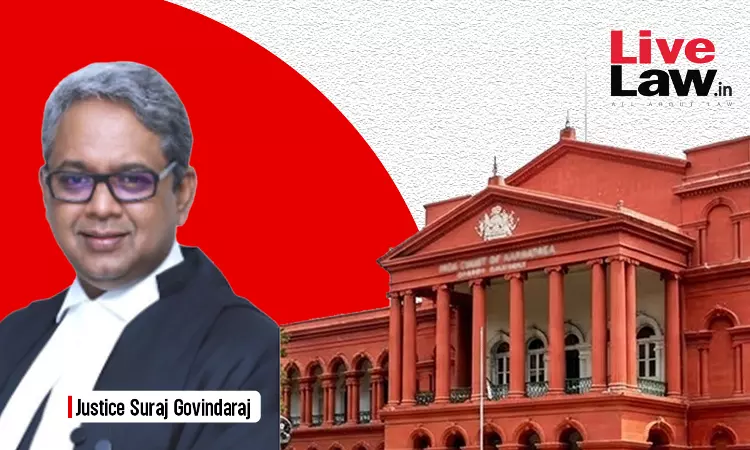
The Karnataka High Court held that the a gathering of 150-200 people on motorcycles and raising slogans in support of a political party does not automatically constitute an unlawful assembly under Section 141 IPC, unless there is material showing they shared a specific unlawful common object. Allowing a criminal petition filed by one Farooq Mugili, Justice Suraj Govindaraj quashed...
This is a premium content
Available exclusively to
Our subscribers
Subscribe Premium 
INR 1099+GST
Your support helps us to bring you more content at
an affordable subscription scheme !!!
All payment options available
The Karnataka High Court held that the a gathering of 150-200 people on motorcycles and raising slogans in support of a political party does not automatically constitute an unlawful assembly under Section 141 IPC, unless there is material showing they shared a specific unlawful common object.
Allowing a criminal petition filed by one Farooq Mugili, Justice Suraj Govindaraj quashed criminal proceedings against him. Mugili has been accused of arriving at the complainant's place with nearly 200 other people, raising slogans, damaging property and assaulting the complainant.
“An assembly of five or more persons does not become an unlawful assembly merely because of the number of persons gathered at a particular place. The common object of the persons composing the assembly must fall within one or more of the categories enumerated under Section 141 of the IPC,” the Court said.
Applying this principle to the allegations of political sloganeering, Justice Govindaraj held,
“The mere fact that a large number of persons allegedly arrived at the spot on motorcycles and raised slogans in support of a political party would not, by itself, constitute an unlawful assembly. There must be some material to indicate that the persons assembled shared a common object of the nature contemplated under Section 141 of the IPC.”
The case originated from a complaint lodged on May 19, 2018, by one B. Vigneshwara Bhat. Based on the complaint, police registered an FIR. The complainant alleged that around 8.45 pm that evening, the petitioner along with 150 to 200 others arrived on motorcycles, raised political slogans, abused and assaulted the complainant when approached, and damaged his property as well as a sacred platform (Devarakatte).
Following investigation, a charge-sheet was filed on July 26, 2020, for offences punishable under Sections 143 (unlawful assembly), 147 (rioting), 148, and 506 (criminal intimidation) read with Section 149 of the IPC, alongside Sections 2(a) and 2(b) of the Karnataka Prevention of Destruction and Loss of Property (KPDLP) Act, which concerns punishment for committing mischief in respect of property.
Commenting on the provisions of KPDLP Act, the Court said, “Insofar as the offences under Section 2(a) and (b) of the KPDLP Act are concerned, the essential requirement for attracting the said provisions is the commission of mischief resulting in loss or damage to property.”
The Court, however, noted that the mahazar drawn during the course of investigation does not disclose any such damage or destruction.
“In the absence of any material indicating that loss or damage was caused to the property, the essential ingredients of Section 2(a) and (b) of the KPDLP Act are not made out,” the Court held.
Similarly, the Court observed that essential ingredients of the other alleged offences were also not met.
“The mahazar does not disclose any damage to the property, the witness statements do not substantiate the alleged acts of violence, and there is no material to establish the common object necessary for attracting Sections 143, 147 and 149 of the IPC. The ingredients necessary to attract Sections 148 and 506 of the IPC are also not disclosed from the material placed before this Court,” the Court said.
It added, “In that view of the matter, this Court is of the considered opinion that the material collected during investigation, even if taken at its face value, does not disclose the commission of the offences alleged against the petitioner. Continuation of the proceedings against the petitioner, in the absence of material constituting the essential ingredients of the alleged offences, would amount to an abuse of the process of law.”
Accordingly, the High Court allowed the criminal petition and quashed the criminal proceedings initiated against the petitioner.
Tags


