



- Home
- /
- High Courts
- /
- Karnataka High Court
- /
- Karnataka High Court Directs...
Karnataka High Court Directs Mandatory Collection Of Blood Samples Of Injured Or Deceased Persons In Criminal Cases
Mustafa Plumber
12 Dec 2025 1:44 PM IST
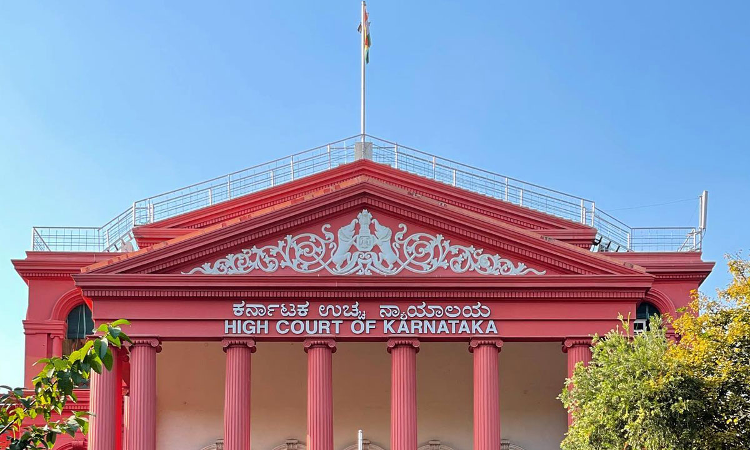
The Karnataka High Court recently directed the Director General and Inspector General of Police of Karnataka and the Director of the Department of Prosecutions to issue necessary instructions to all concerned to mandatorily collect the blood samples of the injured or the deceased, as the case may be, and to submit such blood grouping reports to the court as part of the prosecution papers...
This is a premium content
Available exclusively to
Our subscribers
Subscribe Premium 
INR 1099+GST
Your support helps us to bring you more content at
an affordable subscription scheme !!!
All payment options available
The Karnataka High Court recently directed the Director General and Inspector General of Police of Karnataka and the Director of the Department of Prosecutions to issue necessary instructions to all concerned to mandatorily collect the blood samples of the injured or the deceased, as the case may be, and to submit such blood grouping reports to the court as part of the prosecution papers during trial.
A Division Bench of Justice R. Devdas and Justice B. Muralidhara Pai issued this direction while dismissing an appeal filed by one Bhimappa, who was convicted and sentenced for murdering his wife.
On appreciating the evidence led by the prosecution in the trial court, the Bench noted that the investigating agency had not obtained the blood grouping report of the deceased.
Referring to the evidence of the Investigating Officer, the court noted that he spoke about the recovery of blood-stained articles from the scene of the crime as well as the seizure of the blood-stained clothes from the deceased and the accused. The prosecution had marked an FSL report pertaining to its chemical analysis, which stated that the blood was human blood of the 'O' blood group. However, the prosecution had not produced any other material on record to show that those blood stains were that of the deceased.
Stating that the lapse on the part of the investigating agency had no bearing on the outcome of the present case because of the reliable ocular testimony available on record, the Bench added, “However, the same cannot be said in every case.”
The Court emphasised that the purpose of collecting blood-stained mud, clothes, and other incriminating articles is to link the circumstantial evidence and corroborate the guilt of the accused. If the investigating agency fails to obtain the blood grouping report of the deceased or the injured, the very object of collecting blood-stained material would be defeated. “It is our experience that the investigating agency often commits such mistakes,” it observed.
Accordingly, it held: “As such, we deem fit to issue a direction to the Director General and Inspector General of Police of Karnataka and the Director of Department of Prosecutions to issue necessary instructions to all concerned, to mandatorily collect the blood samples of the injured or the deceased, as the case may be, and to submit such blood grouping reports to the court as part of the prosecution papers to avoid similar lapses in future.”
The Court also noticed that the trial court had failed to comply with Sections 357 and 357A of the Cr.P.C., which provide for awarding compensation in every relevant criminal case to the victims.
Noting the facts of the case—where the accused killed his wife, aged about 32 years, leaving their three minor children (two daughters and a son) orphaned—the Court observed that the trial court imposed only a nominal fine on the accused, taking into account his financial condition.
It stated, “This Court finds no justification for not invoking Section 357A of the Cr.P.C. in this case.”
It further held, “The awarding or refusal of compensation may be within the discretion of the court, but reasons are to be recorded by the court to disclose the application of mind.”
Accordingly, the Court recommended compensation to be paid to the dependents of the victim under Section 357A(2) of the Cr.P.C., and directed all judicial officers in the State to strictly comply with the mandatory requirements of law.
It added, “The registry is directed to forward a copy of the judgment to all the Judicial Officers working in the State for strict compliance with Sections 357 and 357A of Cr.P.C. or corresponding Sections 395 and 396 of the Bharatiya Nagarik Suraksha Sanhita, 2023, as the case may be, in all criminal cases.”
Appearance: Advocate A R Patil for Appellant.
Additional SPP M. B. Gundawade for Respondents.
Citation No: 2025 LiveLaw (Kar) 431
Case Title: Bhimappa AND State of Karnataka
Case No: CRIMINAL APPEAL NO.100335 OF 2022


