



- Home
- /
- High Courts
- /
- Karnataka High Court
- /
- Playing In Unsanctioned Domestic...
Playing In Unsanctioned Domestic Hockey Tournaments Doesn't Attract Automatic Disqualification From State Leagues: Karnataka High Court
Sebin James
8 July 2026 7:30 PM IST
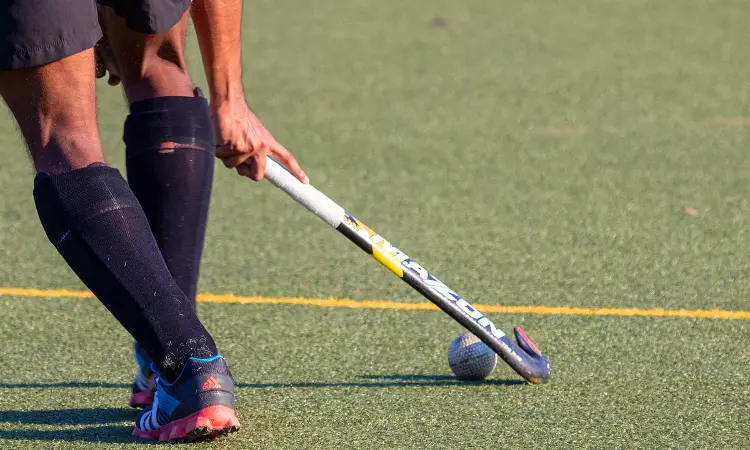
The Karnataka High Court has on Wednesday [July 8] held that participation in unsanctioned domestic hockey tournaments does not lead to automatic ineligibility for other sanctioned state-level leagues.[2026 Liveaw (Kar) 239]In doing so the Court directed Hockey Karnataka to allow seven players, who have played in international and state levels, to participate in the 10th Hockey Karnataka...
This is a premium content
Available exclusively to
Our subscribers
Subscribe Premium 
INR 1099+GST
Your support helps us to bring you more content at
an affordable subscription scheme !!!
All payment options available
The Karnataka High Court has on Wednesday [July 8] held that participation in unsanctioned domestic hockey tournaments does not lead to automatic ineligibility for other sanctioned state-level leagues.[2026 Liveaw (Kar) 239]
In doing so the Court directed Hockey Karnataka to allow seven players, who have played in international and state levels, to participate in the 10th Hockey Karnataka League Championships 2026.
A single-judge bench of Justice Suraj Govindaraj partly allowed a writ petition challenging a letter issued by the Secretary of Hockey Karnataka dated June 18 to the Sports Welfare Officer, which declared the players ineligible for the upcoming league championship and the consequent selection process for the Murugappa Gold Cup Hockey Tournament.
“…The issue relevant to the present matter is simple, namely, whether there would be automatic ineligibility on account of participation in an unsanctioned event.Clause B 1.2.1 of the Regulations relating to Sanctioned and Unsanctioned Events by Hockey India [2019] only mandates that an athlete or individual is ineligible for 12 months, who is found to have participated in unsanctioned events, to participate in 'any international events'. The ineligibility is restricted to international events and not domestic events. Clause 1.2.2 states that a penalty can be imposed for breach of the Clause 1.2, and makes it very clear that if there is a default by any player participating in unsanctioned domestic tournaments (including district, state, or national), proceedings have to be taken up by the Grievance Redressal Committee. There is no automatic disqualification in relation thereto...”, the court reasoned.
For context, the players, represented by Advocate Somanna K P, had argued that their participation in an unsanctioned could not lead to an automatic ban from domestic state events. They placed heavy reliance on the Hockey India Regulations Regarding Sanctioned and Unsanctioned Events (August 2019).
Appearing for Hockey Karnataka, Adv Dr. R. Ravishankar submitted that the State Association has the authority to maintain discipline within the sport. He also submitted that the Bye-laws of Hockey India are mutatis mutandis adopted by Hockey Karnataka.
He argued that the objective of the 2019 Sanctioned & Unsanctioned Regulations was to protect players from being misused by unsanctioned bodies and to regulate their schedules. He further submitted that since the petitioners admittedly participated in the unsanctioned tournaments, the respondents could take disciplinary action without adhering to the principles of natural justice.
Adv. Udit Dedhiya, appearing for Hockey India, supported this view taken by the state organisation.
The court, however, clarified that Article 22 of the Hockey India Bye Laws mandates the constitution of a Grievance Redressal Committee, which must be chaired by a retired High Court judge or an eminent legal practitioner. The procedure requires a suo motu reference or formal complaint, followed by an issuance of notice to the player, who must be granted two weeks to file an explanation before any disciplinary action is taken.
“…The procedure to be followed by the Grievance Redressal Mechanism [Article 5 of Rules & Regulations of Grievance Redressal Committee] is upon complaint or suo motu reference, where two weeks' time is to be given to reply, complying with the principles of natural justice. In the present case, no such action was taken by the Committee, and no suo motu reference has been made. When no such reference has been made and no order passed by the Grievance Redressal Committee, the question of disqualification would not arise. In so far as domestic or national tournaments are concerned, Clause 1.2.2 is required to be followed before coming to a conclusion that any player is ineligible..”, the court held.
In the present case, the Court found that no such procedure was followed by Hockey Karnataka. No notice was issued to the petitioners, no inquiry was conducted, and no Grievance Redressal Committee was constituted to determine their eligibility. IN the absence of the above, no ineligibility can be attributed to the players who wants to participate in local and national sanctioned tournaments, the court said.
“…The Court cannot consider whether the petitioners have any ineligibility at this stage; it must be considered by the Grievance Redressal Committee upon issuance of notice to the petitioners. The petitioners have clearly established that it is such a procedure that is required to be followed. By the impugned letter, the Secretary of Hockey Karnataka could not have held that the petitioners would be ineligible to participate in the League Championships. In view of the aforesaid, it will be for the Grievance Redressal Committee to consider the matter….”, the court concluded.
Hence, the single judge bench held that the impugned letter, which held the petitioner's ineligible for the League Championship, could not be sustained.
The court has granted liberty to Hockey Karnataka to initiate disciplinary proceedings against the petitioners strictly in accordance with the Hockey India Bye-laws and Regulations, before the Grievance Redressal Committee.
Before parting, the court also directed the respondents to act on the printout of the operative portion of the order without insisting on the entire certified copy.
Case Title: Nithin Thimmaiah & Ors. v. Hockey Karnataka & Ors.
Case No.: WP 20256/2026
Citation: 2026 LiveLaw (Kar) 239
Counsel for Petitioners: Sri Somanna K P
Counsel for Hockey Karnataka: Dr. R. Ravishankar
Counsel for Hockey India: Sri Udit Dedhya
Tags
Sebin James
Sebin James is a Correspondent with LiveLaw, covering the Karnataka High Court

