



- Home
- /
- High Courts
- /
- Karnataka High Court
- /
- Karnataka High Court Quashes...
Karnataka High Court Quashes Cheating FIR Against Accused In Ambidant Investment 'Scam', Refuses To Quash ED Summons In PMLA Case
Sebin James
14 Sept 2026 1:35 PM IST
The Karnataka High Court has recently quashed a cheating FIR against realtor-businessman Vijay Tata, booked in the Ambidant Marketing investment "scam"–a company accused of cheating its customers of their money, holding that there was no incriminating material against him except inadmissible confession statements of co-accused. [2026 LiveLaw (Kar) 347]For context, in 2018, a case was...
This is a premium content
Available exclusively to
Our subscribers
Subscribe Premium 
INR 1099+GST
Your support helps us to bring you more content at
an affordable subscription scheme !!!
All payment options available
The Karnataka High Court has recently quashed a cheating FIR against realtor-businessman Vijay Tata, booked in the Ambidant Marketing investment "scam"–a company accused of cheating its customers of their money, holding that there was no incriminating material against him except inadmissible confession statements of co-accused. [2026 LiveLaw (Kar) 347]
For context, in 2018, a case was registered at Devarajeevanahalli Police Station, Bengaluru, against Ambidant Company and its directors under Sections 4, 5 and 6 of the Prize Chits and Money Circulation Schemes (Banning) Act, 1978, and other penal provisions.
M/s Sanchaya Land and Estate Pvt. Ltd, of which Tata is a representative, is said to have entered into a number of agreements of sale with M/s. Ambidant Construction Pvt. Ltd, in terms of which M/s. Sanchaya had agreed to register various flats/apartments in favour of M/s. Ambidant Construction Pvt. Ltd. or its nominees. According to these agreements, flats were allotted to approximately 85 nominees of Ambidant.
The petitioner-Vijay Tata was not initially arraigned as an accused in the matter. After Central Crime Branch (CCB) took up the investigation, it filed a charge sheet arraigning the petitioner as accused No.5, as a result of which the Trial Court took cognizance and issued process against him.
The State alleged that the petitioner, being a representative of M/s. Sanchaya was the one behind the scene, who received the proceeds of the crime.
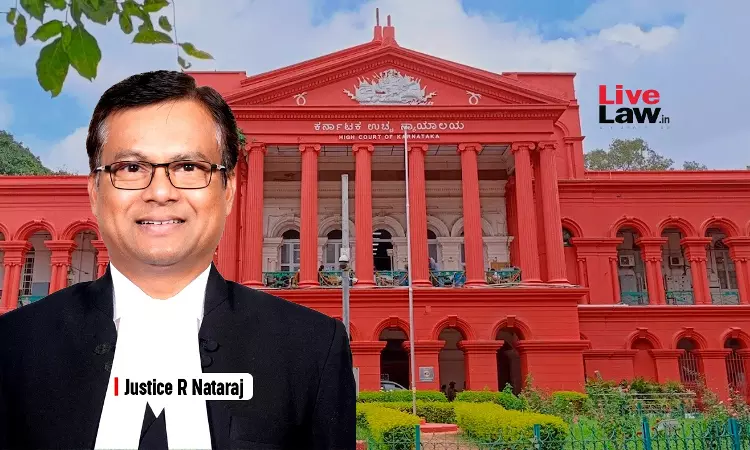
However, the single judge bench of Justice R Nataraj has declined to interfere with summons issued by the Enforcement Directorate (ED), permitting the agency to seek his personal presence for recording statements.
"As regards, the summons issued by the Enforcement Directorate, it is well settled that the Enforcement Directorate is entitled to summon not only the accused in the predicate offence but also those persons who have knowledge about the placement of the proceeds of the crime. The petitioner has throughout the proceedings claimed that he was the authorised representative of M/s. Sanchaya. Therefore, once the predicate offence was registered against the other accused, the Enforcement Directorate was entitled to summon the petitioner"
However the court quashed the FIR against the petitioner under IPC offences and under the Prize Chit Act.
"Except for the accusations made in the confession statements of accused Nos.2 and 3 which are per se inadmissible, there is no material to prosecute the petitioner. It is not as if the petitioner was the recipient of money from M/s. Ambidant. Therefore, there is nothing on record to accuse the petitioner of having committed an offence under Sections 4, 5 and 6 of the Act, 1978. As regards the offence under Sections 120B, 420, 465, 468 and 471 of IPC, the allegations against the petitioner do not, in any manner, constitute offences punishable under the said provisions,” the Court said.
As a reason, the court noted that despite the Court calling for materials to justify the charge sheet, no incriminating material was produced. The Registrar of Companies extract showed the petitioner was not a director of M/s Sanchaya.
Except for the confession statements of co-accused, which the Court held were 'per se inadmissible', there was no material to prosecute the petitioner. The Court also found that the petitioner was not the recipient of any money from M/s Ambidant.
“…In addition to this, M/s. Sanchaya which is the recipient of the proceeds of alleged crime, is not arraigned as an accused in the case. Therefore, as rightly contended by the learned counsel for the petitioner, unless M/s. Sanchaya was arraigned as an accused, the petitioner could not be prosecuted for acts of M/s. Sanchaya…a perusal of the order dated 07.03.2019 passed by the Trial Court would indicate that the Trial Court made an omnibus statement that the charge sheet papers were produced and proceeded to take cognizance. It is now trite that taking cognizance of the offences is not an administrative act, but a conscious judicial act, which has to be performed with great care and caution. The Trial Court did not even apply its mind…”. The court further noted.
The question whether CCB is a police station and whether entrustment of investigation to it violated Section 36 CrPC was kept open in view of pending case before the Supreme Court.
The Court, hence, allowed the writ petition, and quashed the FIR and the charge sheet insofar as the petitioner (accused No.5) is concerned.
The petitioner, before the High Court, challenged the FIR, the transfer of investigation to the CCB, and the cognizance order. He also challenged ED summons issued pursuant to an ECIR.
Before the High Court, it was argued by the petitioner that he was merely an authorised representative of M/s Sanchaya Land and Estate Pvt. Ltd. and not a director. Since the company itself was not arraigned as an accused, he could not be prosecuted for its acts. It was further contended that the CCB, since it's not a police station, had no authority to investigate or file a report in violation of Section 36 CrPC. The petitioner also argued that the charge sheet did not disclose how offences under the Prize Chits Act or IPC were attracted against him.
As regards the ED, the petitioner submitted that he had furnished documents through an authorised representative, but the agency was insisting on his personal appearance.
The State opposed the petition, submitting that witness statements and confession statements showed the petitioner was behind the scenes and had received proceeds of the crime. It was argued that non-arraignment of M/s Sanchaya was not fatal, as the court could invoke Section 319 CrPC. The State also relied on a notification dated February 25, 2021, to contend that CCB officers are treated as superiors to police station officers.
The ED argued that it is empowered to summon not only accused in the predicate offence but also persons who have knowledge about proceeds of crime.
Case Title: Vijay Tata v. Directorate of Enforcement & Anr.
Case No: W.P. No. 24980 of 2019 c/w W.P. No. 56732 of 2018
Citation: 2026 LiveLaw (Kar) 347
Click Here To Read/Download Order
Tags

Sebin James
Sebin James is a Correspondent with LiveLaw, covering the Karnataka High Court

