



- Home
- /
- High Courts
- /
- Karnataka High Court
- /
- Waqf Registration Of Property Based...
Waqf Registration Of Property Based On Tenant's Application Without Notifying Mutawalli Violates Natural Justice: Karnataka High Court
Amruta Gangajaliwale
2 Nov 2026 9:15 AM IST
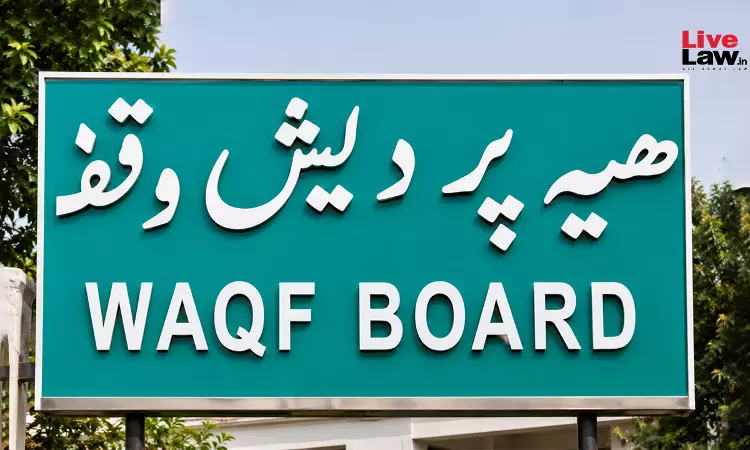
The Karnataka High Court has held that registration of a property as a waqf property at the instance of a tenant facing eviction, instead of a Mutawalli(manager), amounts to gross violation of the principles of natural justice, and a petition under Article 226 of the Constitution challenging such registration certificate would be maintainable.Justice T.P. Vivekananda was hearing a writ...
This is a premium content
Available exclusively to
Our subscribers
Subscribe Premium 
INR 1099+GST
Your support helps us to bring you more content at
an affordable subscription scheme !!!
All payment options available
The Karnataka High Court has held that registration of a property as a waqf property at the instance of a tenant facing eviction, instead of a Mutawalli(manager), amounts to gross violation of the principles of natural justice, and a petition under Article 226 of the Constitution challenging such registration certificate would be maintainable.
Justice T.P. Vivekananda was hearing a writ petition filed by Sri Hafeez, the Mutawalli of a waqf property, seeking to quash the Waqf Registration Certificate, issued by the Karnataka State Board of Auqaf, which had registered a land in Mangaluru Taluk as waqf property on an application filed by a tenant one Mr. Ayoob, without notifying the muttawali.
The petitioner, is the Mutawalli of a private family waqf created by his ancestor, Late Hasanabba, via a registered deed dated January 8, 1945. The property, comprising 31 cents in Bazar Bunder Village, Mangaluru Taluk, contains buildings in which tenants live. To obtain possession from tenants, the petitioner instituted a suit against the tenants.
One of the tenants, Ayoob, submitted an application dated October 21, 2020, for registration of the said property as a waqf property to the Waqf Board. Within two months, the Karnataka State Board of Auqaf processed the request, conducted a mahazar, and issued a Waqf Registration Certificate dated December 28, 2020. The Waqf Board subsequently filed an impleading application in the civil court producing the registration certificate, which was the first time the petitioner came to know about the registration.
The court said:
"It is noticed from the records that respondent No.1 has proceeded to register the waqf in respect of the property in question on the basis of the representation submitted by Mr.Ayoob who is the defendant in the suit filed by the petitioner/plaintiff for recovery of possession. In all probability, in order to avoid the decree of eviction, Mr.Ayoob has ingeniously approached respondent No.1 to declare the property in question as waqf property.
The application filed by Mr.Ayoob is dated 21.10.2020 the same was forwarded by the 2nd respondent to 1st respondent on 29.10.2020, the public notice stated to have been issued on 25.11.2020 and the alleged mahazar was conducted on 01.12.2020 and registration certificate has been issued on 28.12.2020. The sequence of events as noticed supra would clearly disclose that it is only at the instance of Mr.Ayoob, respondent No.1 has took up the process of registration of waqf in a rocket speed without notifying the petitioner who is working as Mutawalli of the family waqf"
The Court took note of the Waqfnama dated January 8, 1945, which stated that Late Hasanabba who created the private waqf property intended the property to remain a family waqf managed by lineal descendants, and to become a public waqf only if no descendants survived.
It said, “It was not the intention of late Mr. Hasanabba that the property would go to the hands of Auqaf Board or under the management of a waqf. Therefore, it cannot be said that under the aforesaid document, a public waqf is created. Since it is demonstrated by the petitioner that the property in question is not a waqf or a property belongs to a waqf question of relegating the petitioner to file a suit before the Waqf Tribunal does not arise.”
Relying on several precedents cited by the petitioner, including Hydersha Abusha Malangsha and Others Vs Karnataka State Board of Wakfs and Others (2009), the Court said, “In identical circumstances, the Co-ordinate Bench of this Court in W.P.No.60010/2019 has rejected the similar contention urged on behalf of the respondent Auqaf Board and set at naught the certificate of registration under Section 36 of the Waqf Act, 1995. Therefore, this Court is of the opinion that in the facts and circumstances of the present case, the petitioner need not be relegated to filing of the suit under Section 83(2) of the Waqf Act, 1995.”
Examining the procedure for registration of Waqf under Section 36 of the 1995 Act followed by the Waqf Board, the Court found that the process was not initiated as stipulated by the Mutawalli, but by a tenant who was facing eviction proceedings instituted by the Mutawalli.
“Respondent No.1 has registered the waqf on the basis of the representation submitted by one Mr.Ayoob and not on the application for registration made by Mutawalli. Since, the property in question has been in the possession of the petitioner being the Mutawalli of the private waqf, it was incumbent for respondent No.1 to notify the petitioner before initiating proceedings under Section 36 of the Waqf Act, 1995,” the Court observed.
Finding that the Board failed to follow the stipulated procedure before issuing the certificate notifying the said property as waqf property, the Court held, “Therefore, the impugned registration certificate dated 28.12.2020 cannot be sustained.”
Rejecting the Waqf Board's argument that the petitioner must have approached the Waqf Tribunal under Section 83(2) of the Waqf Act, 1995 instead of approaching the High Court, the High Court said that the writ petition is maintainable despite availability of alternate remedy if natural justice principles have been breached.
Accordingly, the High Court quashed the certificate of registration.
Tags


