



- Home
- /
- High Courts
- /
- Karnataka High Court
- /
- Private Apartment Dispute Can't Be...
Private Apartment Dispute Can't Be Converted Into RPwD Act Complaint Merely Because One Party Has Disability: Karnataka High Court
Sebin James
23 July 2026 4:25 PM IST
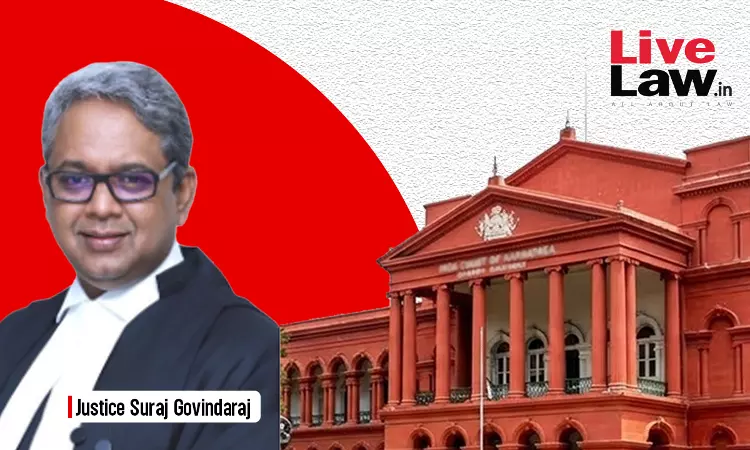
The Karnataka High Court has recently quashed proceedings initiated against residents of an apartment complex under the Rights of Persons with Disabilities (RPwD) Act, holding that the statute cannot be invoked to settle mundane civil disputes merely because one of the parties is a person with disability. [2026 LiveLaw (Kar) 264]The single judge bench of Justice Suraj Govindaraj was hearing...
This is a premium content
Available exclusively to
Our subscribers
Subscribe Premium 
INR 1099+GST
Your support helps us to bring you more content at
an affordable subscription scheme !!!
All payment options available
The Karnataka High Court has recently quashed proceedings initiated against residents of an apartment complex under the Rights of Persons with Disabilities (RPwD) Act, holding that the statute cannot be invoked to settle mundane civil disputes merely because one of the parties is a person with disability. [2026 LiveLaw (Kar) 264]
The single judge bench of Justice Suraj Govindaraj was hearing a plea filed by four residents of Adith Bhavan Apartment in K.R. Puram, challenging an order passed by the State Commissioner for Persons with Disability (PwD), issuing a warning to the petitioners based on a complaint filed by a physically disabled co-resident.
“…the authorities constituted under the Act are entrusted with specific statutory functions to address grievances arising from the denial or infringement of rights recognised under the enactment. Their jurisdiction…is confined to matters having a nexus with the rights and protections conferred by the statute. It cannot be expanded to encompass every dispute in which a person with disability is a party, irrespective of whether the dispute bears any connection to the rights created under the Act….”, the court noted in the order.
The second respondent, who was a disabled resident of the apartment complex preferred a complaint with the State Commissioner alleging that he was verbally abused with the term 'loafer'. He also contended that CCTV cameras installed were infringing upon his privacy due to its positioning near the apartment entry. Moreover, it was complained that his maintenance arrears were unreasonably circulated through Apartment's WhatsApp Group.
Before the State Commissioner, the reliefs sought by the disabled person included action under Section 82[Powers of Commissioner akin to Civil Court] of the 2016 Act and repositioning of CCTVs placed near his apartment.
Though no adverse order was passed against the apartment residents who allegedly harassed the disabled person, a warning was issued nevertheless. This was challenged by the petitioner-residents before the High Court.
“…The grievance essentially pertains to the location of CCTV cameras, the alleged use of an abusive expression, and the manner in which the apartment association or its office-bearers sought to recover outstanding maintenance charge…The complaint does not allege that any of the aforesaid acts were committed because respondent No.2 is a person with disability, nor does it disclose that respondent No.2 was denied any statutory right, reasonable accommodation, accessibility measure, equal opportunity, protection or benefit guaranteed under the RPwD Act”, the Court pointed out.
The court laid down in unequivocal terms that such issues come under the purview of a civil disputes because of interpersonal differences.
“…Such disputes are civil in nature and are not transformed into disputes under the RPwD Act merely because one of the parties happens to be a person with disability”, the Court held.
The court also clarified that the attempt to invoke the machinery under RPwD Act was essentially a 'misuse of the statutory mechanism'.
“…Such invocation, if routinely entertained, would unnecessarily divert the attention of the statutory authorities from genuine grievances involving discrimination, denial of accessibility, failure to provide reasonable accommodation and other substantive rights guaranteed under the Act”, the Court concluded while cautioning the State Commissioner to scrutinise the complaints before it better.
The current dispute can be resolved through mechanisms available under the apartment bye-laws, the provisions of the Karnataka Apartment Ownership Act, other competent civil forums, or through amicable settlement, the court told further.
“…Persons residing in a common residential community are expected to maintain cordial relations and resolve day-to-day disputes in a spirit of mutual accommodation and cooperation as also foster community living...” the Court observed in the order, while allowing the writ petition and holding that the Commissioner lacked jurisdiction to entertain the complaint.
Case Title: Y. Venkateshwara Prasad & Ors. v. The State Commissioner for Persons with Disability & Anr.
Case No: WP No. 13534 of 2026
Citation: 2026 LiveLaw (Kar) 264
Tags

Sebin James
Sebin James is a Correspondent with LiveLaw, covering the Karnataka High Court

