



- Home
- /
- High Courts
- /
- Karnataka High Court
- /
- Karnataka High Court Suggests...
Karnataka High Court Suggests Empowering Civil Courts To Stay Mutation Orders In Title, Possession Dispute Cases
Malavika Prasad
29 Jan 2026 2:56 PM IST
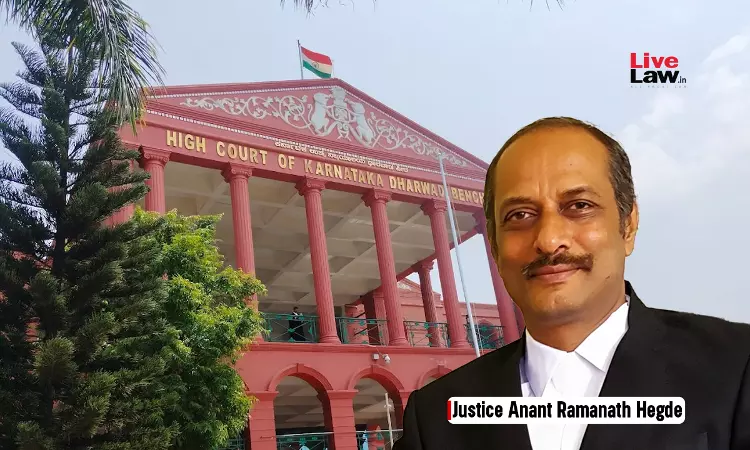
The Karnataka High Court (Dharwad bench) has suggested empowering the Civil Court to pass interim measures staying mutation orders passed by revenue authorities under the State Land Revenue Act concerning properties involving possession or title disputes. This the court said would help avoid multiplicity of parallel proceedings and aide litigants, since a title dispute can only be adjudicated...
This is a premium content
Available exclusively to
Our subscribers
Subscribe Premium 
INR 1099+GST
Your support helps us to bring you more content at
an affordable subscription scheme !!!
All payment options available
The Karnataka High Court (Dharwad bench) has suggested empowering the Civil Court to pass interim measures staying mutation orders passed by revenue authorities under the State Land Revenue Act concerning properties involving possession or title disputes.
This the court said would help avoid multiplicity of parallel proceedings and aide litigants, since a title dispute can only be adjudicated by civil courts.
The court was hearing a petition challenging a 2020 of the Deputy Commissioner under Section 136(3) Karnataka Land Revenue Act, cancelling mutation of land based on a disputed Will, and directed that entry be made in the record in the names of the natural heirs.
For context the Deputy Commissioner had set-aside the order of the Assistant Commissioner which had earlier confirmed the Tahasildar's order certifying the mutation of land in question based on a disputed Will. Additionally the Assistant Commissioner had directed the parties to approach the Civil Court to establish their respective claims on the disputed Will.
Justice Anant Ramnath Hegde observed that it was settled law that Revenue Authorities do not have the jurisdiction to decide claims based on Will/Testament and such power only rests with the Civil Court which can adjudicate the validity of such Will/testament. The court thus upheld the deputy commissioner's order.
It however noted that such cases pointed to "lacuna" in the law as it had noticed that several writ petitions challenging orders passed by revenue authorities in mutation proceedings arising from orders passed under Chapter-XI of the Act were being filed.
It noted that Section 135 prohibits suit against the State Government in respect of a claim over an entry made in any record or register maintained under Chapter-XI. However, the proviso, provides that any party, aggrieved by an entry made in the record or the register maintained by the revenue authorities under Chapter XI may institute a suit against any person denying or interested to deny the title or possession.
"it is apparent that the dispute relating to possession or title over the immovable property affected by any mutation has to be adjudicated by the competent Civil Court. The full Bench of this Court in Jayamma and Others vs State of Karnataka, has held that the parties need not exhaust the remedies of appeal and revision before filing the suit as provided under proviso to Section 135 of the Act, 1964 whenever the dispute arises as to the title and possession of immovable property. Despite the declaration of law being so, parties are approaching the Revenue Authorities challenging the orders under Chapter XI of the Act,1964, by filing an appeal to the Assistant Commissioner against order passed by Tahasildar, and a revision to the Deputy Commissioner against order passed by Assistant Commissioner"
The court noted that after disposal of proceedings before the Deputy Commissioner or Assistant Commissioner, the parties were moving the High Court challenging orders of Revenue Authorities. It said that "innumerable writ petitions" are filed despite Section 135 which provides for a comprehensive suit to establish the possession as well as title. It further emphasized that the high court in exercise of its Article 226 jurisdiction cannot adjudicate over the title and possession of the parties over property. This, the court said, has to be decided by the competent Civil Court.
It said:
"It appears, that lack of a specific provision in the Act, 1964, or in the Code of Civil Procedure, 1908, to seek a stay of operation of impugned mutations/orders under Chapter XI of the Act, 1964, in a Civil suit, drives the parties to approach the Authorities under the Act, 1964 and ultimately the High Court to seek a stay of operation of impugned orders or mutations. Existing law provides for parallel or sequential proceedings resulting in avoidable delay in the adjudication process.To put it differently, the law in the present form is encouraging multiple proceedings in different forums over one lis, where decision before Revenue Authorities is subject to the decision of the Civil Court. Given the enormous workload on the Courts and Revenue Authorities, it is high time to revisit the law which encourages parallel proceedings before various forums"
It thereafter suggested:
1. Exercise before the Revenue Authority where there cannot be any conclusive decision relating to title and possession, (as the decision would be subject to Civil Court's order) is unnecessary. Such situation has to be avoided in the interest of litigants, and to reduce the workload of Authorities and High Court as many such disputes end up in High Court, where the court would only be saying that disputed entries/mutations will be subject to the result of the suit by competent Civil Court
2. Noting that no specific provision was incorporated in Section 135 for seeking stay of orders passed by revenue authorities over mutation claims, the court suggested that the legislature ought to have enabled the Civil Court to pass appropriate interim measure to stay the operations of the orders under Chapter XI of the Act, 1964.
3. It suggested a provision enabling the Civil Court trying a comprehensive suit, to stay the operation of the orders under Chapter XI would achieve the purpose and object of the proviso to Section 135 of the Act and may also avoid unnecessary parallel proceeding under the Act.
"It is for the Law Commission to suggest appropriate measure and the Legislature to pass appropriate law to avoid parallel or sequential litigation before the Appellate/Revisional Authorities under ChapterXI when the title dispute is to be resolved in competent Civil Court. Experience would tell us that most of the disputes originating before the Tahasildar under Chapter XI of the Act, 1964 would travel up to the High Court after going through the remedy of Appeal under Section 136(2) and Revision under Section 136(3) of the Act, 1964. As already noticed, the adjudication in these forums is not conclusive and are subject to the result of the suit by the competent Court. This being the position, a Revision before the Deputy Commissioner appears to be unnecessary exercise in a dispute covered under Chapter XI of the Act, 1964. The legislature may debate as to its efficacy of a Revision under Section 136(3) of the Act, 1964 and take a final call," the court said.
In present case the petitioner-legatee (under the disputed Will) had moved the high court challenging the Deputy Commissioner's order and had sought restoration of the mutation. The respondents argued that even before the Deputy Commissioner's order was passed, the respondents had filed suit challenging the alleged Will. It was submitted that the suit was decreed holding that the alleged Will is not proved; hence the petition must be dismissed.
Dismissing the plea the court said, "It is settled in terms of various authoritative judgments, that the Revenue Authorities do not have the jurisdiction to decide the claims based on the Will/Testament. It is for the Civil Court to adjudicate the validity or otherwise of the Will/testament. This being the well-settled legal position, the Tahasildar and the Assistant Commissioner could not have certified the mutation based on the disputed Will. The Deputy Commissioner followed the wellsettled position of law in this regard and has set-aside the mutation based on the Will".
Case title: SHRI. RUKMANNA v/s THE DEPUTY COMMISSIONER and OTHERS
WRIT PETITION NO.100504 OF 2021
Click Here To Read/Download Order
Citation: 2026 LiveLaw (Kar) 25
Tags

Malavika Prasad
Malavika Prasad is a Desk Editor with LiveLaw

