



- Home
- /
- High Courts
- /
- Karnataka High Court
- /
- Karnataka High Court Refuses To...
Karnataka High Court Refuses To Entertain PIL Against Exclusion Of Urdu Teachers From 2026 Recruitment, Relegates Petitioners To KSAT
Sebin James
18 Sept 2026 2:30 PM IST
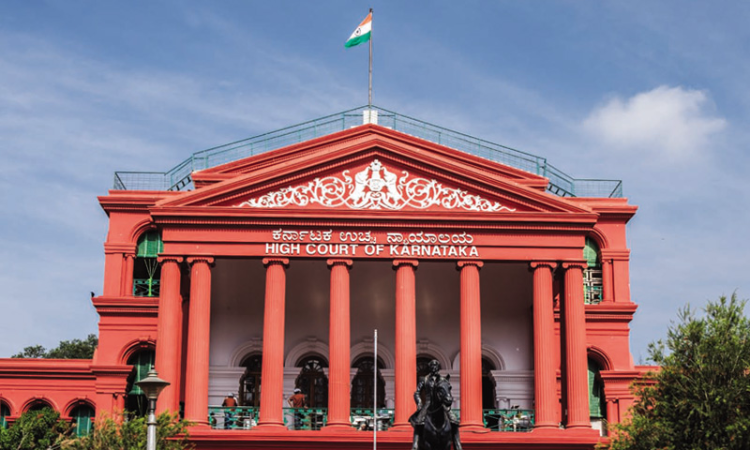
The Karnataka High Court on Friday [September 18] refused to entertain a Public Interest Litigation challenging the State Government's recruitment notification for 15,000 school teachers on the ground that it allegedly excludes Urdu-medium and other linguistic-minority teaching posts, relegating the petitioners to the Karnataka State Administrative Tribunal (KSAT).[2026 LiveLaw (Kar)...
This is a premium content
Available exclusively to
Our subscribers
Subscribe Premium 
INR 1099+GST
Your support helps us to bring you more content at
an affordable subscription scheme !!!
All payment options available
The Karnataka High Court on Friday [September 18] refused to entertain a Public Interest Litigation challenging the State Government's recruitment notification for 15,000 school teachers on the ground that it allegedly excludes Urdu-medium and other linguistic-minority teaching posts, relegating the petitioners to the Karnataka State Administrative Tribunal (KSAT).[2026 LiveLaw (Kar) 364]
The single judge bench of Justice T.M. Nadaf, sitting at Dharwad, noted the following reasons in its order after the Additional Government Advocate submitted that a coordinate bench had asked similarly placed Bcom B.Ed Graduates to approach the KSAT for relief.
“…AGA submits that in an identical matter, a coordinate bench of this court has relegated the petitioners to Karnataka State Administrative Tribunal in view of the alternate remedy. The order passed by the coordinate bench on 1st September reads as under…. Since notification is challenged in respect of appointment of government teachers, since the petitioners have efficacious alternative remedy, this petition is not entertained. However, reserving liberty to the petitioners to approach the KSAT to seek appropriate relief. With these observations, the petition stands disposed of”, the court said.
When the matter came up before the court today, the state's counsel submitted that a coordinate bench, in a similar matter, had heard a challenge to the notification calling for recruitment of school teachers with the qualification of BA B.Ed. This was challenged by graduates of B.Com B.Ed., and the coordinate bench had held that the petitioners had an alternate remedy before KSAT, the state added.
The petitioners' counsel, however, argued that this was the third time the matter was coming up, and that in the previous two hearings, the State had not objected to the locus standi or maintainability of the petition. It was further contended that the alternative remedy of approaching the KSAT must satisfy two tests, namely it must be efficacious and adequate.
The Court, however, orally observed: “…The same power of certiorari and mandamus is granted to KSAT on the administrative side…When the same powers are granted, how can you say it's not efficacious or adequate? Where is the question of this Court entertaining your petition? Are you disputing this judgment?”
The petitioners' counsel contended that the State not coming up with recruitment for Urdu teachers was violative of Article 29(1), and that when there is a violation of fundamental rights and principles of natural justice, the High Court could be approached. It was further submitted by the litigants that while they were challenging the notification per se, they were also challenging the state policy flowing through it.
The Court, however, was not persuaded. At this juncture, when the petitioners again disputed the state challenging their locus, the single judge bench asked him to refrain from further arguments.
The court rebuked the petitioners' counsel for raising his voice during arguments, warning that the Court would initiate action under Section 228 of the Indian Penal Code if the conduct continued.
The Court remarked orally then: “I would have extended some interim protection[in the order, for the petitioners], but I am restraining myself”.
“…Don't raise your voice, this is not the way to conduct the case. You can't threaten the judge by raising your voice. You challenge the order before the division bench if you are not satisfied…. If you argue further, I will initiate action. Have you read Section 228 of the IPC? You better read…”, the court orally told the petitioners' counsel further.
Section 228 of the IPC deals with intentional insult or interruption to a public servant conducting a judicial proceeding.
Context
For context, the High Court on August 25 had sought an explanation from the State Government on the alleged exclusion of Urdu-medium and other linguistic minority teaching posts from its ongoing recruitment drive for 15,000 school teachers, while refusing to stay the recruitment process.
Justice Anant Ramanath Hegde, sitting at Dharwad, had earlier issued notice on a petition challenging the August 11 recruitment notification on the ground that it invites applications for teaching posts in English and Kannada mediums but allegedly does not provide for recruitment of teachers for Urdu-medium and other linguistic-minority schools.
In the plea, the petitioners contend that the exclusion violates the Karnataka Education Department Services (Department of Public Instruction) (Recruitment) (Amendment) Rules, 2026, as well as constitutional guarantees under Articles 19, 21, 29(1) and 350A.
The Court had then directed the Government Advocate to respond as to why the State had not undertaken the selection process for linguistic minorities, including Urdu-medium schools. It also directed the State to respond to a representation submitted by the petitioner.
During the hearing the petitioners had submitted that while there were vacancies in schools where Kannada or English was the medium of instruction, the recruitment notification completely excluded Urdu-medium schools.
“…There appears to be some vacancy in schools where the medium of instruction is Kannada or English. The government is trying to fill up those vacancies. But why there is no recruitment in Urdu schools is a legitimate question... …The Government Advocate is directed to submit a response as to why the Government has not undertaken the selection process for linguistic minorities, including Urdu medium schools. The Petitioner has submitted a representation marked as Annexure-H. The Government may also submit its response to the said representation by the next date of hearing.”
Case Title: Asma Gori (Mogare) v. State of Karnataka & Ors.
Case No: WP 107175/2026
Citation: 2026 LiveLaw (Kar) 364
Tags

Sebin James
Sebin James is a Correspondent with LiveLaw, covering the Karnataka High Court

