



- Home
- /
- High Courts
- /
- Karnataka High Court
- /
- 'Love Thy Neighbour': Karnataka...
'Love Thy Neighbour': Karnataka High Court Refuses To Quash Cross-Cases Over Garbage Dispute, Emphasises Civility And Tolerance
Amruta Gangajaliwale
27 Oct 2026 2:40 PM IST
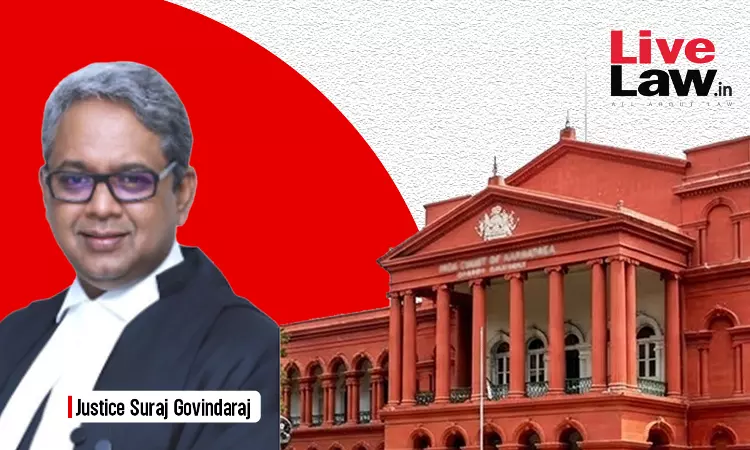
Grievances ought not to become contests of ego in which neither side is willing to exercise restraint, Court said.
The Karnataka High Court has said that resorting to physical violence is not an acceptable way to resolve neighbourhood disputes adding that a dispute over garbage disposal must not become contests of ego in which neither side is willing to exercise restraint. In doing so the court the refused to quash cross cases lodged by two neighbours after physical altercation arose between them over...
This is a premium content
Available exclusively to
Our subscribers
Subscribe Premium 
INR 1099+GST
Your support helps us to bring you more content at
an affordable subscription scheme !!!
All payment options available
The Karnataka High Court has said that resorting to physical violence is not an acceptable way to resolve neighbourhood disputes adding that a dispute over garbage disposal must not become contests of ego in which neither side is willing to exercise restraint.
In doing so the court the refused to quash cross cases lodged by two neighbours after physical altercation arose between them over a dispute pertaining to disposal of garbage.
Justice Suraj Govindaraj dismissed the two cross- petitions filed by neighbours, refusing to interfere with the pending charge sheets.
“The rival complaints and the medical records prima facie indicate that a physical altercation occurred and that injuries were sustained. Both sides attribute the initiation and escalation of the incident to the other… However, the question as to who initiated the altercation, the precise role played by each individual, the circumstances in which the injuries were sustained and the culpability, if any, of the respective accused are matters that must be determined on the basis of the evidence in the criminal proceedings,” the Court said.
The court said that neighbours occupy a distinctive place in the daily lives of individuals and families. Unlike many other relationships, a neighbour is not ordinarily someone whom one can simply choose to replace.
The court said that neighbours share common spaces and facilities and participate in the affairs of the same residential community.
"A disagreement lasting only a few minutes can, if allowed to escalate, create hostility that persists for years. The parties may then find themselves living in an atmosphere of suspicion and resentment, even in the very place where they ought to feel safe and at peace. The familiar exhortation, “Love thy neighbour”, embodies a principle of practical importance for peaceful coexistence. It does not demand that neighbours agree on every matter or surrender their legitimate rights. It calls for civility, tolerance, mutual consideration and a willingness to resolve differences without unnecessary confrontation. Disputes concerning garbage, parking, noise or the use of common areas may understandably cause inconvenience and frustration. Such grievances, however, ought not to become contests of ego in which neither side is willing to exercise restraint. A calm conversation or the intervention of the residents' association may often resolve the issue without allowing it to assume consequences wholly disproportionate to the original disagreement," it added.
The court further emphasized that resorting to physical violence is never an acceptable means of resolving a neighbourhood dispute. It said that a person who believes that a neighbour has acted improperly must pursue lawful remedies rather than take the law into his or her own hands.
However, a genuine grievance should not be allowed to justify intimidation, abuse or retaliation the court said.
"The ability to exercise restraint in the face of provocation is not a sign of weakness; it is an essential safeguard against the escalation of an ordinary disagreement into a serious incident," it said.
The case arose from cross-complaints filed by two neighbours. An alleged dispute over improper garbage disposal turned violent, leading to physical altercations and serious injuries, including facial fractures, to the two parties. Each complaint alleged the other side to be responsible for the assault.
Following investigation into the complaints, the police filed charge sheets before the trial court for several offences, including those punishable under Sections 323, 504, 506, and 341 read with Section 34 of the IPC. Subsequently, both sets of accused \filed criminal petition before the High Court, seeking to quash the proceedings pending against them.
The High Court dismissed the petitions and held, “The medical records lend prima facie support to the allegations concerning the injuries, while the rival complaints disclose materially contested accounts of the incident. In these circumstances, the Court finds no sufficient ground to quash the proceedings.”
Tags


