



- Home
- /
- High Courts
- /
- Karnataka High Court
- /
- Mere Smell Of Alcohol Can't Prove...
Mere Smell Of Alcohol Can't Prove Workman Was Under Its Influence At Time Of Accident: Karnataka High Court
Sebin James
17 Sept 2026 10:50 AM IST
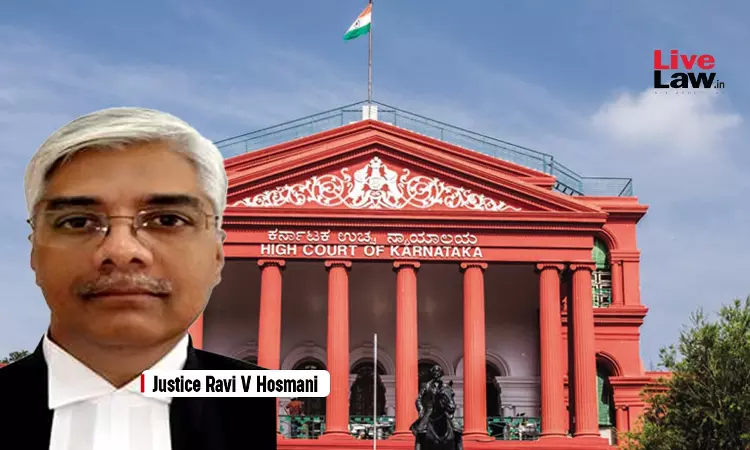
The Karnataka High Court has held that a smell of alcohol emanating from the stomach as per a post-mortem report is insufficient to conclude that a deceased workman was 'under the influence' of alcohol. [2026 LiveLaw (Kar) 361]The single judge bench of Justice Ravi V. Hosmani has set aside a Tribunal order dismissing a compensation claim under the Employees Compensation Act, 1923 preferred by...
This is a premium content
Available exclusively to
Our subscribers
Subscribe Premium 
INR 1099+GST
Your support helps us to bring you more content at
an affordable subscription scheme !!!
All payment options available
The Karnataka High Court has held that a smell of alcohol emanating from the stomach as per a post-mortem report is insufficient to conclude that a deceased workman was 'under the influence' of alcohol. [2026 LiveLaw (Kar) 361]
The single judge bench of Justice Ravi V. Hosmani has set aside a Tribunal order dismissing a compensation claim under the Employees Compensation Act, 1923 preferred by the legal representatives of a deceased lorry driver, observing that 'consumption of alcohol and being under influence of alcohol are two wholly different aspects'.
“…If an incident occurs while workman is under influence of alcohol or drugs, liability of employer/insurer would stand discharged. However, consumption of alcohol and being under influence of alcohol are too wholly different aspects. And prescription of alcohol limit under Section 185 of Motor Vehicles Act, 1988 would substantiate such distinction. Based only on smell of alcohol, it cannot be implied that such person had consumed alcohol was under its influence…”, the court noted in the order.
The dependents of the deceased lorry driver filed a plea under Section 22 of the Employees Compensation Act, 1923 before a Bengaluru Tribunal in 2014. As per their version, the deceased was working with the respondent no.2- employer who entrusted him with driving the vehicle from Bengaluru to Hassan. Enroute, the vehicle met with an accident and the deceased- driver suffered fatal injuries.
The Tribunal relied on the post mortem report to infer that the contents of the intestine smelled of alcohol. Hence, by relying on Section 3 (1) (b) (i) of the Employee's Compensation Act, it concluded that the employer wouldn't be liable in light of the factum of the driver being under the influence of alcohol at the time of accident.
The appellants, before the High Court, argued that mere smell of alcohol as indicated in the post-mortem report wouldn't help in drawing a conclusion that the workman was under the influence of alcohol while driving, or that the accident occurred due to his negligence.
The counsel for the dependants further said that the doctor who conducted the post-mortem has merely stated that the contents of the intestine smelled of alcohol, and there was no material to indicate that the workman was actually under its influence at the time of the accident.
The counsel for the insurer contended that the report indicated the presence of alcohol, and therefore the Tribunal's finding was justified.
The question to be answered by the court was whether the finding of Tribunal about deceased workman being under influence of alcohol was correct or not.
The Court further noted that the workman had died in the accident, and no other eye-witness to the accident had been examined. Tribunal's conclusion about the workman being under the alcohol's influence was drawn solely on the basis of post mortem report, which is flawed, the court opined.
“….It is not uncommon for half-digested food to smell of alcohol due to fermentation. Said possibility has not been got ruled out in deposition of R.W.2…”, the court pointed out.
Hence, the Court allowed the appeal and set aside the judgment and award passed by the Tribunal in 2015. The matter has been remitted back to the Tribunal for fresh disposal with both parties to appear before the Tribunal on 27.10.2026 without need for fresh notice.
Case Title: Salma & Ors. v. United India Insurance Co. Ltd. & Anr.
Case No: MFA 2825/2016
Citation: 2026 LiveLaw (Kar) 361
Tags

Sebin James
Sebin James is a Correspondent with LiveLaw, covering the Karnataka High Court

