



- Home
- /
- High Courts
- /
- Karnataka High Court
- /
- 2009 SC/ST Atrocity Case: Karnataka...
2009 SC/ST Atrocity Case: Karnataka High Court Upholds Acquittal Of 26 Booked For Pulling Down Dr BR Ambedkar's Portrait
Sebin James
9 Oct 2026 12:23 PM IST
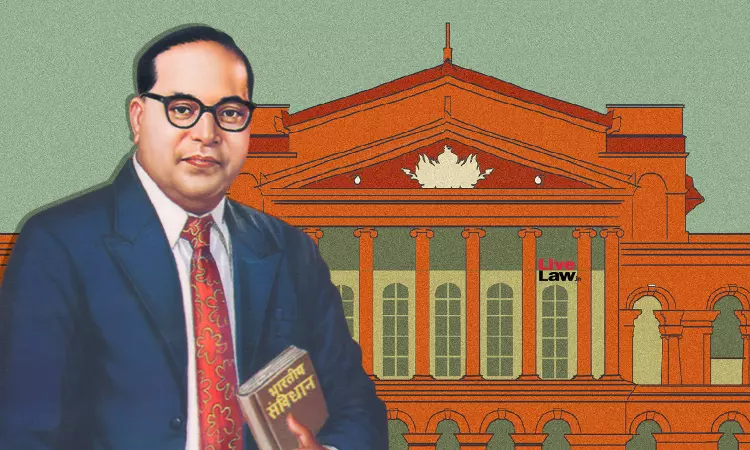
The Karnataka High Court dismissed State's appeal against the acquittal of 26 persons over an incident of pulling down of Dr BR Ambedkar's portrait in Chamarajanagar. [2026 Livelaw (Kar) 408]Upholding trial court's order, the High Court said that the material contradictions in the eye witness statements, among many other factors had led the trial court to acquit the accused and there was no...
This is a premium content
Available exclusively to
Our subscribers
Subscribe Premium 
INR 1099+GST
Your support helps us to bring you more content at
an affordable subscription scheme !!!
All payment options available
The Karnataka High Court dismissed State's appeal against the acquittal of 26 persons over an incident of pulling down of Dr BR Ambedkar's portrait in Chamarajanagar. [2026 Livelaw (Kar) 408]
Upholding trial court's order, the High Court said that the material contradictions in the eye witness statements, among many other factors had led the trial court to acquit the accused and there was no error in the same.
The single judge bench of Justice G Basavaraja held that there was no legal or factual error in the trial court's decision to extend the benefit of doubt to the accused, on account of material contradictions in the prosecution's case. The trial court had noted that it was unclear as to how the witnesses observed the alleged incident at the spot in the admitted darkness.
“…This Court has carefully examined all the materials placed before this Court. On re-appreciation/reconsideration and re-examination of the entire material on record, I do not find any legal or factual error committed by the trial Court….”, the court noted in the order.
According to the state, in June 2009 at around 7 PM on a particular day, 29 accused formed an unlawful assembly in Chamarajanagar. The state's version said that they were holding deadly weapons, and moved forward with the common object of committing rioting.
According to the FIR, the accused pulled down the signboard of Samudaya Bhavana and the photograph of Dr. B.R. Ambedkar, intending to insult and humiliate the feelings of the Scheduled Caste community in public view. They had also allegedly caused injury to several persons belonging to Scheduled Caste.
Sections 143, 147, 148, 341, 323, 324, 506, 427 and 295(A) of the IPC, and Section 3(1)(x) and (xi) of the Scheduled Castes and the Scheduled Tribes (Prevention of Atrocities) Act, 1989 were invoked against the accused. The criminal proceedings were pending before the Principal District and Sessions Judge, Chamarajanagar till now. One of the accused had expired during the pendency of proceedings.
Before the trial court, the prosecution had examined 13 witnesses, wherein PWs. 1 to 7 were the injured and eye witnesses. PW. 10 was the medical officer who treated the injured, and PWs. 12 and 13 were the Investigating Officers.
In August 2015, while acquitting the accused, the Principal District and Sessions Judge, Chamarajanagar, held that all eye witnesses belonging to the same community have admitted that there was a darkness on the spot, and there was no supply of electricity to the village on that date from 6.45 p.m. In these circumstances, no eye witnesses have explained how they were able to observe the incident in such darkness, the court had said.
Aggrieved by the order, the state approached the High Court and submitted that the acquittal was contrary to law. As per the state's counsel, the injured witnesses had categorically stated that the accused assaulted them with hands, clubs and a sickle, causing injuries all over their bodies.
The state's counsel also pointed out that the victims had deposed before the trial court that they were abused by taking their caste name. Stones were allegedly thrown, damaging the signboard of Samudaya Bhavana bearing the photograph and name of Dr. B.R. Ambedkar, the state contended further. According to the state, the trial court failed to apply a strict interpretation of the SC/ST statute.
To the contrary, the respondents/accused submitted that the trial court had properly appreciated the evidence on record in accordance with law and facts, and that there were absolutely no grounds to interfere with the impugned judgment of acquittal.
The High Court examined the materials placed before it, including the depositions of PWs. 1 to 13, the marked documents and material objects. After perusing the contents of the same, the court held that there was no reason to interfere with the trial court findings.
Accordingly, the state's appeal was dismissed and the acquittal order of the trial court was upheld.
Tags
Sebin James
Sebin James is a Correspondent with LiveLaw, covering the Karnataka High Court

