



- Home
- /
- High Courts
- /
- Karnataka High Court
- /
- GBG Act Reduces Ward Committees To...
GBG Act Reduces Ward Committees To 'Advisory Bodies', Confers Binding Powers On Statutory Panels: Citizens Action Forum Tells Karnataka HC
Sebin James
16 April 2026 2:05 PM IST
During the hearing of a PIL challenging the constitutionality of the Greater Bengaluru Governance Act 2024, Citizens' Action Forum, one of the petitioners- told the Karnataka High Court on Wednesday (April 15) that Section 103 of the impugned Greater Bengaluru Governance Act, 2024 [GBG Act], only confers the constitutionally mandated ward committee mere 'advisory powers' under the new statute....
This is a premium content
Available exclusively to
Our subscribers
Subscribe Premium 
INR 1099+GST
Your support helps us to bring you more content at
an affordable subscription scheme !!!
All payment options available
During the hearing of a PIL challenging the constitutionality of the Greater Bengaluru Governance Act 2024, Citizens' Action Forum, one of the petitioners- told the Karnataka High Court on Wednesday (April 15) that Section 103 of the impugned Greater Bengaluru Governance Act, 2024 [GBG Act], only confers the constitutionally mandated ward committee mere 'advisory powers' under the new statute.
The Forum also told the court that the timeline for regularisation contemplated under the GBG Act is open-ended, promoting violations of Floor Area Ratio (FAR) stipulated.
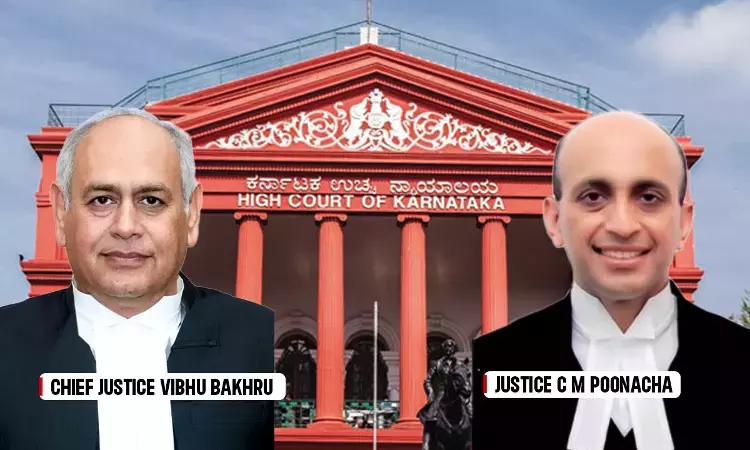
Appearing for the Forum, Adv. Harish Narsappa told the Principal Bench of Chief Justice Vibhu Bakhru and Justice C.M. Poonacha that Section 96 of the Act confers upon the Assembly Constituency Level Consultative and Coordination Committee, 'conjured up by statute', power to issue binding directions.
“… Section 103 & 104 of the GBG Act… It doesn't give the ward committee any executive functions. When I read 103 and 104, the constitutionally mandated committee[ward committee] has only advisory functions but the Section 96-committee recommendations, a body conjured up by the act, is not advisory in nature. They are binding…”, Adv. Harish argued before the court.
The counsel then referred to Section 127 of the GBG Act which allows the government, in consultation with GBA, to issue directions to the Municipal Corporations for taking action in case of non-performance of any duties vested in corporations.
“Section 127- All these sections confer unguided powers on the government and GBA to interfere in the functions of city corporations. Any resolution if not followed, the government can essentially wind up the municipal corporations”, the counsel further said.
The next leg of objections against the GBG Act, placed before the court by Adv. Harish was regarding Section 249. Section 249 of the impugned Act mentions 'regularisation of unlawful buildings' by the Commissioner of a City Corporation.
For context, Section 249 effectively talks about the manner in which a person or entity can regularise, say, a house or a shop illegally constructed. If the illegal construction [less setback or extra floor area (FAR)] was finished at least one year before the GBG Act came into effect, the Commissioner may legalise it. Residential buildings can have up to 50% setback + FAR violation; commercial establishments can have up to 25% violation. To regularise, a payment of 6% or 8% of the illegal portion's market value for residential buildings, and 20% or 35% of the market value for commercial buildings, is required to be paid, as the case may be, in each circumstance. The money is utilised as the city fund for further infrastructure development.
“There is no time limit or guidance as to the process of regularisation… If you have constructed within one year before the enactment, anything can be regularised…The provision only says what kind of constructions you can regularise but the window for regularisation is left open throughout, starting from one year prior to the enactment..Up to 25 per cent violation, you are always exempted if you pay a certain fee. That's a problem….If you change the FAR from time to time, what's the issue of someone violating the rules but benefiting from it once he pays the penalty… This is a new sui generis section, unlike any other regularisation processes… It's an open section…you can violate up to 25 per cent, but you can come at any time too…”, the counsel clarified about the provision.
In a connected writ petition, the appearing Junior informed the court that Senior Advocate Counsel Prashanth Bhushan will be making the submissions [WP 35709/2026] and sought a short adjournment.
The court, noting that there are only 11 working days remaining, posted the matter to June 5 for further proceedings.
For context, the petition impugning the GBG Act states that the elections to the Municipal Corporation, Bengaluru was held in the year 2015. Thereafter, no elections have been held to the Municipal Corporation, Bengaluru on one pretext or the other. The same has resulted in the absence of an elected body of councillors in the City of Bengaluru. Thus, the constitutional mandate of self-governance and decentralisation of administration with respect to the local bodies is completely defeated.
The GBA replaces the existing Bruhat Bengaluru Mahanagara Palike Act, 2020 and the rules made thereunder.
It is claimed that as per the object of the GBG Act, the Bruhat Bengaluru Mahanagara Palike Act, 2020 is inadequate to govern Bengaluru as it did not institute any institutions that address the fragmentation of governance in Bengaluru due to the multiplicity of civic agencies and lack of coordination between them.
The plea says that it is a blatant attempt by the Respondent No. 1 (State government) to usurp power from local governments like BBMP and divert concentration of power and resources in its favour.
Case Title: T S Nagabharana & Others v. State of Karnataka & Others & Connected Matters
Case No: WP 17336/2025 & Connected Matters
Tags

Sebin James
Sebin James is a Correspondent with LiveLaw, covering the Karnataka High Court

