



- Home
- /
- High Courts
- /
- Karnataka High Court
- /
- 'Courts Can't Supplant Executive...
'Courts Can't Supplant Executive Wisdom': Karnataka High Court Refuses To Entertain Hotels Association's Plea Over LPG Shortage
Sebin James
23 March 2026 3:32 PM IST
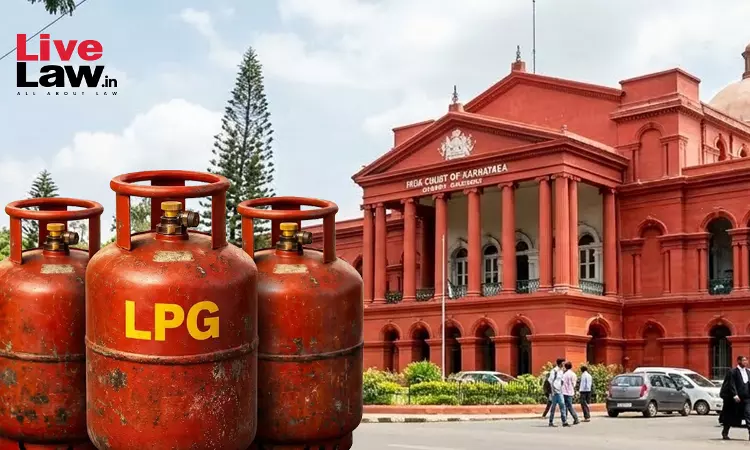
The Karnataka High Court, on Monday, declined to issue directions to the government over the ongoing commercial LPG shortage with regard to the hotel industry. It reasoned that constitutional courts are not equipped to monitor evolving global energy crises or interfere in the executive's distribution policies.The single-judge bench of Justice Sachin Shankar Magadum noted that it can't...
This is a premium content
Available exclusively to
Our subscribers
Subscribe Premium 
INR 1099+GST
Your support helps us to bring you more content at
an affordable subscription scheme !!!
All payment options available
The Karnataka High Court, on Monday, declined to issue directions to the government over the ongoing commercial LPG shortage with regard to the hotel industry. It reasoned that constitutional courts are not equipped to monitor evolving global energy crises or interfere in the executive's distribution policies.
The single-judge bench of Justice Sachin Shankar Magadum noted that it can't venture into the executive domain when the issue at hand involves complex international conflicts, supply chain problems and diplomatic deadlocks.
“…Article 226 of the Constitution, though with wide application, cannot be utilised to supplant executive wisdom”, the court noted in its order pronounced today afternoon.
The court also noted the equitable measures taken by the government for distribution of LPG cylinders to various states.
The court has now asked the petitioner— Bangalore Hotels Association to approach the Food and Civil Supplies Minister to work out a remedy for the supply of cylinders to their industry. Accordingly, the court disposed of the petition filed by the Hotel Association.
“…This court is in respectful agreement with the decision of the Bombay High Court Division Bench. The state government is actively seized of the matter. For appropriate measures, the petitioner association can approach the concerned minister with their concerns”, the court accordingly noted in the order.
Today, when the matter came up for further preliminary hearing, the court told the petitioner that Bombay High Court, too, had refused to interfere in a similar matter.
At this juncture, the Solicitor General Tushar Mehta, appearing for the Union, added that certain global events are beyond the government's control and that it's best to leave such regulatory decisions to the executive.
The single-judge bench also concurred, noting that the court only wanted to ensure that the central government is distributing the quota of LPG cylinders fairly. The Solicitor General, in turn, assured the court that if there is any malpractice at the distribution level, the government would take strict action against it.
Adv. Satish K, appearing for the petitioner hotel association tried to compare the quota available for the nearby states of Tamil Nadu and Kerala. Kerala receives 4200 LPG cylinders per day whereas Tamil Nadu gets 8500 LPG cylinders each day, he added. Compared to these numbers, the number of cylinders (1000 nos.) available for Karnataka is very low, he added.
For context, the Bengaluru Hotels Association and its functionaries had knocked on the doors of the Karnataka High Court seeking a solution for the ongoing scarcity of Liquefied Petroleum Gas (LPG) cylinders, which has threatened to shut down thousands of eateries across Bengaluru.
The matter was posted for a preliminary hearing before the single judge bench of Justice Sachin Shankar Magadum last week. The court had issued notice and sought responses from the Union and State governments as well as oil refining companies. The matter will be heard again next Monday.
The petitioners mainly challenged the Natural Gas (Supply) Order, 2026, issued by the State government on March 09, which restricted the daily supply of commercial LPG cylinders to just 7,000 for the entire state, with only 1,000 cylinders earmarked for restaurants, hotels, and dhabas, which essentially interrupts the regular chain of supply.
The Association pointed out that there are over 40,000 hotels in Bengaluru and 6 lakh labourers relying on the said industry. Moreover, the perishable goods sectors, like milk and vegetables, are a huge beneficiary of the hotel industry, argued the association.
Case Title: Bangalore Hotels Association v. Union of India
Case No: WP 8968/2026
Citation: 2026 LiveLaw (Kar) 118

Sebin James
Sebin James is a Correspondent with LiveLaw, covering the Karnataka High Court

