



- Home
- /
- High Courts
- /
- Karnataka High Court
- /
- Liquor Licence Transfer Can't Be...
Liquor Licence Transfer Can't Be Denied To Legal Heir Merely For Want Of Civil Court Declaration On Succession: Karnataka High Court
Amruta Gangajaliwale
23 Nov 2026 3:45 PM IST
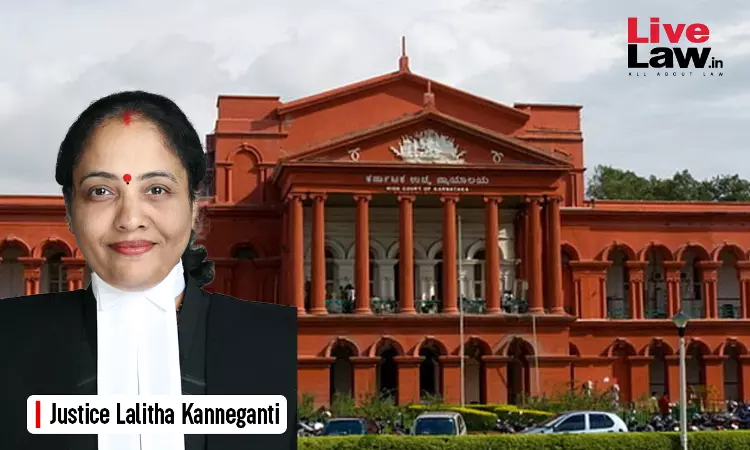
The Karnataka High Court has held that excise authorities cannot insist on a civil court declaration regarding succession to facilitate the transfer of a deceased woman's liquor licence to her husband's heirs merely because her parental relatives have raised competing claims under Wills. Justice Lalitha Kanneganti set aside an order passed by the Deputy Commissioner of Excise, which...
This is a premium content
Available exclusively to
Our subscribers
Subscribe Premium 
INR 1099+GST
Your support helps us to bring you more content at
an affordable subscription scheme !!!
All payment options available
The Karnataka High Court has held that excise authorities cannot insist on a civil court declaration regarding succession to facilitate the transfer of a deceased woman's liquor licence to her husband's heirs merely because her parental relatives have raised competing claims under Wills.
Justice Lalitha Kanneganti set aside an order passed by the Deputy Commissioner of Excise, which had declined to transfer the licence to either of the claimants and insisted that they obtain a succession certificate from a competent civil court.
The Court directed the authorities to consider the claim of the deceased woman's husband's nephew, Hari Prasad B.G., for transfer of the licence under Rule 17A of the Karnataka Excise Licences (General Conditions) Rules, 1967.
The Court also requested the State Government to examine whether Rule 17A, which governs the transfer of an excise licence upon the death of a licensee, requires further clarification regarding the identification of legal heirs, competing claims under Wills and the circumstances in which civil court adjudication may be necessary.
Background
The dispute centred on a Form CL-9 liquor licence, originally held by the husband of late Premamma V and transferred to her after his death. Following Premamma's death on August 13, 2025—her son having predeceased her in December 2022—rival applications were filed for transfer of the licence under Rule 17A.
Hari Prasad B.G., son of Premamma's husband's brother, sought transfer of the licence backed by no-objection affidavits from all other relatives on the husband's side.
On the other hand, Premamma's brother Aswatha Narayana Reddy and his son Karthik A also claimed the same based on a Will allegedly executed by Premamma in their favour.
On September 3, 2026, the Deputy Commissioner of Excise rejected both applications and held that the licence could not be transferred under Rule 17A without the applicants producing a succession certificate.
Husband's heirs occupy preferred position under intestate succession
The High Court noted that the husband's heirs and parental relatives of the woman do not form the same category for succession.
“In the present case, the deceased woman had no children, and her husband had predeceased her. The licence was originally in the name of the husband which was transferred in her favour after his death. Therefore, under the law governing intestate succession, the heirs of the husband constitute the preferred category. Under Section 15(1)(b) of the Hindu Succession Act the relatives belonging to the parental family do not occupy the same position merely by reason of their relationship with her,” the Court said.
The Court said that the preferred category and statutory position of husband's heirs does not depend upon “obtaining a separate civil declaration merely because the deceased woman's parental relatives have asserted competing claims.”
Further, affidavits submitted by other relatives of the husband's side expressing their no objection to the claim advanced by Hari Prasad show no apparent inter se dispute.
On the other hand, noting the competing case of Aswatha Narayana Reddy, the Court said that mere production of a Will does not establish the rights claimed under it.
“The claim advanced by the deceased women's brother and his children rests upon their Wills. Their rights cannot be determined merely by reference to their relationship with the deceased. If they seek to displace the ordinary order of intestate succession on the strength of the testamentary disposition, they must establish their case before the competent Court,” the Court said.
Justice Kanneganti observed that a separate declaration was unnecessary to establish the statutory order of succession in favour of the husband's relatives. However, the genuineness and legal effect of the competing Wills must be established in accordance with law.
“A separate declaration in respect of husband's relatives is not necessary merely to establish the statutory order of succession under Sections 15 and 16 of the Hindu Succession Act. The genuine testamentary controversy, however, cannot be resolved by treating the Wills as either proved or invalid in these writ proceedings,” the Court said.
It held, “Hence, this Court is of the considered opinion that there is no justification in directing the relatives of the husband to obtain an order from the Civil Court. If the petitioner in W.P.No.28317/2026 complies with all other requirements as per the provisions of the Excise Act the license shall be transferred in his favour, which is subject to the judgment of the competent Civil Court on the testamentary succession.”
Rule 17A requires clarification on identification of legal heirs
Explaining the scope of Rule 17A, the Court said, “Rule 17A of the Rules, 1967 provides for transfer upon the death of a licensee. The Rule empowers the Deputy Commissioner, on an application by the legal heirs and with the previous sanction of the Excise Commissioner, to transfer the license in their favour. Though Rule 17A of the Rules, 1967 has undergone amendments, including the amendment notified on 03.11.2025, the expression 'legal heir' continues to govern the category of persons who may invoke the provision. The Rule does not define who constitutes a legal heir.”
The expression “legal heir”, the Court said, therefore must be understood in its “legal context”, having regard to the law of succession.
Justice Kanneganti further pointed out that the provision fails to explain who would be treated as a legal heir, especially when there are competing claims under the intestate succession and under a Will. This, the Court said, leads to years-long civil proceedings during which the license can lapse.
“Rule 17A of the Rules, 1967 enables transfer upon the death of a licensee but does not expressly explain who is to be treated as a legal heir when competing claims arise under the intestate succession and under a Will nor does it adequately distinguish disagreement among admitted legal heirs, from an objection raised by a person claiming through a testamentary disposition. These are not merely questions of terminology, the absence of clear provisions can result in every objection being treated as a reason to direct the parties to the Civil Court,” the Court said.
It added, “The difficulty assumes greater significance when civil proceedings continue for several years... It is therefore possible that the subject matter of the controversy may cease to be available by the time the parties obtain a final determination of their civil dispute. Such uncertainty is neither beneficial to the parties nor conducive to the orderly administration of the Excise law.”
Accordingly, the Court requested the State Government to examine the need for suitable clarification of Rule 17A.
The High Court, consequently, directed the authorities to consider the case of Hari Prasad for transfer of license. It further said that if parental relatives succeed in getting a declaration as a legal heir, the authorities are bound to consider the same.


