


Kerala High Court
Kerala High Court Closes Plea By Asianet Journalist As Her Name Is Dropped From FIR Over Alleged Conspiracy To Defame SFI Leader
The Kerala High Court has closed the petition filed by the Chief Reporter of Asianet News Channel Akhila Nandakumar to quash the FIR registered against her for allegedly conspiring to defame CPI(M)'s student wing leader PM Arsho in connection with the Maharaja’s College examination controversy.Justice P.V. Kunhikrishnan passed the order, taking note of the submission made by the...

Not All Divorces Have To Be Mutual, Nature Of Previous Divorce Irrelevant To Permit Marriage Under Special Marriage Act: Kerala High Court
The Kerala High Court has held that the registering authority did not have to look into the nature of divorce obtained by the parties while considering their marriage applications under Section 8 of the Special Marriage Act.The bench observed that the Registering Authority only has to be satisfied that neither party who intends to marry has a living spouse at the time of registration of...
CPC | Parties Can't Adduce Evidence Not Supported By Pleadings: Kerala High Court
The Kerala High Court recently laid down that no party could succeed a case by adducing evidence without support of pleadings, since the law is well-settled that one could be permitted to let in evidence only in tune with the pleadings.Justice A. Badharudeen added that the basic rule governing pleadings is founded on the principle of secundum allegata et probate, that a party is not allowed...
Article 22(4) | State Must Confirm Order Under Kerala Anti-Social Activities Prevention Act Within 3 Months From Detention: High Court
The Kerala High Court on Wednesday declared that the State Government ought to confirm the detention order issued under the Kerala Anti-Social Activities (Prevention) Act, 2007 ('KAAPA, 2007') within 3 months from the date of its execution.The Division Bench comprising Justice Anu Sivaraman and Justice C. Jayachandran observed that while Article 22 (4) of the Constitution does not create...

'Roads Ordinarily Deserted At Night, Likelihood Of Causing Death By Accident Less': Kerala HC Modifies Charge Against Biker From 304 IPC To 304A IPC
The Kerala High Court recently discharged a person charged under Section 304 IPC stating said that the offence of 'culpable homicide not amounting to murder' will not be attracted to motor accident death caused by him late at night, when roads are deserted.Justice N. Nagaresh observed that knowledge and intention of causing an accident or death could not be presumed in this case and thus...

Humans Dictate Animals' Rights, Occupy Every Inch Of Space They Have: Kerala High Court Laments Rising Man-Animal Conflicts
The Kerala High Court on Wednesday lamented the rising encroachments on forest lands leading to increased human-animal conflicts in the State by the day."Right now, every inch of space animals have, we occupy – and we expect animals to live as per the laws that we make. And we decide what their rights are," the Division Bench comprising Justice A.K. Jayasankaran Nambiar and Justice Gopinath...

'We Swear By Rice': Kerala High Court Directs Supplyco To Clear Paddy Farmers' Dues In A Month, Criticises It For Shifting Liability
The Kerala High Court has held that Supplyco, implementation agency for Decentralized Paddy Procurement Scheme in the State, is liable to ensure that payments under the scheme are effected to the farmers, that they are not delayed and that farmers cannot be prejudiced any further stating that Supplyco could not obtain a bank loan within time.Justice Devan Ramachandran directed Supplyco to...

Kerala High Court Quashes Proceedings Under POCSO Act Following Marriage Of Accused & Victim
The Kerala High Court recently quashed the proceedings against a man who had been alleged of having committed offences under Sections 354 and 376 of the Indian Penal Code (IPC), and Section 7 read with Section 8 of the Protection of Children from Sexual Offences Act, 2012 ('POCSO Act), on the ground that the parties were now married. Justice Gopinath P. observed,"The petitioner and the victim...

Trust Is 'Juristic Person', Can Be Held Liable U/S 138 NI Act For Cheque Dishonour: Kerala High Court
The Kerala High Court recently laid down that a Trust, either public, private or charitable, is a juristic person and can be made liable for dishonour of cheques punishable under Section 138 of the Negotiable Instruments Act ('NI Act').Justice A. Badharudeen, on taking note of a plethora of precedents, further observed in this regard that such Trust would also be a company in terms of Section...
Deity Not Stripped Of Title To Religious Property Maintained By Local Authority Without Acquisition: Kerala High Court
The Kerala High Court has held that a deity cannot be divested of title to a land owned by it which is used for religious purposes, without a legal process such as acquisition or voluntary transfer. A bench of Justice Anil K Narendran and Justice PG Ajithkumar found that the property in question was used as a Temple road for religious activities and that the title of Deity will not be...
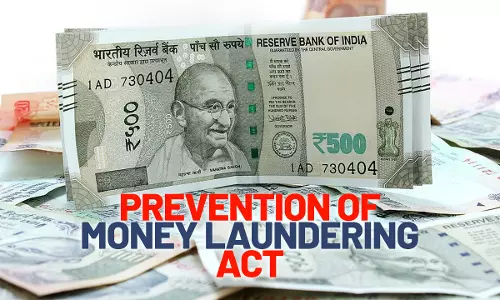
PMLA | Freezing Order Under Section 17(1-A) Not Valid If ECIR Quashed & FIR Not Registered: Kerala High Court
The Kerala High Court recently laid down that where the Enforcement Case Information Report (ECIR) has been quashed and no subsequent FIR has been registered against the accused, further proceedings under the Prevention of Money Laundering Act ('PML Act') shall be dropped and an order issued under Section 17(1A) would not stand. Section 17(1A) empowers an authorized officer to freeze a...
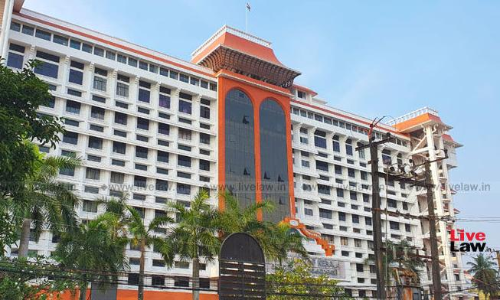
GST Registration Cancellation: Superintendent Of Central Tax To Take Independent Decision Without Influenced By Direction Of DGGI: Kerala High Court
The Kerala High Court has held that the Superintendent of Central Tax should take an independent decision without being influenced by the direction of the DGGI, Kochi Zonal Unit.The bench of Justice Dinesh Kumar Singh has observed that the DGGI, Kochi Zonal Unit, has already taken the decision to cancel the GST registration of the petitioner. The competent authority was only required to form...