



- Home
- /
- High Courts
- /
- Kerala High Court
- /
- BCI Chairman Writes To CJI...
BCI Chairman Writes To CJI Objecting To Kerala HC Judge's Comments Against Election Nomination Fee, Threatens With Transfer
Anamika MJ
27 Jan 2026 10:09 AM IST
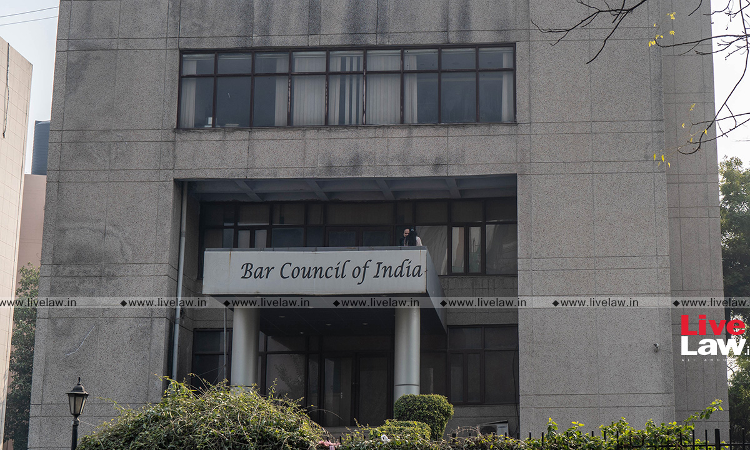
The Bar Council of India (BCI) Chairperson, Senior Advocate Manan Kumar Mishra, wrote to the Chief Justice of India taking serious objection to the critical remarks made by a single judge of the Kerala High Court against the Rs 1.25 lakh nomination fee charged for contesting Bar Council Elections.Terming the remarks “baseless and reckless” in a letter dated January 26, BCI Chairman wrote...
This is a premium content
Available exclusively to
Our subscribers
Subscribe Premium 
INR 1099+GST
Your support helps us to bring you more content at
an affordable subscription scheme !!!
All payment options available
The Bar Council of India (BCI) Chairperson, Senior Advocate Manan Kumar Mishra, wrote to the Chief Justice of India taking serious objection to the critical remarks made by a single judge of the Kerala High Court against the Rs 1.25 lakh nomination fee charged for contesting Bar Council Elections.
Terming the remarks “baseless and reckless” in a letter dated January 26, BCI Chairman wrote a letter to Chief Justice of India Surya Kant and Senior Advocate Manan Kumar Mishra, conveying the "serious institutional reaction" of the BCI.
On January 23, while hearing a challenge to the nomination fee, Justice Bechu Kurian Thomas of the High Court questioned the basis for charging Rs 1.25 lakhs, and asked if the Council members were travelling "business class" and what was the money used for. The single bench also commented that by charging such an amount, the Council was "inviting a probe".
Objecting to the remarks, the BCI Chairperson said that the High Court entertained the matter, despite the existing directions of the Supreme Court restraining High Courts and other courts from entertaining election-related petitions.
The BCI Chairperson went to the extent of stating that if "such attacks" from the judiciary persisted, then the bar bodies will be constrained to seek administrative measures, including transfer of the judge.
"BCI has chosen restraint as mentioned above. However, when such restraint is reciprocated not with mutual respect but with reckless and baseless attacks on the Bar Council of India and other elected bodies of advocates, the Council caimot remain a silent spectator. Its silence does not imply weakness or as acceptance of attempts to tarnish the image of the apex elected body of advocates. If such attacks persist, the advocates through their representative bodies shall be constrained to resort to lawful collective protest and agitation and to pursue appropriate constitutional and legal measures for proper action, including seeking administrative measures, including transfer of Judges found to be indulging in serious irregularities and malpractices undermining institutional balance and public confidence"
The BCI noted that Bar Council elections across the country are currently being conducted under a framework approved by the Supreme Court and supervised through High Powered Election Committees and a High Powered Election Supervisory Committee comprising former High Court judges. According to the BCI, once the Supreme Court has approved the election framework, the entertainment of such challenges by High Courts is “wholly unwarranted.”
The letter also addressed allegations surrounding the nomination fee, clarifying that BCI does not receive or retain any portion of the nomination fee collected during State Bar Council elections. The entire amount, it stated, vests exclusively with the respective State Bar Councils. The nomination fee of ₹1.25 lakh forms part of the election framework already approved by the Supreme Court.
The BCI further pointed out that it is incurring expenditure exceeding ₹20 crore solely to comply with Supreme Court directions on election supervision, covering travel, lodging, boarding, and honorarium of former judges appointed to election committees. These expenses, the Council said, are borne entirely by contributions from the legal fraternity, without any governmental or external financial assistance.
Expressing concern that sweeping judicial observations could disturb the constitutional balance between the Bar and the Bench, the BCI urged the Chief Justice of India to consider issuing appropriate advisories or directions to ensure that election-related disputes remain confined to the Supreme Court-mandated mechanism and that judicial restraint is exercised to avoid institutional friction.

Anamika MJ
Anamika MJ is a Correspondent with LiveLaw, covering Kerala High Court

