



- Home
- /
- High Courts
- /
- Kerala High Court
- /
- Kerala High Court Pushes For...
Kerala High Court Pushes For Real-Time Revenue Tracking After Audit Flags Financial Irregularities In Cochin Devaswom Board
Anamika MJ
18 Jun 2026 11:41 AM IST
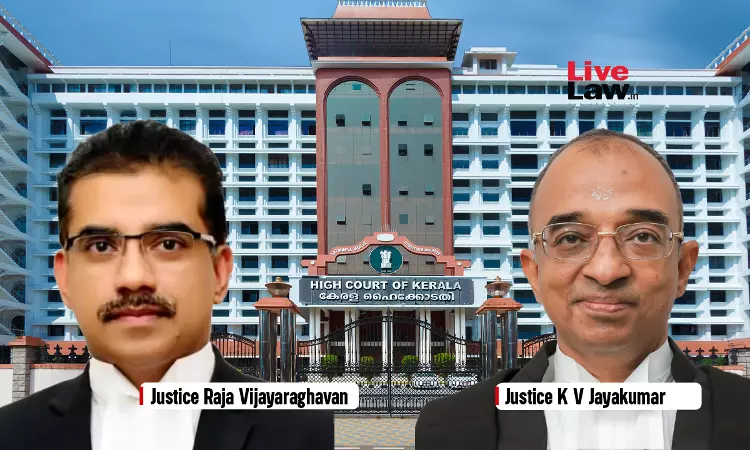
The Kerala High Court has expressed concern over persistent accounting irregularities and delays in audit scrutiny within the Cochin Devaswom Board (CDB), directing the Board to submit a detailed action plan on corrective measures and the digitisation of its financial management systems.A Division Bench comprising Justice Raja Vijayaraghavan V. and Justice K.V. Jayakumar issued the order...
This is a premium content
Available exclusively to
Our subscribers
Subscribe Premium 
INR 1099+GST
Your support helps us to bring you more content at
an affordable subscription scheme !!!
All payment options available
The Kerala High Court has expressed concern over persistent accounting irregularities and delays in audit scrutiny within the Cochin Devaswom Board (CDB), directing the Board to submit a detailed action plan on corrective measures and the digitisation of its financial management systems.
A Division Bench comprising Justice Raja Vijayaraghavan V. and Justice K.V. Jayakumar issued the order while considering the Devaswom Board Audit Report relating to the Board's accounts for the financial year 2019–20.
The court noted that the audit report, which had earlier been referred to the Ombudsman for scrutiny in January 2022, remains pending without a report being submitted. The Court observed that similar delays have been seen in the past several financial years and noted that such inaction undermines the statutory audit framework envisaged under the Travancore-Cochin Hindu Religious Institutions Act, 1950.
“We are also given to understand that audit reports pertaining to earlier years have likewise been referred to the learned Ombudsman and remain pending scrutiny. Such delays strike at the very purpose of the statutory audit mechanism and are plainly inconsistent with the scheme and intent of the TCHRI Act, which contemplates timely audits, prompt identification of irregularities, and effective corrective action.” the Court said.
The Court highlighted several significant observations contained in the audit report, including the failure to effectively implement the recommended double - entry accounting system; wrong debits in bank passbooks amounting to ₹45.59 lakh; wrong credits totalling ₹95.38 lakh; deficiencies in account verification procedures; failure to reflect actual collections in annual accounts; large arrears relating to income tax refunds due to the Board; and discrepancies concerning tax deducted at source (TDS) on cash withdrawals.
The Court noted that these findings point to systemic weaknesses in the Board's accounting and monitoring mechanisms, affecting financial transparency and accountability.
The Court further observed that many of the recurring audit objections stem from outdated and largely manual accounting processes that are vulnerable to human error and inadequate supervision.
Emphasising the need for structural reforms, the court said the Board should seriously examine the feasibility of implementing a fully integrated and computerised accounting system featuring real-time reconciliation, automated controls, digital record maintenance and system-based audits.
“We would like to remind the Board that transparency, accountability, and the adoption of robust technological safeguards are no longer matters of administrative choice; they are essential components of good governance and are intrinsically linked to the statutory duties cast upon the Board. The continued recurrence of audit objections, coupled with the delay in completing audits and implementing corrective measures, raises serious concerns regarding the efficacy of the existing systems and oversight mechanisms. Unless meaningful structural reforms are undertaken, audit observations will continue to remain a recurring feature, year after year, without effective resolution.” the Court said.
The Court thus stated that the Cochin Devaswom Board must establish a secure, tamper-resistant digital governance system covering all institutions managed by the Cochin Devaswom Board.
“Such a system should ensure that all receipts, expenditures, approvals, procurements, inventories, and administrative decisions are digitally recorded, monitored, and reconciled on a real-time basis, thereby facilitating transparency, accountability, and effective audit oversight.” the Court said.
The Court added that the proposed framework should include:
- Real-time tracking of temple and institutional revenues;
- Digital monitoring of tenders and procurement processes;
- Market-rate validation and procurement oversight;
- Comprehensive digital audit trails for all financial transactions;
- Integrated human resources records;
- Digital documentation of construction and development approvals;
- A dedicated contracts and purchase management module;
- A land and property audit database; and
- Digital inventory and appraisal systems for jewellery and valuables.
The Bench also referred to earlier directions issued to the Travancore Devaswom Board requiring digitisation of accounts and implementation of an integrated software ecosystem with audit-by-design features. The court noted that the Kerala State Audit Department had been directed to participate in the design and implementation stages of such systems to minimise future audit objections.
The court directed the Cochin Devaswom Board to file a detailed counter-affidavit explaining the corrective and remedial measures already undertaken; compliance status regarding each audit objection; steps taken to recover or reconcile wrongly debited or credited amounts; measures introduced to strengthen accounting and internal controls; and progress achieved in digitising financial management systems, along with a timeline for completion.
The matter has been posted for further consideration on June 30.
Case Title: Deputy Director, Kerala State Audit Department v The Secretary Cochin Devaswom Board
Case No: DBAR 3/ 2022
Tags

Anamika MJ
Anamika MJ is a Correspondent with LiveLaw, covering Kerala High Court

