



- Home
- /
- High Courts
- /
- Kerala High Court
- /
- 'Irreplaceable Ecological Value':...
'Irreplaceable Ecological Value': Kerala High Court Allows Road-Widening To Kannur Temple On Conditions Including Afforestation With 400 Trees
K. Salma Jennath
16 April 2026 4:03 PM IST
The Kerala High Court, in a recent ruling, gave the green signal for a road widening project that was undertaken near Madayikavu Bhagavathy Temple in Kannur after imposing several conditions, including afforestation by planting at least 400 trees.The Division Bench of Justice Raja Vijaraghavan V. and Justice K.V. Jayakumar took note of the fact that the area is an 'ecological paradise' and...
This is a premium content
Available exclusively to
Our subscribers
Subscribe Premium 
INR 1099+GST
Your support helps us to bring you more content at
an affordable subscription scheme !!!
All payment options available
The Kerala High Court, in a recent ruling, gave the green signal for a road widening project that was undertaken near Madayikavu Bhagavathy Temple in Kannur after imposing several conditions, including afforestation by planting at least 400 trees.
The Division Bench of Justice Raja Vijaraghavan V. and Justice K.V. Jayakumar took note of the fact that the area is an 'ecological paradise' and a biodiversity hotspot, and gave a slew of directions to ensure sustainable development.
The Court was considering two writ petitions challenging the road-widening project, one of which had highlighted that the Public Works Department and the Malabar Devaswom Board have no authority to widen the road by destroying temple property and its biodiversity.
The petitioner pointed out that statutory sanction as per Section 29 of the Madras Hindu Religious & Charitable Endowments Act, 1951 was not obtained. It was also stated that the project is without acquisition proceedings and by trespassing into temple property.
The second plea sought to restrain trespass into the petitioner's property, which, she claimed, was being encroached upon by the temple and the PWD contractor while undertaking the project.
The PWD Executive Engineer submitted that the road leading to Madayikavu is very narrow and remains in a bad condition, leading to difficulties for the devotees to ply their vehicles. It was also pointed out that Chirakkal Kovilakam had relinquished their land for increasing the road width from 6 to 8.5 metres and there is no need for acquisition of any land. Moreover, the MLA Kalliassery sanctioned Rs. 1.42 crores for the project.
It was further undertaken that the road construction would be done in a manner so as not to disturb the biodiversity of the area. The Temple's executive officer filed statement, outlining similar points. The State and the Malabar Devaswom Board also supported the road widening.
After considering the submissions, the Court described, in detail, the ecological characteristics of Madayipara, located on the banks of Kuppam river:
“Covering about 600–700 acres and rising 40–47 m above sea level, the plateau offers wide views of nearby wetlands and the coast near Ezhimala. It offers panoramic views of the surrounding countryside and sea, with seasonal colour transformations—green grasses in the monsoon, golden hues in summer, and blue flower carpets in spring. It is an ecological paradise rich in a wide variety of flora and fauna. Madayipara is a biodiversity hotspot, with over 500 plant species, including rare and endemic plants… Madayipara hosts diverse butterfly and bird species that play crucial ecological roles in pollination, pest control, and nutrient cycling…It also hosts a variety of species of birds, including Wetland birds, Terrestrial/insectivores, local migrants, and long-distance Palaearctic/ Himalayan migrants that use it as a key stopover. Madayipara has an irreplaceable ecological, hydrological, geological, and cultural value.”
Next, it referred to various decisions laid down by the Supreme Court that had stressed upon the principle of sustainable development, including NHAI v. Pandarinathan Govindarajulu and Auroville Foundation v. Navroz Kersasp Mody.
The Court then opined that from the nature and extend of widening proposed, it is not likely that there is any real threat to the ecology of the area and on the contrary, the same would enhance devotee safety.
Next, the Court referred to Section 29 of the Madras HR & CE Act and observed that same deals with transfer of immovables property of a religious institution. Since, in the present case, there is only a temporary surrender of property for the purpose of road widening, the same would not require prior sanction.
With respect to the second plea regarding encroachment, the Court took note of the fact that the petitioner had already approached the civil court to address the grievance and added that the High Court cannot adjudicate on the same in a plea under Article 226.
The Court came to the conclusion that the prayers sought for in the two writ petitions cannot be granted but went on to issue directions to preserve the ecological balance of the area.
Directions
The Court disposed of the two pleas with a set of directions.
No damage or disturbance to biodiversity
The Court stressed that the biodiversity in the area is not damaged while the road-widening is conducted:
“The proposed road widening project shall be undertaken strictly in a manner that does not cause any damage or disturbance to the biodiversity of Madayipara, including its ponds, water bodies, and the existing natural flora and fauna.”
Afforestation by planting at least 400 trees with videographic records
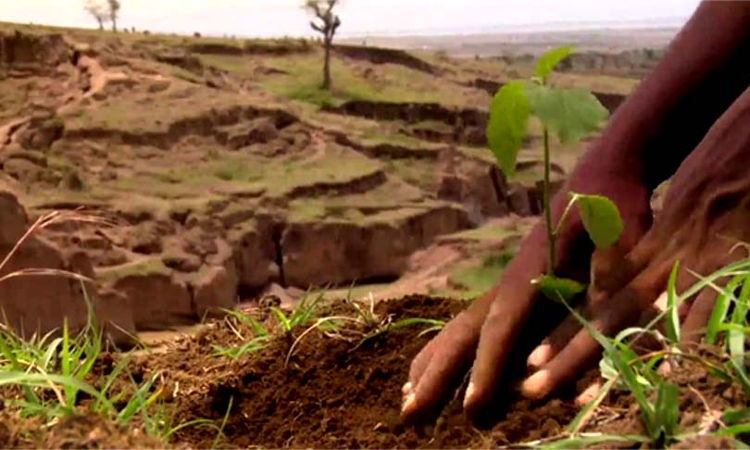
Further, it directed the Malabar Devaswom Board and its Commissioner, the Executive officer of the Temple and the Trustee of Sree Madayi Trustee Chirakkal Kovilakam Devaswom to ensure that the PWD contractor undertakes afforestation with at least 400 trees, consisting of indigenous species that are compatible to the geographical and ecological features of the locality.
The same is to be done after consulting with the Divisional Forest Officer concerned and must be completed by end of June 2026. Videographic records of the afforestation activities are to be placed on record by July 15, 2026 along with a detailed affidavit.
The Executive Engineer of PWD department is to monitor and oversee the same and file affidavit. The Temple's executive officer and the Sree Madayi Trustee Chirakkal Kovilakam Devaswom is further directed to give proper care and maintenance to the newly planted saplings.
Comprehensive afforestation scheme
The Court directed the Principal Chief Conservator of Forests or any other competent authority of the Forest Department to formulate and finalise a comprehrensive afforestation scheme for Madayipara area, prepared with inputs from relevant stakeholders.
“The said scheme shall be placed before this Court on or before 15th July 2026, and shall clearly set out the measures proposed to ensure long-term preservation of the biodiversity and ecological integrity of the area,” the Court added.
Adherence to green protocol
The Court observed:
“The Secretary, Madai Grama Panchayat, shall ensure strict and continuous adherence to the green protocols issued by the State Government from time to time, so as to safeguard and preserve the ecological balance and biodiversity of Madayipara.”
The matter is posted on July 16 for compliance report.
Case No: W.P(C). No. 3407/2026 and 8011/2026
Case Title: Vijesh C.K. v. State of Kerala and Ors. & Bachi Sulaimantakath Sameera v. Malabar Devaswom Board and Ors.
Citation: 2026 LiveLaw (Ker) 202
Counsel for the petitioners: K.M. Sathyanatha Menon, T.V.Jayakumar Namboodiri
Counsel for the respondents: K. Mohanakannan, Mahesh V. Ramakrishnan, R. Surendran, H. Praveen (Kottarakara), S. Rajmohan – Sr. Government Pleader, R. Ranjanie – SC – Malabar Devaswom Board
Tags

K. Salma Jennath
Salma Jennath is a Principal Correspondent with LiveLaw, covering Kerala High Court

