



- Home
- /
- High Courts
- /
- Kerala High Court
- /
- 'Cultivating' Cannabis Plant An...
'Cultivating' Cannabis Plant An Offence Under NDPS Act Whether Planted In Pots Or In Earth: Kerala High Court
K. Salma Jennath
12 Nov 2025 6:06 PM IST
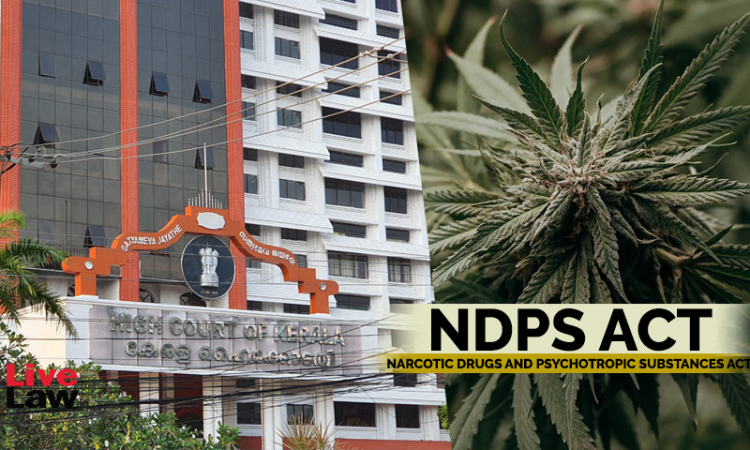
The Kerala High Court recently clarified that cultivation of cannabis plant is an offence under the Narcotic Drugs and Psychotropic Substances Act (NDPS Act), and that it does not distinguish between cannabis plants grown in pots or in the earth.Justice C.S. Dias observed,“the expression 'cultivate any cannabis plant' used in Sections 8 (b) and 20 (a) of the Act encompasses any act of...
This is a premium content
Available exclusively to
Our subscribers
Subscribe Premium 
INR 1099+GST
Your support helps us to bring you more content at
an affordable subscription scheme !!!
All payment options available
The Kerala High Court recently clarified that cultivation of cannabis plant is an offence under the Narcotic Drugs and Psychotropic Substances Act (NDPS Act), and that it does not distinguish between cannabis plants grown in pots or in the earth.
Justice C.S. Dias observed,
“the expression 'cultivate any cannabis plant' used in Sections 8 (b) and 20 (a) of the Act encompasses any act of planting, tilling, raising, growing, farming or gardening a cannabis plant with the mens rea, whether such cultivation is carried out in the earth or in a pot. The statute does not distinguish between planting in the earth or growing in pots. The essence of the offence lies in the conscious act of planting and nurturing a cannabis plant in contravention of the provisions of the Act.”
The petition before the Court was filed by a person, who was accused of the offences under Section 8(c) read with Sections 20 (a) (i) and 20 (b) (ii) (A) of the NDPS Act, seeking to quash the criminal proceedings initiated against him.
The prosecution allegation was that the excise officials, on being informed that the petitioner was cultivating cannabis plants on the terrace of a rented building, conducted a search and in the presence of the petitioner, they seized five cannabis potted plants. They also seized ganja seeds and dried branches from his bedroom.
Before the High Court, the petitioner contended that the offences under the provision would not be attracted in the case since the cannabis plants seized did not have flowering or fruiting tops. Referring to Section 20(a)(i), he said that the ingredients of the offence specifies that offending act is 'cultivating' and not 'planting'. He also claimed that he was not residing in the premises from where the contraband was seized.
The public prosecutor vehemently opposed the plea and argued that, prima facie, the offence is made out and that the petitioner was caught red-handed.
The Court examined Sections 2 (iii), (iv), (viiib), 8, and 20 of the NDPS Act and found that the statue does not specify that cannabis plant must bear flowering or fruiting tops for it to be considered as a contraband under the Act. It observed:
“Section 2 (iv) of the Act defines a 'cannabis plant' as any plant of the genus cannabis. The definition does not state that a plant assumes the character of a cannabis plant only when it bears flowering or fruiting tops. In contrast, sub-clause (b) of clause (iii) of Section 2 of the Act defines 'ganja' as the flowering or fruiting tops of the cannabis plant (excluding the seeds and leaves when not accompanied by the tops), by whatever name they may be known or designated. To put it differently, while the flowering or fruiting tops of the cannabis plant are 'ganja', it does not follow that a plant can be identified as a cannabis plant only upon bearing such tops.”
It went on clarify that 'cannabis plant' and 'ganja' are considered to be separate items as per the Act. The Court opined:
“Furthermore, Section 8(b) of the Act explicitly prohibits the cultivation of a cannabis plant, and Section 20 imposes separate punishments for (a) cultivating cannabis and (b) possessing, selling or purchasing cannabis. Therefore, it stands beyond any pale of doubt that the expressions 'cannabis plant' and 'ganja' denote two distinct entities/species within the framework of the Act.”
The Court next went on to see if cultivation of potted cannabis plants is an offence under the NDPS Act. Since the definition of 'cultivate' has not been provided, it looked into the dictionary meaning of the term. Thereafter, it came to the conclusion that cultivation includes planting as well and the offence would be attracted if committed with mens rea.
The next two contentions raised by the petitioner, that he was not residing in the premises and that the ganja seeds seized cannot be classified as ganja as it did not have flowering or fruiting tops, were matters to be adjudicated during trial according to the Court.
The Court came to the conclusion that the materials on record prima facie discloses commission of the offences by the petitioner. Thus, it dismissed the petition and made it clear that the petitioner is at liberty to raise these contentions before the trial court, which shall decide the matter notwithstanding the observations made in the order.
Case No: Crl.M.C. No. 8469 of 2025
Case Title: Jatin v. State of Kerala
Citation: 2025 LiveLaw (Ker) 727
Counsel for the petitioner: Suman Chakravarthy, K.R. Rija, Brejitha Unnikrishnan, Surya R., Sudeesh K.E., Prahladh S.P.
Counsel for the respondent: C.S. Hrithwik – Sr. Public Prosecutor

K. Salma Jennath
Salma Jennath is a Principal Correspondent with LiveLaw, covering Kerala High Court

