



- Home
- /
- High Courts
- /
- Kerala High Court
- /
- Kerala High Court Upholds Denial Of...
Kerala High Court Upholds Denial Of OBC Non-Creamy Layer Certificate To Daughter Of Directly Recruited Judge
Anamika MJ
29 Oct 2026 3:05 PM IST
Direct recruitment to Class I post, not age of entry, governs OBC creamy layer exclusion, Court held.
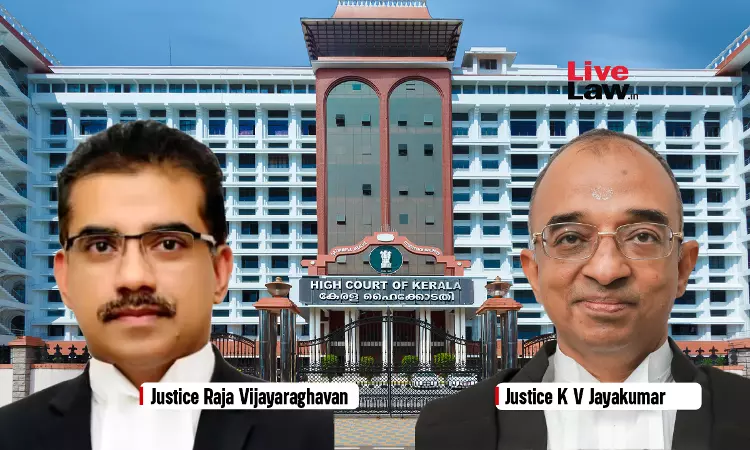
The Kerala High Court has upheld the rejection of an OBC Non-Creamy Layer (NCL) certificate to the daughter of a woman judge directly recruited to the Class I post, who sought reservation benefits for CLAT 2027. [2026 LiveLaw (Ker) 608]The Division Bench comprising Justice Raja Vijayaraghavan V and Justice K. V. Jayakumar held that the criteria applicable to officers directly recruited to Class...
This is a premium content
Available exclusively to
Our subscribers
Subscribe Premium 
INR 1099+GST
Your support helps us to bring you more content at
an affordable subscription scheme !!!
All payment options available
The Kerala High Court has upheld the rejection of an OBC Non-Creamy Layer (NCL) certificate to the daughter of a woman judge directly recruited to the Class I post, who sought reservation benefits for CLAT 2027. [2026 LiveLaw (Ker) 608]
The Division Bench comprising Justice Raja Vijayaraghavan V and Justice K. V. Jayakumar held that the criteria applicable to officers directly recruited to Class I posts cannot be mixed with those governing officers who enter such posts through promotion from lower service categories.
The court accordingly allowed the State Government's appeal against a Single Judge's order directing the issuance of the certificate.
The minor petitioner, who is the respondent in the present appeal belongs to the Mappila community, which is included among the Socially and Educationally Backward Classes in Kerala, intended to apply for CLAT 2027. Her application for an OBC Non-Creamy Layer certificate was rejected on the ground that her mother was a directly recruited Class I/Group A officer.
The petitioner's mother had practised as an advocate before being appointed as an Additional District and Sessions Judge in the Kerala State Higher Judicial Service in July 2021, at the age of 41.
The father of the petitioner was appointed as Assistant Public Prosecutor Grade II at Gram Nyayalaya and was subsequently promoted as Assistant Public Prosecutor Grade I.
The petitioner contended that her mother's professional income before entering judicial service was modest and that the applicable government instructions prescribed in Office Memorandum dated 08 September, 1993 and the subsequent clarification insured in 2004 required the circumstances and age at which her mother entered Group A service to be considered.
The Single Judge accepted the petitioner's case, and held that the 1993 Office Memorandum and the 2004 clarification should be read harmoniously. The Court also considered that candidates whose parents entered judicial service through promotion could, in certain circumstances, obtain NCL certificates, whereas the petitioner's claim was rejected because her mother had been directly recruited as a District Judge.
The Single Judge accordingly quashed the rejection order and directed the Tahsildar to issue the certificate within three working days. The State challenged that judgment before the Division Bench.
The question considered by the Court was whether the children of a person directly recruited to a Class I/Group A post after the age of 40 could claim the benefit of the clarification dated October 14, 2004, which excludes certain children of government employees who enter Group A service after beginning their careers in lower service categories.
The Division Bench examined the Schedule to the Office Memorandum dated September 8, 1993, which prescribes distinct criteria for determining creamy-layer status based on the service category of a candidate's parents.
Category II(A), deals with directly recruited Class I/Group A officers, and includes the children of parents where either parent is a Class I officer, subject to the exceptions expressly provided in the Schedule.
Category II(B), deals with directly recruited Class II/Group B officers, and prescribes separate conditions. In particular, clause (b) addresses the situation where the husband is a Class II officer and enters Class I service at the age of 40 or earlier.
“Where the parent falls within a category expressly covered by the Schedule, the determination must ordinarily be made by applying the criterion prescribed for that category, subject to any applicable exception. The circumstances that may be relevant under a different category cannot, merely on grounds of perceived similarity or hardship, be imported into the category governing the case at hand.” Court observed.
The Court held that the distinction between these categories was material and could not be disregarded by importing conditions applicable to one category into another.
“A plain reading of the 1993 Office Memorandum makes it clear that the children of persons holding Class I/Group A posts in the civil services of the Central and State Governments are subject to exclusion in accordance with the criteria prescribed under Category II A of the Schedule,” the Bench observed.
It further held that the applicable provision is framed in terms of the parent's status and does not, by itself, make the exclusion dependent on whether the parent entered service through promotion or direct recruitment from a lower category.
The Court then examined the clarification dated October 14, 2004, which addresses the creamy-layer status of children whose father initially entered government service as a Class III/Group C or Class IV/Group D employee and subsequently entered Class I/Group A service at the age of 40 or earlier.
Under the clarification, the children of such employees are not to be treated as belonging to the creamy layer. The clarification distinguishes this situation from that of a directly recruited Class II/Group B officer who subsequently enters Class I/Group A service at the age of 40 or earlier, whose children are treated as belonging to the creamy layer.
The Bench held that the clarification was confined to the specific service histories described in it. It did not establish a general rule that every parent entering Group A service after the age of 40 would be treated as falling outside the creamy layer.
The Court noted that the petitioner's mother had been practising as an advocate before her direct appointment as an Additional District and Sessions Judge. She was neither a government employee initially recruited to Class III/Group C or Class IV/Group D service who subsequently entered Group A service, nor a person falling within the specific service category contemplated by the clarification.
“The relevant consideration is not the age of entry into Class I/Group A service in isolation, but whether the circumstances of the parent's service fall within the category addressed by the clarification,” the Bench held.
Consequently, the petitioner could not claim the benefit of the 2004 clarification merely because her mother entered judicial service at the age of 41.
The Court placed significant reliance on the Supreme Court's judgment in Union of India v. Rohith Nathan [(2026) 6 SCC 1], which examined the legal framework governing the exclusion of the creamy layer from OBC reservation benefits.
The Supreme Court had emphasised that the 1993 Office Memorandum lays down the governing framework for determining creamy-layer status and that its various categories prescribe distinct and independent exclusionary criteria. The criteria applicable to one category cannot be indiscriminately combined with those governing another.
The Court noted that a subsequent government clarification cannot override, supersede or alter the substantive provisions of the original Office Memorandum.
“A clarification may explain the meaning of an existing provision, resolve ambiguity or address practical difficulties in implementation. It cannot, however, be interpreted as altering the substantive policy embodied in the original instrument or as creating an independent basis for determining eligibility that is consistent with the governing framework.” the Court noted.
The Court thus held that the 2004 clarification could not be relied upon in isolation to create an exception for a person who did not fall within the category it expressly addressed.
The Court also rejected the argument based on the petitioner's mother's income before her appointment to judicial service.
It noted that the mother's income during the financial year 2019–2020 was approximately ₹1,20,130, when she was practising as an advocate. However, the Court held that her professional income did not, by itself, displace the specific service-status criterion applicable to her as a directly recruited Class I/Group A officer.
The authority was required to determine whether the petitioner fell within an exclusionary category specified in the 1993 Office Memorandum, rather than apply an income-based criterion drawn from a different category.
“Where the applicable service category prescribes a distinct criterion, that criterion must be applied in accordance with its terms.” the Court noted.
The Court also rejected the contention that the petitioner had been discriminated against because persons whose parents entered judicial service as Munsiff Magistrates and were subsequently promoted to District Judge could, in certain circumstances, obtain NCL certificates.
The Court held that the principle of equality did not require persons belonging to materially different service categories to be treated identically, irrespective of the distinctions recognised under the applicable policy.
It further noted that the petitioner had not challenged the constitutional validity of the classification or the criteria prescribed in the 1993 Office Memorandum. Her case was confined to the interpretation and application of the 1993 Office Memorandum and the 2004 clarification.
In the absence of a challenge to the validity of the prescribed criteria, the Single Judge could not extend the benefit of the clarification on the ground that a different interpretation would result in discrimination.
The Court observed that the exclusion of the creamy layer is integral to the constitutional framework governing reservation and is intended to ensure that its benefits reach the genuinely disadvantaged sections of backward classes.
Referring to Ashoka Kumar Thakur v. State of Bihar, [(1995) 5 SCC 403], the Bench reiterated that the exclusion of the more affluent sections is intended to ensure that reservation benefits reach the poorer and weaker sections of backward classes.
The Court emphasised that this constitutional objective must be implemented through the criteria prescribed by the competent authority. Courts cannot enlarge an exception beyond its intended scope merely because a different interpretation may appear more beneficial in an individual case.
“Though we are conscious of the fact that the issue concerns the future of a young child, sympathy, however genuine, cannot justify a departure from the criteria prescribed by law.” the Court added.
The Court thus set aside the Single Judge's judgment, and upheld the Tahsildar's rejection of the minor petitioner's application for an OBC Non-Creamy Layer certificate and held that she was not entitled to the reliefs sought in the writ petition.
The writ appeal filed by the State was accordingly allowed.
Counsel for Respondent: P.A. Mohammed Shah (Addl. AG), Parvathy Kottol
Tags

Anamika MJ
Anamika MJ is a Correspondent with LiveLaw, covering Kerala High Court

