



- Home
- /
- High Courts
- /
- Kerala High Court
- /
- Kerala High Court Pushes Electronic...
Kerala High Court Pushes Electronic Service, Dedicated Police Officers To Speed Up Criminal Cases Against MPs/MLAs
Anamika MJ
30 Sept 2026 1:36 PM IST
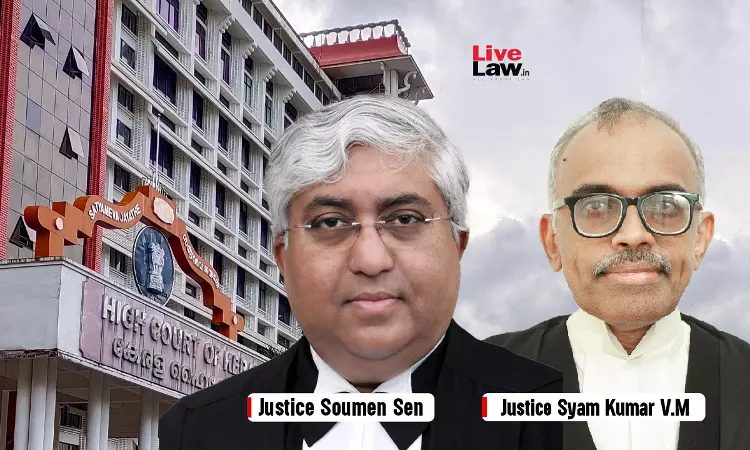
The Kerala High Court on Tuesday (29 September) directed strict adherence to a series of recommendations aimed at expediting the disposal of pending criminal cases registered against sitting and former Members of Parliament (MPs) and Members of the Legislative Assembly (MLAs) in the State.A Division Bench comprising Chief Justice Soumen Sen and Justice Syam Kumar V.M issued the directions...
This is a premium content
Available exclusively to
Our subscribers
Subscribe Premium 
INR 1099+GST
Your support helps us to bring you more content at
an affordable subscription scheme !!!
All payment options available
The Kerala High Court on Tuesday (29 September) directed strict adherence to a series of recommendations aimed at expediting the disposal of pending criminal cases registered against sitting and former Members of Parliament (MPs) and Members of the Legislative Assembly (MLAs) in the State.
A Division Bench comprising Chief Justice Soumen Sen and Justice Syam Kumar V.M issued the directions while considering a a suo motu petition registered in 2021 complying with the directions of the Supreme Court in Ashwini Kumar Upadyay v. Union of India [W.P.(C) No. 699 of 2016] so as to monitor the progress of pending criminal cases against sitting/former MPs and MLAs.
The Court took on record a memo filed by the Special Government Pleader along with a statement concerning the progress of pending criminal cases against sitting and former MPs and MLAs.
The Court took note of the report by the Registrar (District Judiciary) to expedite the disposal of the pending criminal cases against the sitting/ former MPs and MLAs.
The report suggested that the processes relating to criminal court cases should be accorded due priority and that an appropriate mechanism should be established to ensure their execution and return without delay.
It suggested that two police officers from every police station be deputed exclusively for process-related duties and Additional officers may be deputed where required, considering the pendency and volume of processes.
It also called for strengthening the functioning of nodal officers through monthly meetings at the concerned court centre to identify and resolve issues affecting execution of processes.
The report further highlighted the Kerala Electronic Processes (Issuance, Service and Execution) Rules, 2025, which provide for transmission of court processes to the disclosed electronic communication address of the concerned person. It was noted that the District Court Management System (DCMS) has been enhanced to facilitate delivery of notifications through WhatsApp under the Criminal Process Module. Recipients can verify the authenticity of electronically received processes through the process-verification facility on the DCMS portal or by scanning the QR code provided on the process.
The recommendations also envisage reconstitution of committees to improve coordination among courts, police authorities and designated nodal officers.
At the Magistrate court level, committees comprising judicial officers, court ministerial officers, Station House Officers and prosecution representatives have been proposed. While, at the district level, the monitoring committee is to include the Chief Judicial Magistrate along with the District Judge, District Collector, police and prosecution authorities and other concerned officials.
At the State level, the proposed coordination mechanism would involve the Registrar (District Judiciary), the State Police Chief and the Director General of Prosecutions. It also suggested that, in cases involving non-service of processes on Members of the Legislative Assembly, coordination with the Office of the Speaker could be considered.
The Report recommended greater use of video-conferencing facilities, wherever feasible, to secure the appearance of accused persons and witnesses and avoid unnecessary delays. The report noted reluctance on the part of prosecutors to seek examination through video conferencing.
The Court also considered a recommendation for an electronic police station-wise Process Register. The proposed system would record details including the case number, court, nature of process, accused or witness concerned, date of receipt, date fixed by the court, officer entrusted with execution, action taken, date of execution and date of submission of the report to court.
Processes that remain unexecuted beyond the prescribed period could be separately flagged for immediate follow-up.
The High Court recorded the suggestion and noted that the suggestion must be adhered to in order to expedite the process.
“We find that the suggestions and recommendations, which are broadly as follows, should be adhered to in order to expedite the process” Court recorded.
The Court noted that the latest report from the District Judiciary, as on September 17, 2026, showed 22 cases in which processes had remained pending for more than five years. A further nine cases were added to the list during August 2026.
In addition, 26 cases more than two years old were pending on account of non-execution of processes as of September 17, 2026.
The consolidated list of such cases appended to the Registrar's report has been directed to be taken into consideration by the State while filing its progress report on the next hearing date.
The matter has been posted to November 3 for further consideration.
Counsel for Respondent: Rasheed C. Nooranad (Spl.GP), Laliza T.Y(Sr. GP)
Tags

Anamika MJ
Anamika MJ is a Correspondent with LiveLaw, covering Kerala High Court

