



- Home
- /
- High Courts
- /
- Kerala High Court
- /
- ESZ Constructions & Quarrying:...
ESZ Constructions & Quarrying: Kerala High Court Directs Centre, State To Disclose Action On Gadgil & Kasthurirangan Committee Recommendations
Anamika MJ
17 Feb 2026 6:13 PM IST
The Kerala High Court has recently (12 February) directed the Union and the State Government to disclose the steps taken by them pursuant to the recommendations of the Gadgil Committee Report and or the Kasthurirangan Committee Report.For context, the Gadgil Committee Report is the report submitted in 2011 by the Western Ghats Ecology Expert Panel (WGEEP) which was appointed by the Ministry...
This is a premium content
Available exclusively to
Our subscribers
Subscribe Premium 
INR 1099+GST
Your support helps us to bring you more content at
an affordable subscription scheme !!!
All payment options available
The Kerala High Court has recently (12 February) directed the Union and the State Government to disclose the steps taken by them pursuant to the recommendations of the Gadgil Committee Report and or the Kasthurirangan Committee Report.
For context, the Gadgil Committee Report is the report submitted in 2011 by the Western Ghats Ecology Expert Panel (WGEEP) which was appointed by the Ministry of Environment and Forests of India. The report has recommended strong environmental protection of the Western Ghats. The Kasthurirangan Report has sought to balance the concerns of development and environment protection and has suggested a more relaxed environmental regulation regime.
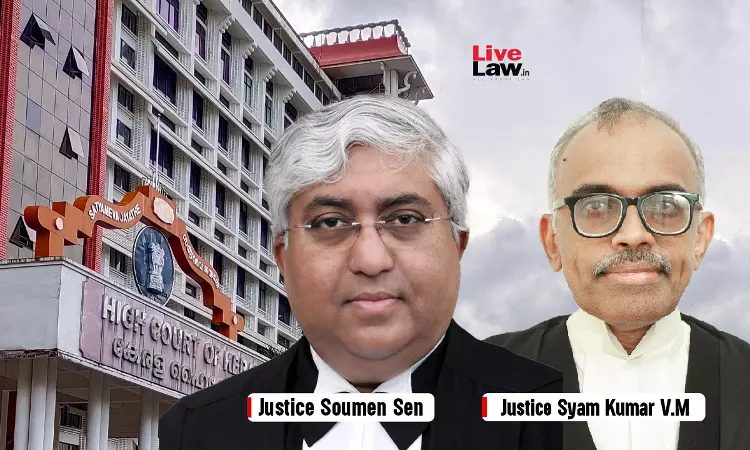
The division bench comprising Chief Justice Soumen Sen and Justice Syam Kumar V M issued the direction while considering a public interest litigation seeking a moratorium on all large scale constructions and quarrying in areas previously identified as ESZ (Ecologically Sensitive Zone)-I by the Gadgil Committee until the final disposal of the petition.
The writ petition is filed by a retired principal, along with other petitioners including minor children represented by their guardians.
The petitioner has relied heavily on the Public Trust Doctrine, as expanded by the Supreme Court in M C Mehta v Kamal Nath [(1997) 1 SCC 388], and argued that the State holds natural resources in trust for the public. The State, it says, cannot permit unregulated tree felling whether in forest or non-forest areas without violating its fiduciary duty.
The petition further seeks a declaration that trees are living entities or juristic persons with legal rights and no tree, whether on public or private land, can be felled without due authority of law.
The petition also cites international examples such as Ecuador's constitutional recognition of the Rights of Nature and New Zealand's conferral of legal personhood on forest areas and rivers.
The petition links environmental degradation to recent disasters in Kerala, particularly the 2024 landslides in Mundakkai and Chooralmala in Wayanad, which reportedly claimed over 400 lives. The petition attributes these tragedies to deforestation, soil instability, and the alleged non-implementation of the Gadgil Committee's recommendations on ESZs.
The petition has also questioned the adequacy of the Kerala Preservation of Trees Act, 1986 and the Kerala Promotion of Tree Growth in Non-Forest Areas Act, 2005, asserting that these statutes restrict felling only of certain notified species and do not factor in oxygen -producing capacity and ecosystem services.
The petitioners have also submitted that the tree valuation must move beyond timber value and incorporate ecological metrics such as oxygen production, carbon sequestration, biodiversity support, and soil stabilization, citing ongoing discussions before the Supreme Court in environmental valuation matters.
The Court observed that out of the fifteen prayers in the petition, only three need to be considered as the rest have been settled by several decisions of the Supreme Court.
The Court would thus consider whether the right of Nature to exist, persist, and regenerate should be recognized as a legal right.
It would also consider whether felling down of the trees with old age more than 10 years may be restrained and also on the question of valuation of trees purpose, including compensation or felling permissions, must be calculated based on their Oxygen and ecosystem services.
The matter is posted on 12 March for further consideration.
Case Title: Dr. Chandrasekharan P V and Ors. v Union of India and Ors.
Case No: WP(PIL) 35/ 2026
Counsel for Petitioner: P Sathisan, Shibu B S, Razak M, Biju P Paul, Alvin Jewel S S, Vidhya T U, Abhirami S, Sreekarthik S Menon
Counsel for Respondent: K S Bharathan (CGC), T Naveen, Nagaraj Narayanan (Spl. GP), Sunil V Muhammed
Tags

Anamika MJ
Anamika MJ is a Correspondent with LiveLaw, covering Kerala High Court

