'Policing Can't Be Based On Stereotypes': Kerala High Court Questions Restrictions On DJ Parties Over Drug Concerns
K. Salma Jennath
16 Nov 2026 2:05 PM IST
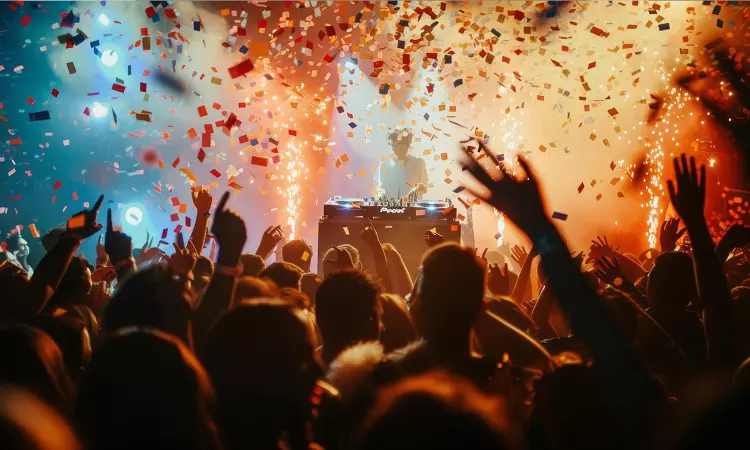
There is a fine line between policing and Police Raj, Court said.
The Kerala High Court on Monday (November 16) orally remarked that the State cannot stereotype DJ parties to mean parties where drugs happen and that policing cannot be based on stereotypes.
The Division Bench of Justice Devan Ramachandran and Justice Basant Balaji was considering the State's appeal against a Single Bench order, which set aside the police notices restricting the operation of Kochi Radisson Blu hotel beyond 12:00 am and curtailing DJ parties after 11 pm.
The Bench orally said:
"You are stereotyping DJ parties to mean parties where drugs will find its place. Policing cannot be allowed on stereotypes. Policing cannot be assumptions and generalisations...Our problem in this case is stereotyping. Don't stereotype. Police cannot go forward on stereotypes. Predictive policing, preventive policing, preemptive policing is there in these times...There is a fine line between policing and Police Raj. Policing should be there...There are now people who are professional disc jockeys in the world. How can you say DJs are bad? If you do that, we'll cross over to police Raj. You would be targeting certain demographic. You can't do that. It is the 21st century."


The Court clarified that it is not against police action to prevent crimes or to curb drug menace: "Drugs cannot be tolerated under any circumstances. There must be zero tolerance towards drugs."
It also sought clarification from the State as to what it meant by the term 'DJ parties' and quizzed whether DJ parties in places without bar licences would be permissible:
"Your police cannot inform us what 'DJ party' is. Your objection is not against alcohol or music. According to you, drugs can happen only in a DJ party, I think....What if there is a DJ party in a place without bar licence? Is that not allowed? What if we introduce a licensing system for DJs? Why specifically DJ parties? What is meant by a DJ party?...Should we say that nobody can dance in a bar or listen to music? How can we say that listening to music or dancing leads to drug consumption? Don't people dance in churches and in temples?...Does a DJ party require a licence? Show us the law on this, give us the law on a party. Do you require a permission, particularly the police, to conduct a DJ party or any party?...Suppose a DJ party is held at a place where no liquor is served and there is no FL-3 licence. How would you stop it?"
The Bench then sought the State's view on what restrictions it proposes to have on DJ parties or any parties.
"What does it mean to say that DJ parties cannot be allowed? You can come back to us on parties in private spaces. Are the police saying that there shall be no nightlife? That is not your case, is it?...You tell us the restrictions you want. What are the regulations governing a party held in a private space? Is a licence required?"
The Court then opined that its previous interim order should continue. It added:
"policing is not merely acting after a crime, but is also prevention, as statutorily permitted. As we have already said, every measure, not merely for reacting to a crime, but averting it is also enjoined on the police...To reiterate, the crackdown against drugs and prohibited substances should continue at all times and with such force and vigour as is absolutely necessary."
Case is posted to Nov 20 for further consideration.
Counsel for appellant: P.A Mohammed Shah - Additional Advocate General, Renoy Vincent - Government Pleader
Counsel for the respondents: Anand Kalyanakrishnan, S. Rajeev, C. Dheeraj Rajan, V. Vinay, M.S. Aneer, Libin Varghese